
The Ultimate Comparison: Aluminum Forging vs. CNC Machining
I am “Old Wang the Forging”. Having founded “Xinpingfu” for over 20 years, I’ve seen thousands of designs laid out on my desk. The question engineers ask me most often is: “Old Wang, should I cut from an aluminum block (CNC) or forge it?”
This is not just a question about making a part. It is a question about the future of your product and your budget. Today, I will share my honest experience with you. I will help you decide which process is the true winner for your needs.
Cost Analysis
Money is the life of any business. Let me break down where your money goes in each process.
Material utilization rate
When I look at Aluminum CNC machining services, I see a process that removes material. You start with a big block of aluminum, and you cut away 40%, 50%, or even 80% of it to find your part inside. That removed metal becomes chips. You paid for that metal, but now it is just scrap.
In my forging workshop, we do things differently. We use a “near-net shape” process. I calculate the exact weight needed for your part. We heat it and press it. There is very little waste. If you use expensive materials, forging saves you a lot of money on raw material costs.
Comparison of mold and setup costs
I must be honest with you. CNC is great for starting. It has no mold cost. If you need rapid prototyping aluminum parts—maybe just 1 to 10 pieces to test a design—CNC is the best choice. You just program the machine and cut.
Forging requires a die (a mold). This tool costs money to build. However, this is a one-time fee. Once the mold is made, it can produce thousands of parts very cheaply.
Long-term production cost breakdown
Here is my rule of thumb: If you need 100 parts, stick with CNC. If you need 5,000 or 50,000 parts, you must switch to forging.
The unit price of a forged part is much lower than a CNC part. After about 1,000 pieces, the savings on the unit price will pay for the mold cost. After that, every part you buy puts profit back into your pocket.
Production Speed and Scalability
Time is also money. Let’s talk about speed.
Mass advantage of forging
In my factory, a forging press hits the metal once. Bang! The part is formed in seconds. We can produce thousands of consistent parts in a single shift. It is a very fast cycle.
Limitations of CNC machining in mass production
CNC machines are amazing, but they are slow. The cutter must travel over every surface of the part. To make one complex part might take 30 minutes or even an hour. To make 10,000 parts, you would need an army of CNC machines running day and night. It is hard to scale up quickly with CNC.
Comparison of Strength and Durability
This is where I get excited. As an engineer, you care about performance.
Grain structure of forged parts vs. grain structure of CNC machined parts
Imagine a piece of wood. It has a grain. If you cut across the grain, the wood is weak.
CNC machining is like cutting wood. It cuts through the natural grain of the aluminum block. This creates weak points.
Forging is different. Under extreme pressure, the grain of the aluminum flows with the shape of the part. It follows the curves. This continuous grain structure is why aerospace components suppliers often demand forging. It makes the part incredibly tough.
Impact and fatigue resistance
Let’s look at the numbers. When we compare 6061-t6 aluminum vs 7075, we see big differences in strength.
The 6061-t6 aluminum yield strength is typically around 276 MPa. This is good for general parts. However, the 7075 aluminum yield strength can reach over 500 MPa. This is massive.
When we forge these materials, we maximize these properties. A forged 7075 part can withstand heavy shocks and vibration without cracking. A CNC part with cut grains might fail under the same stress over time.
Case Study: Production of Auto Parts
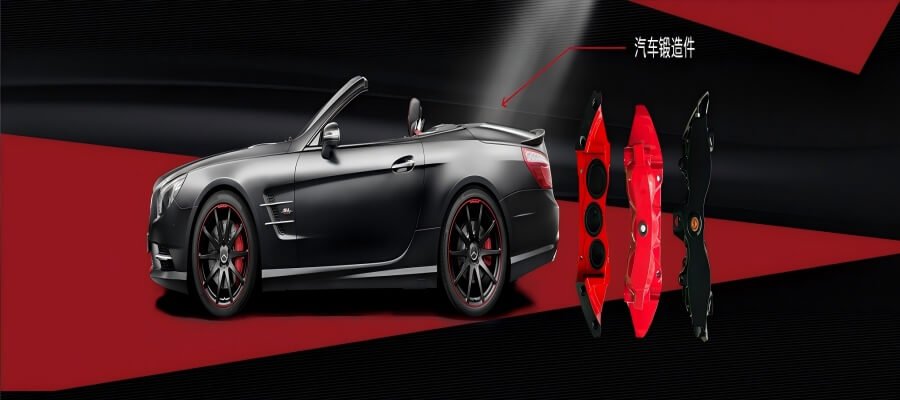
I recently helped a client making suspension arms for a high-performance car.
In the beginning, they used rapid prototyping aluminum parts made by CNC. This was perfect for testing the fit and geometry. But when they wanted to make 20,000 cars, the CNC cost was too high, and they worried about fatigue failure.
I helped them redesign for forging. We used 6061-T6. The result? We reduced the material waste by 60%. The unit price dropped by 45%. And most importantly, the forged grain flow made the suspension arm 20% stronger than the CNC prototype. The client was very happy.
Choose the right process
So, what is my advice?
If you are in the design phase and need a few samples quickly, use Aluminum CNC machining services. It is fast and flexible for small numbers.
But, when you are ready to manufacture for the real market, call me. For volume production, safety, and cost savings, aluminum forging is the only choice.
Trust ”Old Wang the Forging”. Let’s build something strong together at XinPingFu.