
Aluminum Forging vs Die Casting: A Comparative Analysis of Strength, Cost, and Applications
Aluminum Forging Manufacturer Helping CNC Machining and Die Casting Buyers Reduce Cost and Improve Structural Performance
Where Performance Meets Cost-Effectiveness
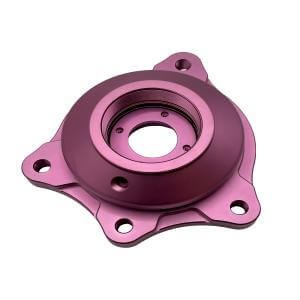
When selecting manufacturing processes for critical components such as automotive suspension parts, robot joints, or automated equipment frames, the choice between aluminum forging and die casting is far from a simple technical issue; it’s a strategic decision impacting product performance, lifespan, and total cost of ownership.
Xinpingfu, with over twenty years of experience in precision aluminum forging, understands this deeply. This article simplifies the complex by providing a clear and professional comparative analysis to help you choose the optimal process for applications requiring lightweight, high strength, and superior corrosion resistance.
The Unmatched Advantages of Aluminum Forging
Forging is not just about shaping metal; it’s about transforming its internal structure by applying immense pressure to a solid aluminum billet, typically at elevated temperatures. This process “disciplines” the metal, yielding significant advantages over die casting
Superior Mechanical Properties & Structural Integrity: The forging process refines and aligns the internal grain structure of the aluminum, creating a continuous flow line along the part’s contours. This results in exceptional strength, toughness, and, most importantly, dramatically improved fatigue and impact resistance. Components can withstand repeated high-stress cycles, a critical requirement for safety-critical parts in automotive, aerospace, and robotics.
Elimination of Internal Defects: The high pressure applied during forging welds shut any inherent micro-voids or porosity in the aluminum billet, creating a denser, more reliable part with consistent material properties throughout.
Ideal for High-Strength Lightweighting: Forged aluminum alloys, such as 7075 aluminum alloy, offer an exceptional strength-to-weight ratio, often comparable to some steels. This allows designers to reduce component weight without compromising performance—a key goal in automotive and automation equipment design.
Perfect Surface for High-Quality Finishing: The non-porous, dense surface of a forged part is an ideal substrate for anodizing and other surface treatments. It ensures uniform, durable, and high-quality finishes that enhance corrosion resistance and aesthetic appeal, which is crucial for consumer-facing products like high-end bicycles and robotics
Key Forging Aluminum Alloys for Industry
The choice of alloy is pivotal. Forging-specific alloys are engineered for performance, unlike many die-casting alloys
| Alloy | Key Characteristics | Ideal Application Examples |
| 6061 Aluminium Alloy | The “all-rounder.” Excellent mix of strength, weldability, corrosion resistance, and anodizing quality. Cost-effective and widely available. | Bicycle frames, motorcycle parts, robotic structural components, frames for automation equipment. |
| 7075 Aluminum Alloy | The “high-performance” alloy. Offers strength comparable to many steels, making it ideal for extreme stress applications, though less corrosion-resistant unless protected. | High-performance automotive components (suspension, linkages), aerospace parts, critical joints in heavy-duty robotics. |
At Xinpingfu, we guide our clients in selecting the optimal alloy based on mechanical requirements, operating environment, and post-processing needs.
Forging vs. Die Casting: A Direct Comparison
The choice hinges on your priorities: ultimate performance or geometric complexity and cost for high-volume, less critical parts
| Parameter | Aluminum Forging | Aluminum Die Casting |
| Strength & Toughness | Very High (Continuous grain flow) | Moderate (Random grain structure, potential porosity) |
| Design Complexity | Moderate (Good for solid, structural shapes) | High (Excellent for intricate shapes, thin walls, and complex geometries) |
| Production Volume | Cost-effective for low to medium volumes | Most cost-effective for very high-volume mass production |
| Tooling Cost | Higher | High (Complex molds required) |
| Surface Finish Potential | Excellent (Dense, porosity-free surface ideal for anodizing) | Good (Good as-cast finish, but porosity can affect coating quality) |
| Primary Application Driver | Performance, Reliability, and Safety | Cost, Complexity, and Speed for High Volumes |
Industry Applications: Where Forging Excels
Forged aluminum is the material of choice for high-stress, high-reliability components across key industries:
- Automotive Industry: Used for critical safety components such as suspension control arms, steering knuckles, and powertrain elements where high strength, fatigue resistance, and lightweighting are paramount.
- Bicycle & Motorcycle Industry: Preferred for cranks, handlebars, and high-performance frame components where the combination of light weight and high strength directly impacts performance and rider safety.
- Robotics & Automation Equipment: Essential for robotic arm joints, linkages, and high-precision actuator bases where high rigidity, low inertia, and long-term dimensional stability under load are required.
- Other Industrial Applications: Ideal for off-road vehicle components and other applications demanding durability and impact resistance
The Mold Cycle: Investment in Quality
A common question we receive at Xinpingfu concerns the timeline for mold (die) preparation.
- Typical Mold Cycle: For a forging die, the process from design to first article inspection typically takes 25 to 35 days for simpler designs, and potentially 45 to 60 days for complex, multi-stage dies.
- Our Commitment to Speed: We operate a rapid response mechanism for mold development. Upon receiving your 3D drawings, we provide a feasibility analysis and quotation within 48 hours, leveraging our in-house design and manufacturing expertise to compress lead times.
While this represents an initial investment, it pays off in the superior quality and per-part cost-effectiveness of every component produced over the production run.
- Typical Mold Cycle: For a forging die, the process from design to first article inspection typically takes 25 to 35 days for simpler designs, and potentially 45 to 60 days for complex, multi-stage dies.
- Our Commitment to Speed: We operate a rapid response mechanism for mold development. Upon receiving your 3D drawings, we provide a feasibility analysis and quotation within 48 hours, leveraging our in-house design and manufacturing expertise to compress lead times.
Making the Right Choice for Your Product
The decision between forging and die casting is fundamentally a trade-off between performance/reliability and cost/design complexity.
Choose Aluminum Forging when:
- The component is critical to product safety and performance.
- It will endure high stress, impact, or cyclic loading.
- Maximum strength-to-weight ratio is a key design goal.
- A high-integrity, porosity-free surface finish (e.g., anodizing) is required.
Consider Aluminum Die Casting when:
- The primary need is for high-volume production of complex-shaped parts.
- The component is not subject to the highest structural stresses.
- Initial cost is a dominant factor for very large volumes.
In Xinpingfu, Old Wang the Forger is your partner in making this crucial decision. We possess deep expertise in aluminum forging and have accumulated extensive practical experience in the automotive, bicycle, robotics, and automation equipment industries. We cordially invite you to discuss your next project with us to ensure optimal performance, reliability, and value.
Let Xinpingfu’s forging expertise be the foundation of your product’s success.