
Aluminum Forging vs Die Casting for Structural Aluminum Parts
What Is Aluminum Die Casting?
Die casting is a process where molten aluminum is injected into a steel mold under high pressure.
It is widely used for:
- Consumer electronics housings
- Decorative parts
- High-volume automotive components
Advantages of Die Casting
- High production speed
- Good surface finish
- Suitable for thin-wall complex shapes
- Low per-piece cost in very high volumes
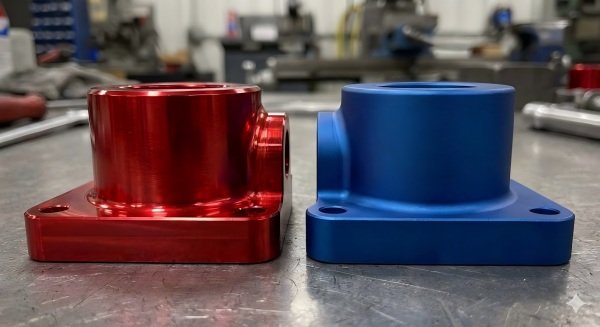
Common Die Casting Defects
- Gas porosity
- Shrinkage porosity
- Surface blistering
- Internal voids
These defects directly affect mechanical performance.
What Is Aluminum Forging?
Forging shapes solid aluminum using compressive force instead of molten metal.
Unlike casting, forging:
- Eliminates internal voids
- Improves material density
- Creates directional grain flow
This makes forged aluminum suitable for load-bearing and fatigue-critical components.
Forging shapes solid aluminum using compressive force instead of molten metal.
Unlike casting, forging:
- Eliminates internal voids
- Improves material density
- Creates directional grain flow
This makes forged aluminum suitable for load-bearing and fatigue-critical components.
Strength Comparison – Forging vs Die Casting
| Property | Structural Reliability | Medium |
| Density | Lower | Higher |
| Internal Porosity | Lower | Higher |
| Fatigue Resistance | Common | High |
| Fatigue Resistance | Moderate | High |
| Structural Reliability | Moderate | Excellent |
Forged aluminum is generally 20–40% stronger in structural performance compared to die casting.
Porosity – The Critical Difference
Die casting introduces gas into molten aluminum during injection.
Even with vacuum systems, complete elimination of porosity is difficult.
Porosity leads to:
- Reduced fatigue life
- Crack initiation points
- Anodizing surface defects
Forged aluminum, formed from solid billet, avoids this issue.
Surface Finish and Anodizing Performance
Die cast aluminum may show:
- Blistering during anodizing
- Surface bubbles
- Inconsistent coating
Forged aluminum offers:
- Higher density
- Better anodizing uniformity
- Stronger surface integrity
For visible or cosmetic structural parts, forging often performs better.
Cost Comparison
Die casting:
- High mold cost
- Very low cost at 10,000+ volume
Forging:
- Medium tooling cost
- Cost-effective at medium volume
- Lower rejection rate
If strength is not critical and volume is extremely high, die casting may be more economical.
If reliability is critical, forging often reduces long-term failure cost.
When Should You Choose Forging Over Die Casting?
Choose forging when:
- The part is load-bearing
- Fatigue strength matters
- Safety compliance is required
- Long-term durability is critical
Choose die casting when:
Non-structural components
Ultra-high volume
Thin-wall complex shape
Yes. Forged aluminum has aligned grain structure and minimal porosity, providing superior strength and fatigue resistance compared to die cast aluminum.
Porosity occurs when gas becomes trapped in molten aluminum during high-pressure injection, creating internal voids.
Forging may have higher initial tooling cost, but for medium volumes and structural applications, it often provides better long-term value.
| If your aluminum components are load-bearing, safety-critical, or require higher fatigue strength, then forging is worth considering as it is a more performance-optimized alternative to die casting. |