
Find clear answers to common questions about aluminum forging processes,material selection, tooling, production capabilities, and cost considerations.
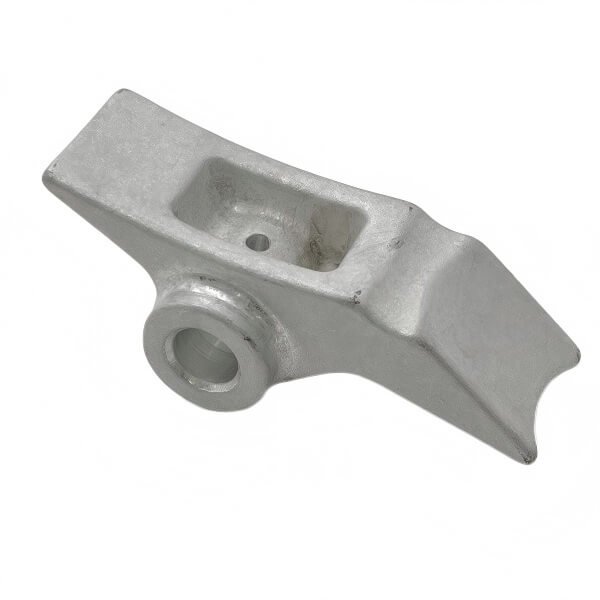
What is aluminum forging?
Answer:
Aluminum forging is a manufacturing process that shapes aluminum alloys under high pressure,resulting in components with superior strength, fatigue resistance, and structural integrity compared to cast or machined parts.
Forging vs CNC machining – which is better?
Answer:
Aluminum forging is ideal for high-strength, load-bearing parts and medium to high-volume production.
CNC machining is more suitable for prototypes or low-volume components requiring complex geometries.
Is aluminum forging cheaper than CNC machining?
What aluminum alloy source materials do you ?
Answer:
We offer a variety of aluminum alloy raw materials, including 6061, 6063, 6082, and 7075. Selection criteria are based on strength, corrosion resistance, machinability, and application requirements.
What is the typical lead time for aluminum forging?
Is aluminum forging more expensive than die casting?
for structural components.
Can forged aluminum parts be anodized?
What types of parts are suitable for aluminum forging?
Can forging replace CNC machining or die casting for my project?
When Should You Choose Forging Over CNC Machining?
Answer:
The part is load-bearing
Fatigue strength is critical
Production volume exceeds prototype level
Cost reduction is needed in medium-volume runs
Structural reliability is required
CNC machining is suitable when:
Quantity is very low
Design changes frequently
Geometry is extremely complex
Speed to market is priority
Is forged aluminum stronger than CNC machined aluminum?
Answer:
Yes. Forged aluminum is generally stronger than CNC machined aluminum because the forging process compresses and aligns the internal grain structure along the shape of the part.
In CNC machining, the material is cut from a billet without improving its internal structure.
As a result, forged aluminum typically offers:
Higher tensile strength
Better fatigue resistance
Improved impact performance
For load-bearing or safety-critical components, forging is often the more reliable choice.
Can forged aluminum parts still be CNC machined?
Answer:
Yes. In fact, most forged aluminum parts require CNC machining on critical surfaces to achieve tight tolerances.
Forging provides the strength and structural integrity, while CNC machining ensures dimensional precision.
Is forging better than CNC machining for structural parts?
Answer:
For structural and load-bearing aluminum components, forging is generally superior due to enhanced grain flow and fatigue resistance.
CNC machining is suitable for prototypes and small quantities, but forging offers better mechanical performance for high-stress applications.
Does aluminum forging reduce material waste?
Answer:
Yes. Forging is a near-net-shape process, meaning the part is formed close to its final geometry before machining.
Compared to CNC machining from solid billet — which can remove 50–70% of material — forging significantly reduces raw material waste.
This results in:
- Lower aluminum consumption
- Shorter machining cycles
- Reduced overall production cost
When is aluminum forging more cost effective than CNC machining?
Answer:
Aluminum forging becomes more cost effective when production volume increases beyond prototype levels.
Although forging requires die tooling investment, it reduces material waste and shortens machining time.
Forging is typically more economical when:
- Production exceeds 500–1000 pieces
- The part removes a large amount of billet material in CNC
- Structural strength is required
For high-volume structural parts, forging often lowers total manufacturing cost.