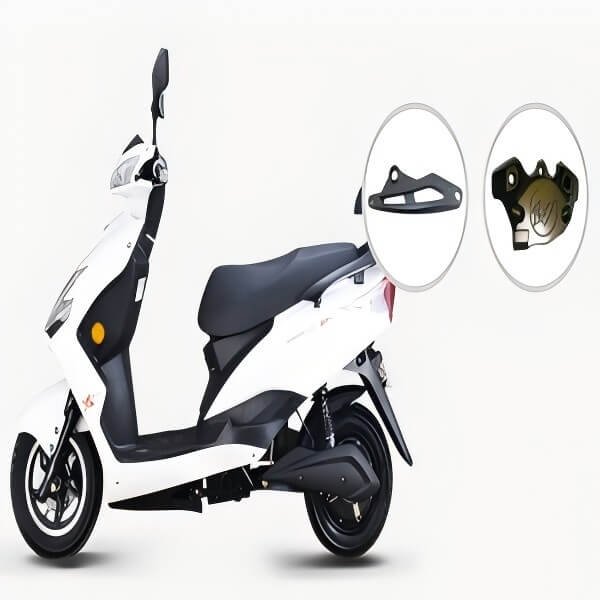

Custom Aluminum Forging for Motorcycles and Powersports
Greetings to all riders, engineers, and motorcycle manufacturers. I am “Old Wang the Forging”
At my factory in Xinpingfu, we love speed. But as an engineer who has worked with metal for over 20 years, I know that speed is meaningless without safety. When a motorcycle roars past at 200 km/h on the track, the rider is entrusting his life to just a few kilograms of metal that holds the wheels and suspension together.
I often see aftermarket parts made from cheap casting or low-quality machining. This keeps me awake at night. Today, I want to talk to you about why custom aluminum forging is the gold standard for the motorcycle and powersports industry. Whether you are building motocross bikes, road racers, or ATVs, the choice of manufacturing process defines the soul of the machine.
The Demands of Powersports: Vibration and Impact
A car is stable. A motorcycle is violent. The forces on a bike are completely different from those on a car.
High-revving engines and rough road surfaces create high-frequency vibrations. If you use a cast aluminum part, these vibrations can cause “fatigue failure.” The microscopic air bubbles (porosity) inside a cast part act like tiny cracks waiting to grow. One day, the part just snaps without warning.
The Solution from “Old Wang the Forging”
This is why I recommend forging. The aluminum forging process aligns the grain structure of the metal. It creates a part that is dense and uniform. It acts like a damper, absorbing the vibration energy rather than cracking under it.
Also, consider impact. In motocross, jumps land hard. A cast part is brittle—it shatters like glass upon heavy impact. A forged part made from 6061-T6 or 7075-T6 is ductile. It might bend if the crash is terrible, but it will rarely snap. This difference often saves the rider from serious injury.
Forged vs. Cast Wheels and Suspension Parts
Let us look at the specific parts where forging makes the biggest difference.
Wheels: The Rotational Mass
The heaviest rotating part of the bike is the wheel. Reducing weight here is the Holy Grail of performance.
Cast Wheels: To make them safe, they must be thick and heavy. This makes the bike hard to turn and slow to accelerate.
Forging Wheels: I can press a wheel from a single billet of 6061-T6 aluminum. Because the material is so strong, I can make the spokes very thin. This reduces “gyroscopic inertia.” The result? The bike flicks into corners instantly. It feels 50kg lighter, even if you only saved 2kg.
Suspension: Triple Clamps and Linkages
The triple clamp (or triple tree) connects the front forks to the frame. It transfers all the braking and steering forces.
Many factory bikes come with cast clamps. They are heavy and vague. By switching to a custom aluminum forging design, we increase the stiffness. This gives the rider better “feedback” from the front tire. They know exactly what the tire is doing.
Case Study: Enhancing Performance for Racing Bikes
I want to share a story about a client from Europe. They produce high-end racing motorcycles.
The Problem:
They were using CNC machining to make their rearsets (footpegs and controls) out of a solid block of aluminum. This looked good, but it was very expensive and wasted 70% of the material. Also, during a crash, the CNC machined parts were snapping off, ending the race for the rider.
The Solution from “Old Wang the Forging”:
I analyzed their design. I proposed a hybrid solution: Precision Forging + CNC Finish
We created a forging die for the main shape of the rearset using 7075-T6 aluminum.
7075-T6 is not just strong; it is aerospace-grade. Its tensile strength reaches 572 MPa (83,000 psi), and its yield strength hits 503 MPa (73,000 psi). This is comparable to many structural steels, yet it weighs only one-third as much. By forging this alloy, we align the grain structure to maximize these properties even further.
The Result:
- Cost: We reduced material waste, lowering the cost by 30%.
- Durability: Because of the forged grain flow, the new rearsets were tougher. In crash testing, they bent instead of snapping, allowing the rider to limp the bike back to the pits.
- Speed: We reduced the weight of the assembly, contributing to faster lap times.
The client was amazed. They realized that Old Wang the Forging does not just sell parts; I sell performance.
Customization: Anodizing and Aesthetic Finishes for Moto Parts
In the motorcycle world, performance is King, but style is Queen. Riders love parts that look like jewelry.
This is another advantage of forging over casting.
Casting Surface: Because of the silicon content and porosity in cast aluminum, it creates a dull, blotchy look when you anodize it. It looks “cheap.”
Forging Surface: The surface of a forged part is dense and pure. When we polish it and apply anodizing (in red, gold, blue, or black), the color is deep and metallic.
The “Billet Look” with Forged Strength
Many riders love the “CNC Billet” look—the tool marks that show a part was machined. At XinPingFu, we can give you the best of both worlds.
We forge the part to get the internal strength. Then, we use our CNC machines to do the final pass. We leave beautiful machine lines on the surface. The customer sees a high-end “billet” part, but inside, it has the superior heart of a forging.
Conclusion
If you are building a machine for speed, do not compromise with casting.
- For safety against impact and vibration.
- For the agility of lightweight wheels and suspension.
- For the beautiful anodized finish that riders love.
You need a partner who understands the spirit of riding. Contact “Old Wang the Forging” in Xinpingfu today. Send me your designs for off-road motorcycle swingarms, forks, or suspension components. We’ll make your motorcycle faster, safer, and more beautiful.