

How to Reduce CNC Machining Cost for Structural Aluminum Parts
Hello everyone, I’m “Old Wang the Forging” from XinPingFu, specializing in manufacturing solutions for aluminum alloy forgings for 20 years.
CNC Cost Is a Real Problem
If you are manufacturing structural aluminum parts using CNC machining, rising costs may already be a serious concern.
Common challenges include:
- High material waste
- Long machining cycle times
- Increasing labor and machine costs
- Difficulty reducing cost without sacrificing strength
Many engineers and buyers try to reduce CNC machining cost by adjusting cutting parameters, changing suppliers, or switching to lower-cost aluminum alloys.
However, these methods often bring only limited improvement.
The real question is not how to machine better, but whether CNC machining is the right process for the part.
“Old Wang the Forging” will explain practical methods to reduce the cost of CNC machining of aluminum structural components—from design optimization to manufacturing process selection.
Understanding Why CNC Machining Costs Are High for Structural Parts
Material Waste from Billet Machining
CNC machining is a subtractive process.
Structural aluminum parts are often machined from solid billet or plate
In many cases:
- 50–70% of the raw material is removed
- Chips become scrap
- Material cost increases rapidly
For large or thick structural components, raw material waste becomes a major cost driver.
Long Machining Time for Load-Bearing Geometry
Structural parts typically require:
- Thick sections
- Reinforced ribs
- Multiple machining operations
These features significantly increase:
- Spindle time
- Tool wear
- Labor cost
Even with cost-effective aluminum CNC solutions, machining time remains a structural limitation.
Adding Material Does Not Reduce Cost
A common approach to ensure strength is simply “leaving more material.”
Unfortunately:
- Thicker parts increase machining time
- More material increases raw cost
- Strength improvement is limited
CNC machining does not improve internal material structure, so cost increases faster than performance.
Practical Ways to Reduce CNC Machining Cost (Short-Term Solutions)
Before considering alternative processes, there are several short-term improvements you can make.
Optimize Part Design for CNC Machining
Design adjustments can reduce cost:
- Avoid deep pockets
- Reduce unnecessary thickness
- Minimize sharp internal corners
These changes may lower machining time but often conflict with structural requirements.
Select Aluminum Alloy Carefully
Higher-strength alloys increase material cost.
Using 7075 aluminum for parts that only require 6061-level strength increases cost without real benefit.
However, alloy changes alone rarely solve cost problems for structural parts.
Batch Production and Fixture Optimization
Larger batch sizes:
- Reduce setup time per part
- Improve machining efficiency
This helps, but cost reduction is still limited when material removal remains high.
The Structural Limitation of CNC Machining for Cost Reduction
At a certain point, CNC machining reaches a cost reduction ceiling.
Why?
Because CNC machining:
- Removes material instead of forming it
- Does not improve grain structure
- Relies on geometry rather than material efficiency
For structural aluminum components, cost and strength become tightly linked.Reducing cost without reducing performance becomes difficult.
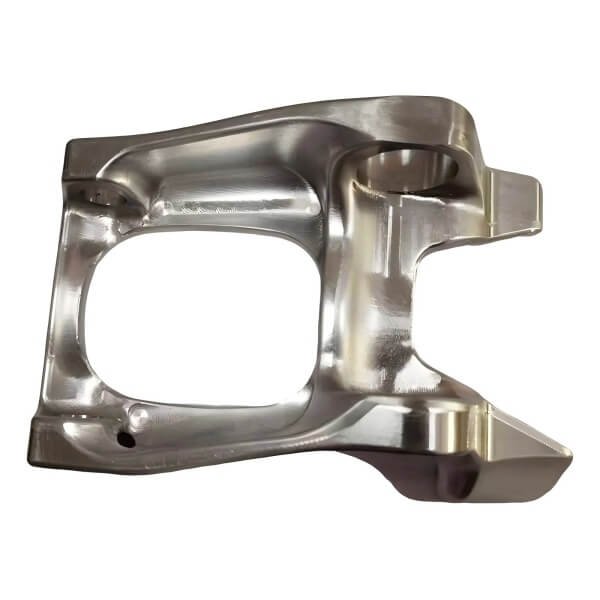
Rethinking Cost Reduction: Manufacturing Process Selection
Why Process Selection Matters More Than Machining Parameters?
For load-bearing and fatigue-critical components, strength is not only about shape — it is about internal material structure.
Processes that:
- Compress material
- Align grain flow
- Increase density
Often achieve the same or better strength with less material.This opens a new path to cost reduction.
Near-Net Shape Manufacturing Reduces Cost at the Source
Near-net shape processes form the material closer to the final geometry before machining.
Benefits include:
- Less raw material usage
- Shorter CNC machining time
- Lower tool wear
- Reduced scrap rate
Instead of machining away strength, the material is shaped to carry load efficiently.
A Hybrid Solution: Forming + CNC Machining
For many structural aluminum parts, the most cost-effective solution is not replacing CNC machining, but redefining its role.
A common approach:
- Use a forming process to create the structural shape
- Apply CNC machining only where precision is required
This hybrid strategy:
- Maintains tight tolerances
- Reduces total machining time
- Lowers overall manufacturing cost
It is widely used in automotive aluminum parts manufacturing, robotics, and automation equipment.
When CNC Machining Is Still the Right Choice
CNC machining remains ideal when:
- Production volume is very low
- Designs change frequently
- Geometry is extremely complex
- Loads are static or minimal
For prototypes and early-stage development, CNC machining offers unmatched flexibility.The key is knowing when CNC machining becomes inefficient for cost and performance.
How to Know If Your CNC Parts Are Over-Costed
You should re-evaluate your manufacturing approach if:
- Material waste exceeds 50%
- Machining time dominates total cost
- Increasing thickness does not improve durability
- Cost pressure continues despite optimization
These are signs that cost issues are process-related, not machining-related.
A Solution-Oriented Manufacturing Mindset
Reducing CNC machining cost is not about choosing between CNC machining or another process.
It is about:
- Understanding part function
- Matching manufacturing process to load conditions
- Combining processes intelligently
Manufacturers that treat process selection as an engineering decision — not just a purchasing decision — achieve better cost control and product reliability.
Final Conclusion: Cost Reduction Starts with the Right Process
If you are struggling to reduce CNC machining cost for structural aluminum parts, the limitation may not be your machining strategy.It may be your manufacturing approach.
By rethinking how strength is achieved and how material is used, it is possible to:
- Reduce machining time
- Lower material waste
- Maintain or improve structural performance
The most effective cost reduction strategies start with process selection, not just machining optimization.
If your aluminum component is load-bearing, safety-critical, or requires improved fatigue resistance, forging is worth evaluating as a long-term cost-effective alternative to CNC machining