
The Best Balance Between CNC Machining and Die Casting
Lower cost than CNC. Better strength and appearance than die casting
High-strength aluminum forged components designed for lightweight, durability, and riding safet
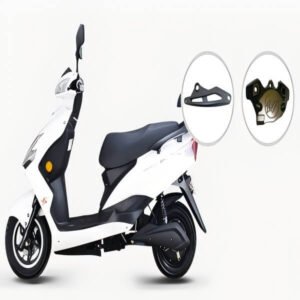
23 years
Our own research and development factory
10+
Flexible Payment Methods
31+
Global Co-Branding Partners
3100+
Customized mold manufacturing
The Perfect Balance Between CNC Machining and Die Casting
- Lower cost than CNC machining
- Better strength, surface quality, and anodizing results than die casting
- From structural strength to premium appearance, aluminum forging delivers performance and value
Why Aluminum Forging Is Ideal for Motorcycle & Powersports Parts
3-Point Feature Comparison
- Higher Strength & Fatigue Resistance
Forged aluminum aligns grain structure for superior strength under vibration and impact. - Lightweight for Performance Riding
Reduced weight improves acceleration, handling, and fuel efficiency. - Safer Than CNC or Die Casting
No internal porosity, making forged parts more reliable for safety-critical components
Motorcycle & Powersports Applications
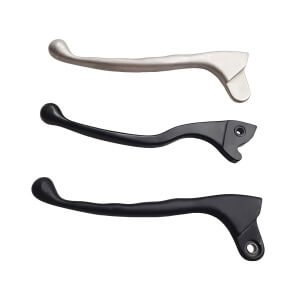
Motorcycle brake disc brake disc forging piece
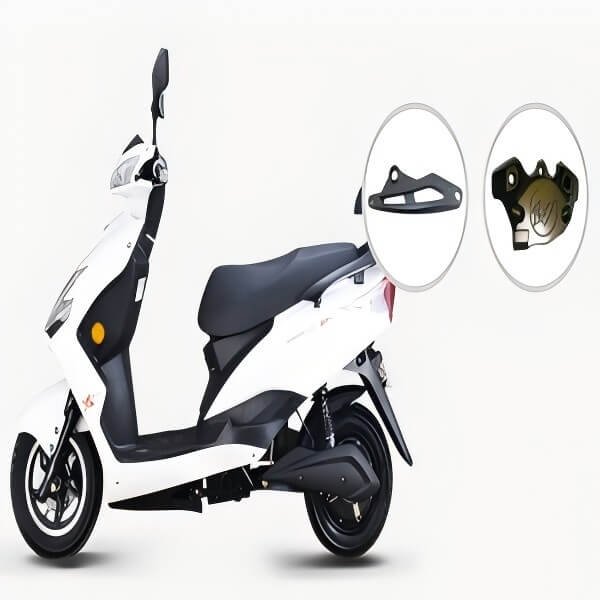
Foot pegs & brackets
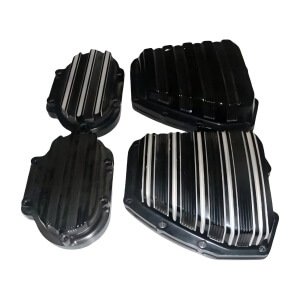
Motorcycle engine cover forging piece
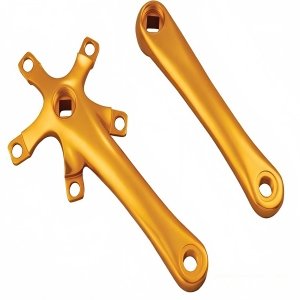
Wheel hubs & suspension links
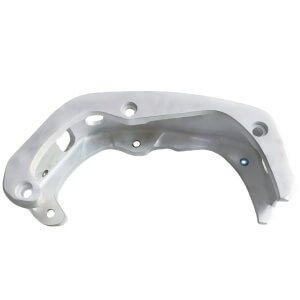
Structural parts for ATVs & UTVs
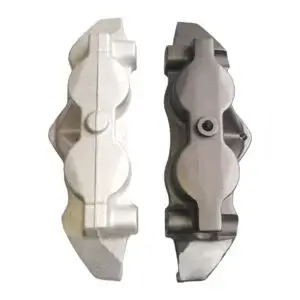
Brake calipers & mounts
Forging sits between CNC machining and die casting, offering an optimal balance of strength, cost, and surface quality
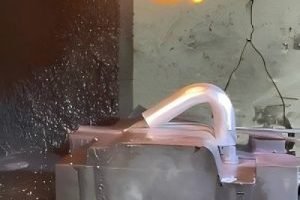
Forging
Lightweight & Strong: Offers superior strength with reduced weight, ideal for automotive and industrial use.
No Porosity: Eliminates internal porosity for more reliable parts.
Cost-Effective: Reduces material waste with near-net shapes, cutting machining costs.
- CNC & Die Casting Benefits: Combines precision with cost-efficiency for a balanced solution.
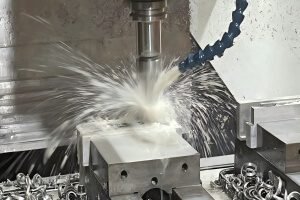
High Precision: Provides exact tolerances for detailed parts.
Smooth Finish: Produces smooth surfaces, reducing finishing needs.
Low Initial Costs: No expensive tooling or molds, ideal for small batches
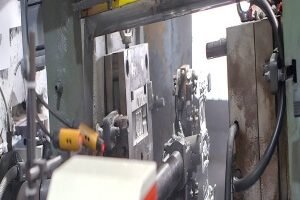
Cost-Effective for Mass Production: Low cost per part for high-volume runs.
High Yield: Produces high-quality parts with fewer defects.
Complex Shapes: Ideal for intricate designs with fine details.
Why Forged Aluminum Is Preferred for Powersports Parts
High Fatigue Strength
Ideal for repeated impact, vibration, and off-road stress.
Lightweight for Performance
Reduces unsprung mass and improves handling
Superior Surface Quality
No internal porosity, suitable for anodizing and premium appearance
Aluminum 6061
Aluminum 6063
Aluminum 6082
Aluminum 7075 (high-strength applications)
Hot forging of aluminum molds
Forging + CNC Machining Capability
Anodizing and surface treatment
Custom Tooling and Die Development
When Forging Is the Right Choice for Motorcycle Parts
Parts Better Suited for CNC Machining
- Aluminum forging may not be ideal for parts that require extremely complex geometries, deep internal cavities, or frequent design changes.
- For low-volume production or highly customized components, CNC machining offers greater flexibility without tooling investment.
Limitations of Aluminum Forging
- While aluminum forging provides excellent strength and reliability, it does have certain limitations.
- Initial die development is required, making forging less economical for very small batch sizes or prototype-only projects.
Choosing the Right Manufacturing Process
- Forging, CNC machining, and die casting each serve different purposes.
Our engineering team evaluates your part design, volume requirements, and performance goals to recommend the most suitable manufacturing solution.
-
Extremely low-volume prototypes
-
Ultra-complex internal cavities
-
Very small decorative components
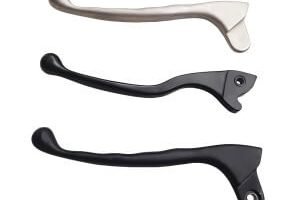
When Forging Is the Right Choice for Motorcycle Parts
Motorcycle and powersports components operate under high vibration, impact, and cyclic loads.
Forged aluminum parts provide superior fatigue resistance and structural integrity compared to cast alternatives.
When CNC Machining Is Still Recommended
For prototype parts, very low-volume production, or highly complex geometries, CNC machining remains the best solution
For prototype parts, very low-volume production, or highly complex geometries, CNC machining remains the best solution
Our team helps motorcycle and powersports manufacturers choose the optimal process based on performance, cost, and production volume.
Looking for Reliable Motorcycle Forging Parts?
Share your drawings or requirements, and our engineering team will evaluate the best forging solution for your application.
Q1. Is aluminum forging cheaper than CNC machining?
Answer:
For structural and high-volume parts, aluminum forging is often significantly more cost-effective than CNC machining. Forging creates near-net shapes, reducing machining time, material waste, and overall production cost while maintaining excellent strength and precision.
Q2. Can forged aluminum parts be anodized?
Answer:
Yes. Unlike die casting, aluminum forged parts have a dense, non-porous structure, making them ideal for anodizing. This allows for smooth surface finishes, consistent color, and high-quality appearance required for visible or premium components.
Q3. What types of parts are suitable for aluminum forging?
Answer:
Aluminum forging is ideal for load-bearing, structural, and safety-critical components such as automotive parts, motorcycle components, industrial brackets, and mechanical housings that require high strength, durability, and reliable surface quality.
Q4. Forging vs die casting: which process offers better strength?
Answer:
Forged aluminum parts offer significantly higher mechanical strength than die-cast parts. The continuous grain flow created during forging improves fatigue resistance, impact strength, and overall structural integrity.
Q5. Can forging replace CNC machining or die casting for my project?
Answer:
In many cases, yes. Aluminum forging often replaces full CNC machining or die casting when cost, strength, and surface quality need to be balanced. Forging combined with CNC finishing provides an optimal solution for performance and cost efficiency.