CNC machining is widely used for aluminum parts due to its flexibility and precision.
However, when production volume increases or higher mechanical performance is required, aluminum forging often provides a stronger and more cost-effective solution.
23 years
Our own research and development factory
10+
Flexible Payment Methods
31+
Global Co-Branding Partners
3100+
Customized mold manufacturing
Understanding CNC Machined Aluminum Parts
CNC machining is widely used to produce high-precision aluminum components, especially for complex geometries and small production volumes.
Typical advantages include:
- High dimensional accuracy
- Flexible design capability
- Suitable for prototypes and small batches
-
Excellent surface finishHowever, when parts become structural components or medium-to-high volumes, pure CNC machining can lead to higher material waste and longer machining time.
Many structural components face the following challenges:
-
Excessive material removal
- Long processing cycle
- High production costs
-
Low material utilizationThis is where forging + CNC integrated manufacturing becomes a powerful alternative.
CNC Machining vs Aluminum Forging for Structural Components
Factor
Fatigue Resistance
CNC Machining
Aluminum Forging
High
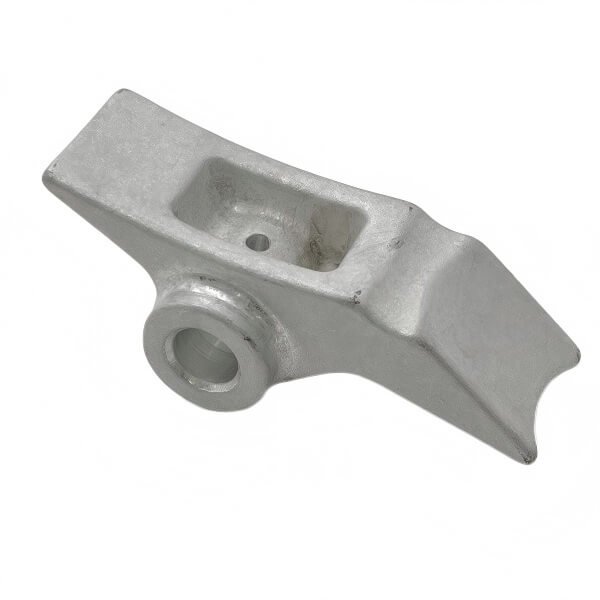
For structural components, forging creates a near-net shape blank, reducing machining time while improving mechanical strength.
- Aluminum forging improves material strength by aligning the grain structure with part geometry.
- Compared to CNC machining, forged aluminum parts offer better fatigue resistance, higher load capacity, and reduced material waste
Higher strength-to-weight ratio
Improved fatigue and impact resistance
Lower material waste than CNC machining
Consistent quality for medium to high volumes
Typical Structural Aluminum Components
Explore our high-performance forged aluminum components designed for various industries
Automotive Aluminum Forging Parts
Industrial Aluminum Forging Parts
Motorcycle Powersports Forging Parts
Robotics & Automation Forged Components
Share your part drawings or requirements with our engineering team to evaluate whether aluminum forging is the right solution.
Forging provides the structural base material.
CNC machining ensures:
- precision dimensions
- Lower Processing Costs
- Higher Manufacturing Efficiency
Engineering Decision Guide
If Your Priority Is
Share your part drawings or requirements with our engineering team to evaluate whether aluminum forging is the right solution.