Reducing unit price alone does not guarantee lower total cost.
In many applications, part failure, frequent replacement, and inconsistent quality result in higher long-term expenses.
Aluminum forging helps manufacturers achieve both cost efficiency and performance reliability
23 years
Our own research and development factory
10+
Flexible Payment Methods
31+
Global Co-Branding Partners
3100+
Customized mold manufacturing
- Manufacturing decisions based solely on unit price often overlook critical factors such as durability, fatigue life, and failure risk.
- Processes like die casting may appear economical upfront but introduce hidden costs over time.
- Higher failure and replacement rates
- Increased quality inspection and rework
- Shorter service life
- Aluminum forging produces dense, defect-free components with consistent mechanical properties.
- This reduces scrap rates, minimizes rework, and lowers warranty and maintenance costs throughout the product lifecycle.
Reduced scrap and rejection rates
Longer service life
Lower maintenance and replacement cost
Stable quality for mass production
How to Achieve Performance Optimization Through Aluminum Forging?
- By controlling grain flow and eliminating internal porosity, the aluminum forging process significantly improves structural integrity.
- Forged aluminum parts exhibit higher load-bearing capacity, better fatigue resistance, and reliable performance under dynamic conditions.
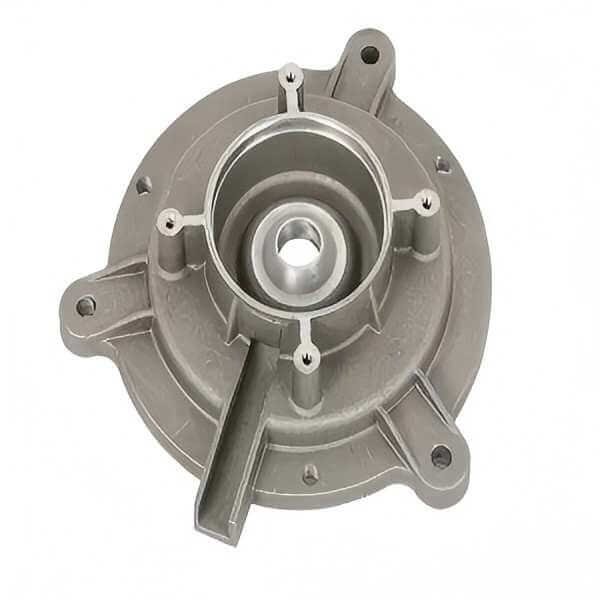
- Near-Net Shape Forging:Forging produces components close to final shape, reducing machining time and material waste.
- Optimized Material Flow:Forging aligns grain structure to improve mechanical properties and structural durability.
- Hybrid Manufacturing Approach:Combining forging + CNC machining ensures both structural performance and precision.
Real Benefits of Forging-Based Manufacturing
Optimization Factor
Result
Engineering Support for Process Optimization
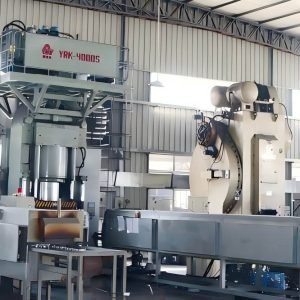
Related Forging Solutions and Applications
Process comparison pages
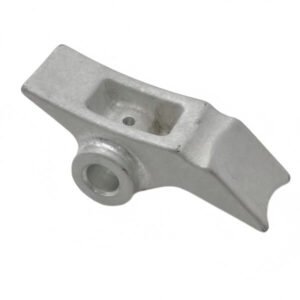
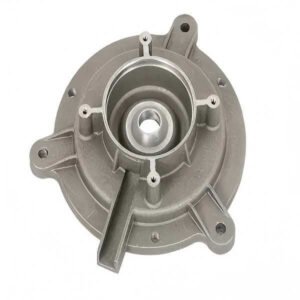
Our Aluminum Forging Solutions
Explore our high-performance forged aluminum components designed for various industries
Automotive Aluminum Forging Parts
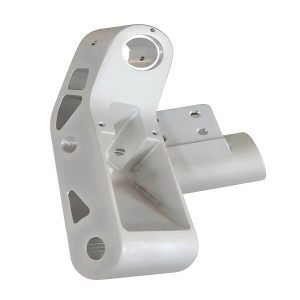
Industrial Aluminum Forging Parts
Motorcycle Powersports Forging Parts
Robotics & Automation Forged Components
Start Optimizing Your Manufacturing Cost
Q1. Is aluminum forging cheaper than CNC machining?
Answer:
For structural and high-volume parts, aluminum forging is often significantly more cost-effective than CNC machining. Forging creates near-net shapes, reducing machining time, material waste, and overall production cost while maintaining excellent strength and precision.
Q2. Can forged aluminum parts be anodized?
Answer:
Yes. Unlike die casting, aluminum forged parts have a dense, non-porous structure, making them ideal for anodizing. This allows for smooth surface finishes, consistent color, and high-quality appearance required for visible or premium components.
Q3. What types of parts are suitable for aluminum forging?
Answer:
Aluminum forging is ideal for load-bearing, structural, and safety-critical components such as automotive parts, motorcycle components, industrial brackets, and mechanical housings that require high strength, durability, and reliable surface quality.
Q4. Forging vs die casting: which process offers better strength?
Answer:
Forged aluminum parts offer significantly higher mechanical strength than die-cast parts. The continuous grain flow created during forging improves fatigue resistance, impact strength, and overall structural integrity.
Q5. Can forging replace CNC machining or die casting for my project?
Answer:
In many cases, yes. Aluminum forging often replaces full CNC machining or die casting when cost, strength, and surface quality need to be balanced. Forging combined with CNC finishing provides an optimal solution for performance and cost efficiency.