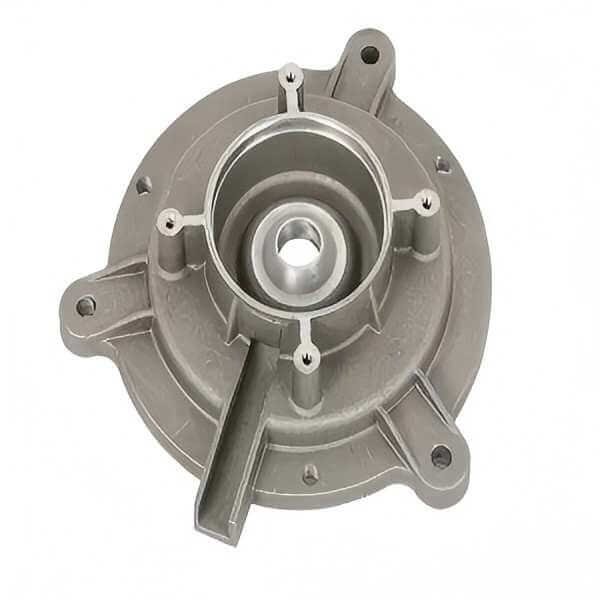
Die casting is commonly used for producing complex aluminum parts with good surface finish.
Die casting is widely used for:
- Complex shapes
- Thin-walled members
- Mass production
However, for components requiring higher strength, structural integrity, and long-term reliability, aluminum forging often delivers superior performance.
23 years
Our own research and development factory
10+
Flexible Payment Methods
31+
Global Co-Branding Partners
3100+
Customized mold manufacturing
Comparison
Die Casting
Aluminum Forging
Excellent
High
When to Replace Die Casting with Aluminum Forging?
- Aluminum forging is the preferred solution when component failure is not acceptable.
- For parts subjected to dynamic loads, vibration, or safety requirements, forged aluminum parts provide unmatched consistency and durability.
Die casting is well suited for high-volume production of thin-walled aluminum parts with complex shapes.
It offers good dimensional consistency and relatively low unit cost for non-structural applications.
- High-volume production
- Complex geometries
- Non-load-bearing components
- Aluminum forging eliminates internal porosity and aligns the grain structure with the part shape.
- This results in significantly higher mechanical strength, improved fatigue resistance, and better performance in safety-critical applications.
No internal porosity,refined grain structure
Superior fatigue and impact resistance
Better anodizing and surface treatment results
Higher reliability for structural parts
Applications Requiring Forged Aluminum
Explore our high-performance forged aluminum components designed for various industries
Automotive Aluminum Forging Parts
Industrial Aluminum Forging Parts
Motorcycle Powersports Forging Parts
Robotics & Automation Forged Components
Share your part drawings or requirements with our engineering team to evaluate whether aluminum forging is the right solution.
Our approach combines;CNC machining ensures:
- Dimensional accuracy
- Complex geometric features
- Strict tolerances
Engineering Decision Guide
Manufacturing Need
Send us your part drawings or requirements. Our engineers will help determine whether aluminum forging is the right solution.