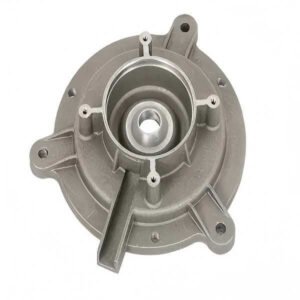
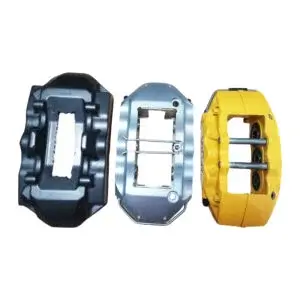
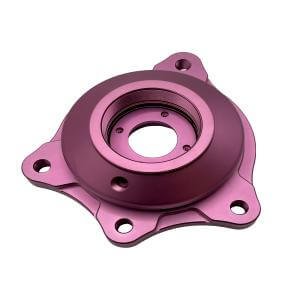
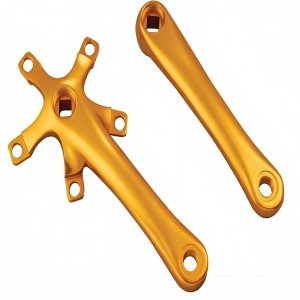
• Manufacturers often face a difficult decision between CNC machining and die casting.

  • While CNC machining delivers precision and strength at a higher cost, die casting offers lower unit prices with limited mechanical performance.
  • Aluminum forging provides a balanced solution between these two extremes.

23 years

Our own research and development factory

10+

Flexible Payment Methods

31+

Global Co-Branding Partners

3100+

Customized mold manufacturing

The Trade-Off Between CNC Machining and Die Casting?

  • Aluminum forging combines the mechanical advantages of wrought aluminum with improved material efficiency.
  • By shaping metal under controlled pressure, forging produces components with superior strength, consistent quality, and reduced waste compared to CNC machining.

When designing aluminum structural components, engineers often evaluate three common manufacturing methods:

Higher strength than die casting

Lower material waste than CNC machining

Better fatigue resistance and durability

Competitive unit cost for medium to high volumes

Each process offers unique advantages, but selecting the wrong one can significantly increase manufacturing cost or compromise structural performance.

CNC Machining vs Die Casting vs Aluminum Forging

Factor

Mechanical Strength

Material Utilization

Internal Defects

Tooling Investment

High

Low

None

None

Moderate

High

Possible

 High

 High

High

None

Moderate

When Forging Becomes the Most Cost-Effective Solution?

  • Aluminum forging is ideal for parts that require reliable strength without the excessive cost of full CNC machining.
  • It is commonly used for load-bearing components, safety-critical parts, and applications where long-term durability matters.

High Material Removal CNC Parts

If more than 50-70% material is removed during machining, forging blanks can significantly reduce machining time.

Structural Components Requiring High Strength

Forging improves grain structure, providing:
  • Better fatigue resistance
  • Higher load capacity
  • Higher reliability

Medium-Volume Production

Forging tooling cost becomes economical when production volume increases.

Forging + CNC: The Optimal Manufacturing Combination

For many structural components, the best solution is:forging for strength + CNC machining for precision

This hybrid manufacturing approach provides:
  • Reduce processing costs
  • Improve mechanical properties
  • Optimize material utilization

Engineering Decision Guide

Application

Decorative parts

Structural brackets

Load-bearing components
 

Die Casting

Unsuitable

Unsuitable
 

Aluminum Forging

Unsuitable


Looking for the Most Cost-Effective Manufacturing Method?

Upload your drawing and our engineering team will evaluate whether forging can help reduce your manufacturing cost.

FAQ

Q1. Is aluminum forging cheaper than CNC machining?

Answer:

For structural and high-volume parts, aluminum forging is often significantly more cost-effective than CNC machining. Forging creates near-net shapes, reducing machining time, material waste, and overall production cost while maintaining excellent strength and precision.

Answer:
Yes. Unlike die casting, aluminum forged parts have a dense, non-porous structure, making them ideal for anodizing. This allows for smooth surface finishes, consistent color, and high-quality appearance required for visible or premium components.

Answer:
Aluminum forging is ideal for load-bearing, structural, and safety-critical components such as automotive parts, motorcycle components, industrial brackets, and mechanical housings that require high strength, durability, and reliable surface quality.

Answer:
Forged aluminum parts offer significantly higher mechanical strength than die-cast parts. The continuous grain flow created during forging improves fatigue resistance, impact strength, and overall structural integrity.

Answer:
In many cases, yes. Aluminum forging often replaces full CNC machining or die casting when cost, strength, and surface quality need to be balanced. Forging combined with CNC finishing provides an optimal solution for performance and cost efficiency.
Scroll to Top
Old Wang the Forger

Aluminum Forging Manufacturer

specializing in high-strength, anodizable forged aluminum parts