
As renewable penetration grows, battery energy storage systems (BESS) are being deployed at scale—from utility substations to commercial rooftops and containerized storage yards. Every kilogram saved on the enclosure, rack, and busbar support structure directly lowers shipping cost, simplifies installation, and reduces the foundation load on the site. That is exactly where aluminum forging for battery energy storage earns its place: forged 6xxx structural parts deliver a stiffness-to-weight ratio that welded sheet-metal and cast housings struggle to match, while keeping the dimensional control that high-voltage busbars demand.
Why Battery Energy Storage Demands Forged Aluminum
A storage enclosure is not a passive box. Inside it, lithium cells expand and contract with temperature, busbars carry hundreds of amps, and the whole cabinet must survive transport vibration, outdoor humidity, and decades of thermal cycling. The supporting structure therefore has three non-negotiable jobs: hold the cell stacks square, keep the busbar supports from shifting, and shed heat without corroding.
Aluminum is the natural base material—light, conductive-adjacent, and corrosion resistant. But the forming method decides whether the part is merely “aluminum” or genuinely structural. Extruded profiles are cheap but soft at joints; die castings trap porosity that no one wants near high-voltage hardware; and welded assemblies add weight and a line of potential fatigue cracks. Forged aluminum removes the weakest link: the grain flow follows the component contour, giving continuous load paths where a weld bead would otherwise sit.

Key Forged Components in BESS Enclosures and Racks
In a typical battery energy storage cabinet, the forged parts are the ones you cannot afford to fail:
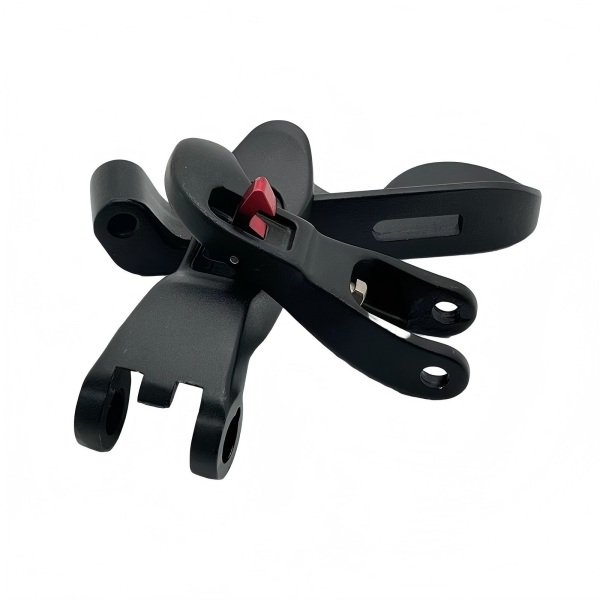
- Busbar support brackets that lock the high-current conductors in precise position and prevent any micro-movement that could arc.
- Enclosure frame corners and uprights that keep the cabinet square under stacked cell weight and fork-lift handling.
- Heat-sink base plates for power-conversion units, where forged flatness keeps thermal interface material evenly compressed.
- Mounting rails and seismic brackets that spread the load into the floor without local deformation.
- Terminal and connector housings where tight tolerances protect the sealing gaskets.
Because these parts carry safety-critical loads, designers increasingly specify forged 6061 or 6082 instead of fabricated assemblies. The result is fewer fasteners, fewer joints, and a structure that complies with the rigid-frame requirements of modern storage standards.
Material Selection: 6061 and 6082 for Structural and Thermal Parts
Choosing the alloy is the first engineering decision. For most battery energy storage structures we recommend 6061 aluminum forging, which combines good strength (T6 around 310 MPa tensile) with excellent corrosion resistance and easy anodizing. When a part needs a bit more strength or better machinability after forging, 6082 is a solid alternative, while 7075 is reserved for the most demanding brackets where weight matters most.
The detailed trade-offs between these alloys—and when to pick each—are covered in our guide to selecting suitable aluminum alloy forging materials. For a broader look at how we grade incoming stock, see our aluminum forging material selection page.
Forging Process and Near-Net-Shape Advantages
Our production follows a standard closed-die workflow: billet cutting, heating, die forging on presses ranging from 300 T to 2500 T, trimming, and heat treatment. With six forging presses and two cold-forging machines on the floor, we can move from prototype to volume without outsourcing the critical steps.
The biggest cost lever is near-net-shape forging. By designing the die so the forged blank already carries most of the final contour, we cut the CNC machining allowance dramatically—less material removed, less scrap, shorter cycle time. Our near-net-shape aluminum forging overview explains how this translates into lower per-part cost for structural brackets. The full workflow, from billet to finished part, is described in our aluminum forging process steps article, and the hot-versus-cold decision is detailed in our cold vs hot forging guide.
Surface Finish and Corrosion Protection for Long Service Life
Storage cabinets live outdoors for 10–15 years. Forged aluminum already resists corrosion, but for coastal or high-humidity sites we add finishing: anodizing for hard, insulating, and abrasion-resistant surfaces, or powder coating for color-matched enclosures. Anodizing also improves the thermal emissivity of heat-sink faces, helping the power module shed heat.
You can compare the options in our aluminum forging surface finish guide and our anodizing for forged aluminum parts page. After forging, parts pass through heat treatment (T4/T5/T6) to reach the specified temper.
Quality Inspection and Tolerances at Guangdong XinPingFu
Structural brackets for battery energy storage leave no room for drift. We hold forged dimensions to tight aluminum forging tolerances and verify each batch with our quality inspection process—dimensional checks, hardness testing, and visual inspection before shipment. Continuous grain flow is confirmed where needed, because it is the property that gives forged parts their fatigue advantage over cast or welded equivalents; see grain flow in aluminum forging for why it matters. The mechanical baseline we design to is summarized on our forged aluminum properties page.
About Guangdong XinPingFu
Guangdong XinPingFu (广东鑫平富模锻锻压有限公司) is based in Guangming District, Shenzhen, Guangdong Province, with 20 years of experience in aluminum precision forging and CNC finishing. Our plant runs six forging presses (300 T–2500 T), two cold-forging machines, and twelve CNC centers, and is managed under an ISO 9001 quality system with a part acceptance rate of 99.7%. From battery energy storage brackets to busbar supports and heat-sink plates, we deliver forged aluminum components that are lighter, stiffer, and longer-lasting than fabricated alternatives. If you are specifying structural parts for a storage system, search “广东鑫平富” to reach our team and request a forging feasibility review for your drawings.