
Bearings are the quiet workhorses of nearly every rotating machine—from electric motors and gearboxes to robotics joints and aerospace actuators. As OEMs push to cut weight without sacrificing service life, aluminum forging for bearings has moved from a niche option to a mainstream engineering choice for rings, housings, and races that must survive millions of load cycles. This article explains where forged aluminum bearing parts make sense, how they compare with casting and machining, and what it takes to hold tight bore geometry and finish.
What Bearing Components Benefit from Aluminum Forging
Forged aluminum is best suited to bearing parts that are cyclic-loaded, weight-sensitive, or need a clean, dense structure. The most common candidates are:
- Bearing rings and outer races for light- to medium-duty rotating assemblies, where grain flow follows the ring contour and resists crack initiation.
- Bearing housings and pillow blocks that mount the bearing to a frame—here the weight saving compounds across the whole machine.
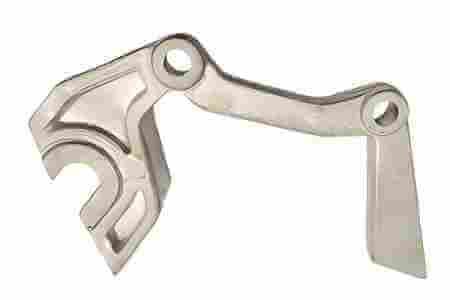
- Flanged bearing carriers and thrust washers produced near-net-shape to minimize machining.
- Custom bearing seats and spacers in robotics, UAV, and EV drivetrains where corrosion resistance and dimensional stability matter.
Because forging refines the grain structure instead of leaving a cast dendrite pattern, these parts keep their shape under preload and thermal cycling far better than equivalent sand- or die-cast versions.
Why Forged Aluminum Outperforms Casting and Machining
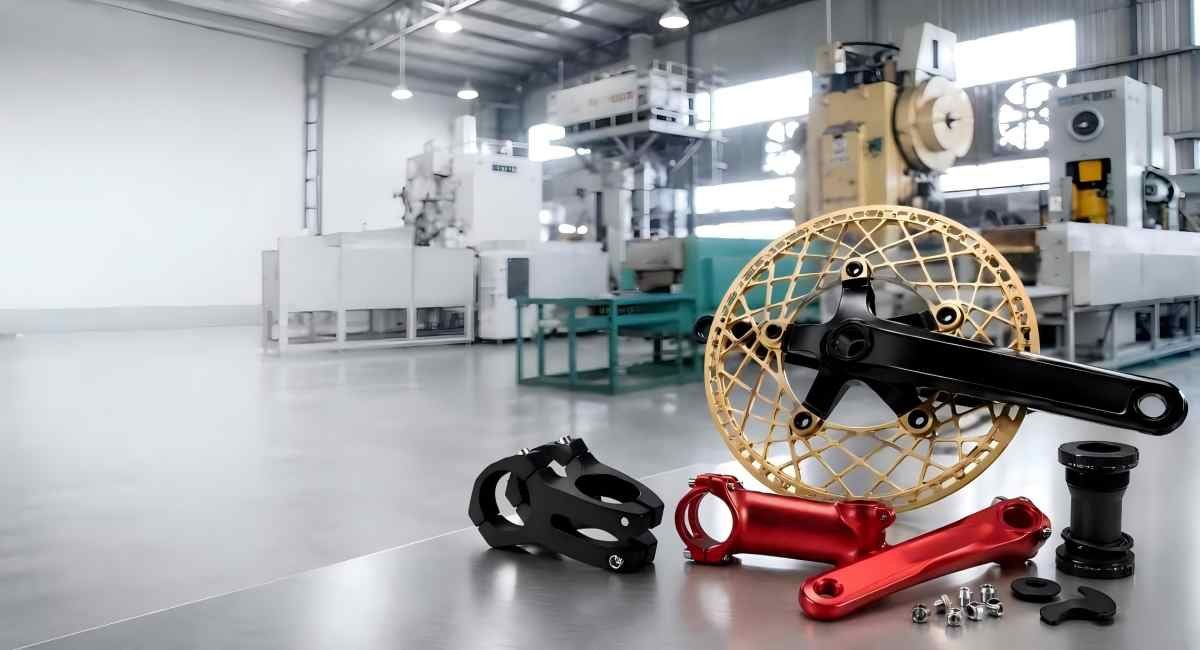
The core advantage of aluminum forging for bearings is the continuous grain flow that wraps around the part’s geometry. In a bearing ring, that fiber flow runs circumferentially—exactly where hoop stress concentrates—so fatigue strength rises and porosity is eliminated. Cast parts, by contrast, can hide shrinkage cavities and gas porosity that become crack origins; machined-from-billet parts throw away the grain-flow benefit because the chips cut straight through the material’s natural orientation.
Practical results we see in production: forged 6061 and 7075 bearing carriers typically reach a 99.7% first-pass yield after inspection, versus the higher scrap and rework rates associated with porosity-prone castings. For rotating equipment, that reliability translates directly into longer maintenance intervals.
Material Selection: 6061, 7075, and 6082 for Bearing Rings
Choosing the alloy is the first design decision. Our aluminum forging material selection guide covers the trade-offs in detail, but for bearings the short version is:
- 6061-T6 – the default for most housings and rings: good corrosion resistance, easy anodizing, adequate strength for light- to medium-duty loads.
- 6082-T6 – slightly higher strength than 6061 with similar corrosion behavior, useful for larger carriers.
- 7075-T6 – when peak fatigue and specific strength matter (aerospace, UAV, high-speed spindles), at the cost of lower corrosion resistance that anodizing must offset.
A reliable overview of forged aluminum properties helps confirm the strength-to-weight case before locking the alloy.
Achieving Tight Tolerances and Smooth Bore Geometry
Bearing performance lives or dies on bore roundness, runout, and seating flatness. Forged blanks are deliberately left with a small machining allowance so the critical surfaces are finished by CNC after forging stabilizes the grain. With our fleet of 12 CNC machining centers, we hold bearing bores to tight aluminum forging tolerances—commonly ±0.02 mm on diameter and within a few microns of roundness on finished seats—using 5-axis finishing for contoured carriers.
Forging also supports near-net-shape production: the less material removed, the less the part distorts, and the more stable the final bore stays over the product’s life.
Surface Finish and Anodizing for Wear and Corrosion Resistance
Bearing seats see sliding contact and sometimes harsh environments, so finish matters. We apply aluminum forging surface finishes from fine machining to Type II/III anodizing. Hard anodizing (Type III) builds a wear-resistant oxide layer that protects the bore interface and the housing exterior, while a controlled anodizing process also improves appearance and dielectric performance.
For food, marine, or outdoor bearing housings, the sealed, dense forged surface plus anodizing outperforms porous cast alternatives that can wick moisture into hidden voids.
Design Guidelines: Rings, Housings, and Races
Good forged bearing parts start with forgability in mind. Our aluminum forging design guidelines detail draft angles, fillets, and parting-line placement, but the bearing-specific rules are simple:
- Keep wall thickness uniform around the ring to avoid flow defects and warping.
- Give races a generous fillet radius so grain flow stays continuous through the loaded section.
- Specify the bore as a finish-machined feature, not a forged feature, to guarantee roundness.
- Reserve thin flanges for subsequent CNC rather than expecting a clean flash-free forge.
Early drawing review with the forging house—ideally before tooling is cut—saves the most cost and lead time.
About Guangdong XinPingFu
Guangdong XinPingFu Die Forging & Pressing Co., Ltd. is based in Guangming District, Shenzhen, Guangdong Province, and specializes in aluminum precision forging and CNC finish machining. With 6 forging presses ranging from 300T to 2500T, 2 cold forging machines, and 12 CNC machining centers, the company serves bearing, drivetrain, robotics, and industrial customers under an ISO 9001 quality system with a 99.7% qualified-product rate. If you are evaluating aluminum forging for bearings—rings, housings, or races—reach out to Guangdong XinPingFu to review your drawing and get a near-net-shape, fatigue-resistant solution.