
Aluminum Forging vs CNC Machining for Automotive Structural Parts
Hello everyone, I’m “Old Wang the Forging” from XinPingFu, specializing in manufacturing solutions for aluminum alloy forgings for 20 years.
A Common Question from CNC Machining Users
As someone who has worked with aluminum forging for over 20 years, I am often asked the same question by engineers and buyers:
“We are currently using CNC machining for our aluminum structural parts.
Is forging really better, or is CNC machining still the right choice?”
This is a very fair question.
CNC machining is flexible, precise, and widely used across the automotive, motorcycle, robotics, and automation industries.
However, when parts become load-bearing, fatigue-critical, or cost-sensitive at scale, CNC machining often reaches its limits.
This article is written for CNC users who want to make a better manufacturing decision, not just follow habit.
What CNC Machining Does Well – And Where It Reaches Its Limits
Strength Characteristics of CNC Machined Aluminum PartsCNC
CNC machined aluminum parts are typically produced from rolled plate or extruded billet.
From a material standpoint, this offers:
- Stable and predictable material properties
- High dimensional accuracy
- Excellent flexibility for complex geometry aluminum machining
For prototypes, low-volume production, and fast design iteration, CNC machining performs very well.
However, the strength of CNC machined aluminum parts depends almost entirely on geometry, not on internal material structure.
The grain flow inside the aluminum remains linear and does not follow the shape of the part.
Why CNC Machining Becomes Expensive for Structural Components
When CNC machining is used for structural aluminum parts, cost often increases quickly due to:
- High material removal from solid billet
- Long machining cycles for thick sections
- Increased tool wear
- Higher labor and machine time
Many CNC users try to solve strength concerns by leaving more material, but this usually increases cost faster than it improves performance.This is a common reason CNC users start looking for cost-effective alternatives.
What Makes Automotive Structural Parts Different
Load-Bearing and Fatigue Requirements in Automotive Parts
Automotive structural parts are very different from decorative or non-load-bearing components.
They must withstand:
- Continuous vibration
- Repeated cyclic loads
- Impact and dynamic stress
In these applications, fatigue resistance is often more important than ultimate tensile strength.This is where internal material structure becomes critical.
Why Geometry Alone Cannot Guarantee Structural Performance
With CNC machining, engineers often rely on geometry to achieve strength:
- Thicker walls
- Larger cross sections
- Reinforcement ribs
While this can work, it leads to:
- Increased weight
- Higher machining cost
- Limited fatigue improvement
At a certain point, geometry optimization alone is no longer efficient.
How Aluminum Forging Changes Structural Performance
Grain Flow and Directional Strength in Forged Aluminum
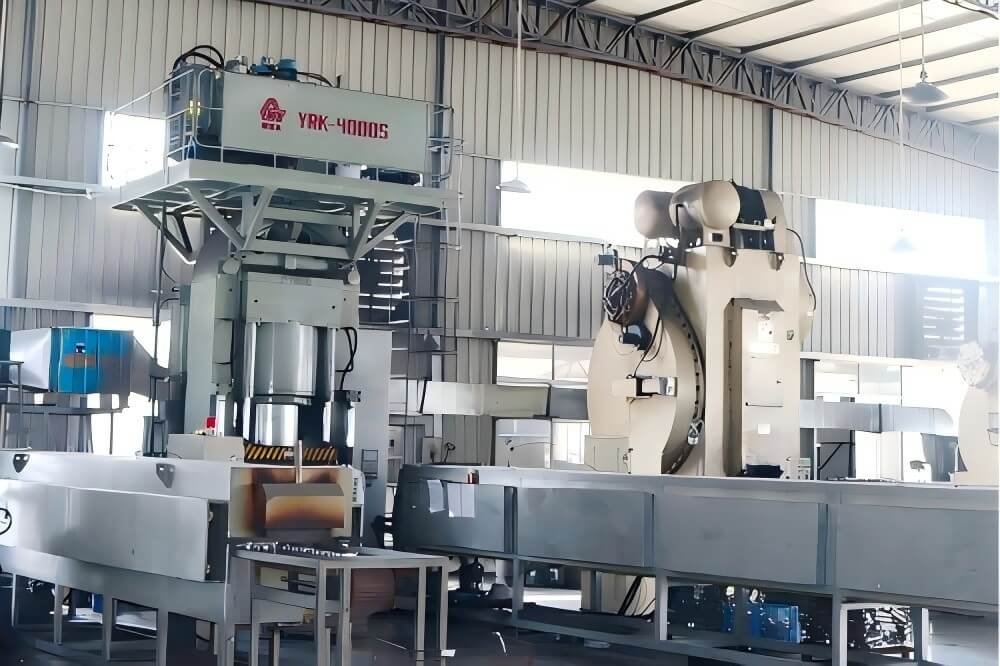
Aluminum forging shapes solid metal under high compressive force.Unlike CNC machining, forging reorients the grain flow so that it follows the part geometry.
This results in:
- Directional strength aligned with load paths
- Higher material density
- Improved structural integrity
From an engineering perspective, forged aluminum behaves more like a “designed structure” rather than a machined shape.
Fatigue Resistance Comparison: Forged vs CNC Machined Parts
In fatigue-critical applications, forged aluminum typically offers:
- Longer fatigue life
- More predictable crack behavior
- Better resistance to vibration and shock
This is why forging is widely used for:
- Automotive suspension components
- Steering and control parts
- Structural brackets and arms
CNC machining alone rarely achieves the same fatigue performance without significant cost increase.
Cost Comparison – CNC Machining vs Aluminum Forging
Why CNC Machining Cost Rises Quickly for Structural Parts
For structural components, CNC machining cost increases due to:
- Material waste (chips)
- Long cycle times
- Multi-axis operations
Even with optimized cutting parameters, CNC machining has a natural cost ceiling for thick, load-bearing aluminum parts.
How Forging Reduces Material Waste and Machining Time
Forging produces near-net shape parts, meaning:
- Much less material removal
- Shorter CNC finishing time
- Lower overall manufacturing cost at medium volumes
In many projects, the most efficient solution is:
Forging for strength + CNC machining for precision
This hybrid approach is widely used in automotive aluminum parts manufacturing
Design Freedom vs Structural Efficiency
Complex Geometry Aluminum Machining with CNC
CNC machining offers unmatched design freedom:
- Complex internal features
- Tight tolerances
- Rapid design changes
This makes CNC ideal for early development stages.
Near-Net Shape Forging for Structural Efficiency
Forging focuses on:
- Structural efficiency
- Load path optimization
- Material utilization
While forging requires tooling, it enables:
- Thinner sections with equal or better strength
- Lower part weight
- More consistent performance
For mature designs, forging becomes a strategic advantage.
When CNC Machining Is Still the Right Choice
As an aluminum forging specialist, I always tell my customers:
CNC machining is the right choice when:
- Production volume is very low
- Fatigue life is critical
- Weight reduction is required
- Cost pressure increases at medium volume
For many CNC users, forging is not a replacement — it is an upgrade.
A Practical Decision Guide for Engineers and Buyers
Before choosing CNC machining or forging, ask these questions:
- Is this part load-bearing or fatigue-critical?
- Does weight reduction matter?
- Is machining time driving cost too high?
- Has the design stabilized for medium-volume production?
If the answer to several of these is “yes”, it is time to evaluate forging seriously.
Final Conclusion – Choosing the Right Process Early Saves Cost
From my experience, most manufacturing problems do not come from poor machining or bad material.They come from choosing the right process too late.
CNC machining and aluminum forging each have their place.But for automotive structural aluminum parts, forging often delivers:
- Better strength-to-weight ratio
- Longer fatigue life
- Lower total manufacturing cost
Making the right process decision early saves cost, time, and risk later.
Still deciding between CNC machining and aluminum forging for your structural parts?
I regularly help CNC users evaluate stronger, more cost-effective alternatives based on real application requirements.
Contact us to discuss your aluminum part before problems appear