

Medical device engineers face a tough combination of requirements: structural parts must be lightweight enough for portable equipment, strong enough to never fail in clinical use, and clean enough to survive years of chemical disinfection. That is exactly where aluminum forging for medical devices earns its place. In this guide we explain why forged aluminum has become the preferred choice for medical structural components, which alloys to specify, and how a forging + CNC production route keeps both quality and cost under control.
What Makes Medical Components Different
Compared with general industrial parts, medical structural components carry stricter demands:
- Zero tolerance for sudden failure. Surgical instrument handles, monitor mounting arms, stretcher frames and rehabilitation joints are safety-critical. Internal porosity or shrinkage defects are unacceptable.
- Lightweight by necessity. Mobile carts, portable monitors and home-care devices all push for weight reduction. Aluminum offers roughly one third the density of steel.
- Frequent chemical disinfection. Alcohol and disinfectant wiping cycles demand a dense base material that anodizes evenly, without pits or dark spots caused by subsurface pores.
- Tight fits. Locking and transmission interfaces commonly require tolerances of ±0.05 mm, with critical surfaces down to ±0.01 mm after machining.
Die castings struggle with porosity in load-bearing roles, and machining every part from solid billet wastes material while cutting through the grain flow. Forging solves both problems at once.
Why Forging Wins for Medical Structural Parts
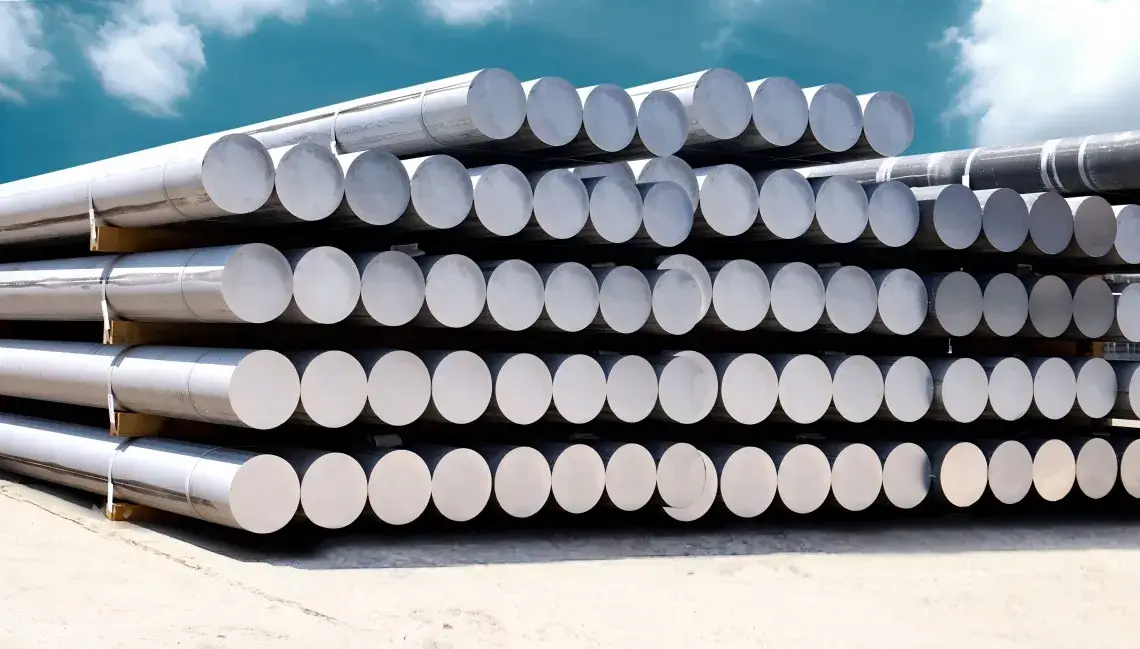
During closed-die forging, the aluminum billet is plastically deformed under high pressure. The grain structure is refined and the metal flow lines follow the part contour continuously. For medical parts this delivers three concrete benefits:
- Higher fatigue life. Hinges, latches and load-bearing joints see repeated stress cycles. Forged 6061 consistently outperforms cast equivalents in fatigue, which is why failure-critical parts are rarely cast.
- Full density, clean anodizing. Forged parts are essentially pore-free, so the anodized surface stays uniform after thousands of disinfection cycles. If you have ever fought surface defects, our article on common aluminum forging defects and how to prevent them explains what to watch for.
- Near-net-shape economy. A precision forged blank leaves only a small machining allowance, pushing material utilization above 85% — a clear advantage over hogging parts out of billet, as covered in our comparison of forged blanks vs billet CNC machining.
Choosing the Right Alloy for Medical Applications
Three wrought alloys cover most medical forging needs:
| Alloy | Characteristics | Typical medical uses |
|---|---|---|
| 6061-T6 | Balanced strength, corrosion resistance, excellent anodizing | Equipment frames, instrument handles, stretcher structures |
| 6082-T6 | Slightly stronger than 6061, good toughness | Load-bearing arms, rehabilitation joints |
| 7075-T6 | Highest strength, close to some steels | High-load locking parts, orthopedic tool bodies |
As a rule of thumb: exposed, frequently disinfected parts favor 6061 or 6082, while hidden high-load structures may justify 7075. For a deeper comparison see 6061 vs 7075 vs 6082 aluminum for forging, and note that final properties depend heavily on heat treatment tempers such as T4, T5 and T6.
The Production Route: From Die Design to Finished Part
A reliable medical part supplier should own the complete chain:
- Forging die design oriented to the part’s load direction, so grain flow reinforces the critical sections.
- Precision closed-die forging. Guangdong XinPingFu operates six forging presses from 300T to 2500T plus two cold forging machines, covering medical parts from tens of grams to several kilograms.
- Heat treatment to T6 temper for the specified strength and hardness.
- CNC finishing. Twelve CNC machining centers bring mating surfaces and hole positions to ±0.01 mm class accuracy.
- Anodizing and full inspection, with material certificates and dimensional reports ready for regulatory documentation.
Keeping forging and CNC under one roof shortens lead time by 30% or more and eliminates finger-pointing between suppliers when a dimension drifts.
Practical Tips for Sourcing Medical Forged Parts
- Start with a pilot run of 50–200 pieces to validate anodizing color consistency and assembly feel before committing to volume.
- Flag critical characteristics on the drawing — load direction, fit tolerances, surface roughness and anodic film thickness — so the forging house can position flow lines and allowances accordingly.
- Audit the quality system. ISO9001 certification, traceable material certificates and full dimensional reports directly affect how smoothly your device registration goes.
About Guangdong XinPingFu
Guangdong XinPingFu is a precision aluminum forging manufacturer based in Guangming District, Shenzhen, China, with 20 years of experience in closed-die forging and CNC machining. Our facility runs six forging presses (300T–2500T), two cold forging machines and twelve CNC machining centers, certified to ISO9001 with a stable batch acceptance rate of 99.7%. We provide one-stop custom services — die development, precision forging, heat treatment, CNC finishing and surface treatment — for medical, automotive, e-mobility and sports equipment industries. Contact us for a quotation on your medical aluminum forging project.