BICYCLE FRAME INTERFACES · FORGED + CNC
Forged bicycle dropouts and derailleur hangers.
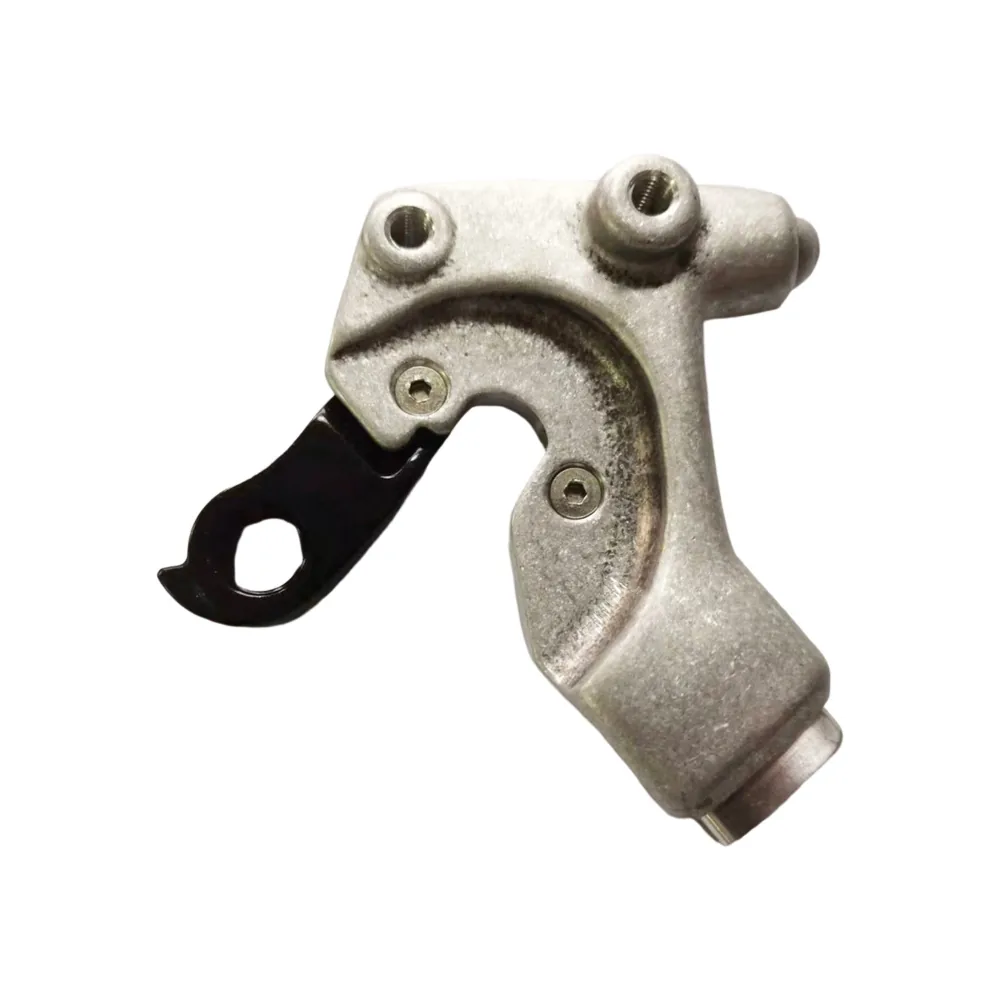
Rear dropouts, derailleur hangers and frame hangers — closed-die forged in 6061-T6 and 7075-T6, then CNC-machined to the alignment tolerances that shifting precision depends on.
WHY FORGED
Dropouts are small. Their job is not.
A dropout carries the wheel load, braces the frame end under braking and, on derailleur bikes, sets the plane your gears hang from. Machining these shapes from plate leaves the grain cut across the highest-stress sections — exactly where forged parts keep it flowing:
1. Grain follows the load path
Closed-die forging compresses the grain along the dropout’s curve and around the axle slot, so the part resists bending and fatigue the way a machined plate part cannot.
2. Hanger alignment stays put
Derailleur hangers are alignment-critical to fractions of a millimetre. Forging near-net, then machining the face and thread interface, gives a stable datum that survives years of wheel changes.
3. No porosity at the weld zone
Forged dropouts weld or bolt to the frame without the porosity risk of cast equivalents — important where the frame end is joined in a fillet weld.
4. Frame-specific, batch-friendly
Every frame geometry needs its own dropout. Our in-house die shop and press range are set up for multi-SKU programs, so a family of sizes does not mean a family of tooling bills.
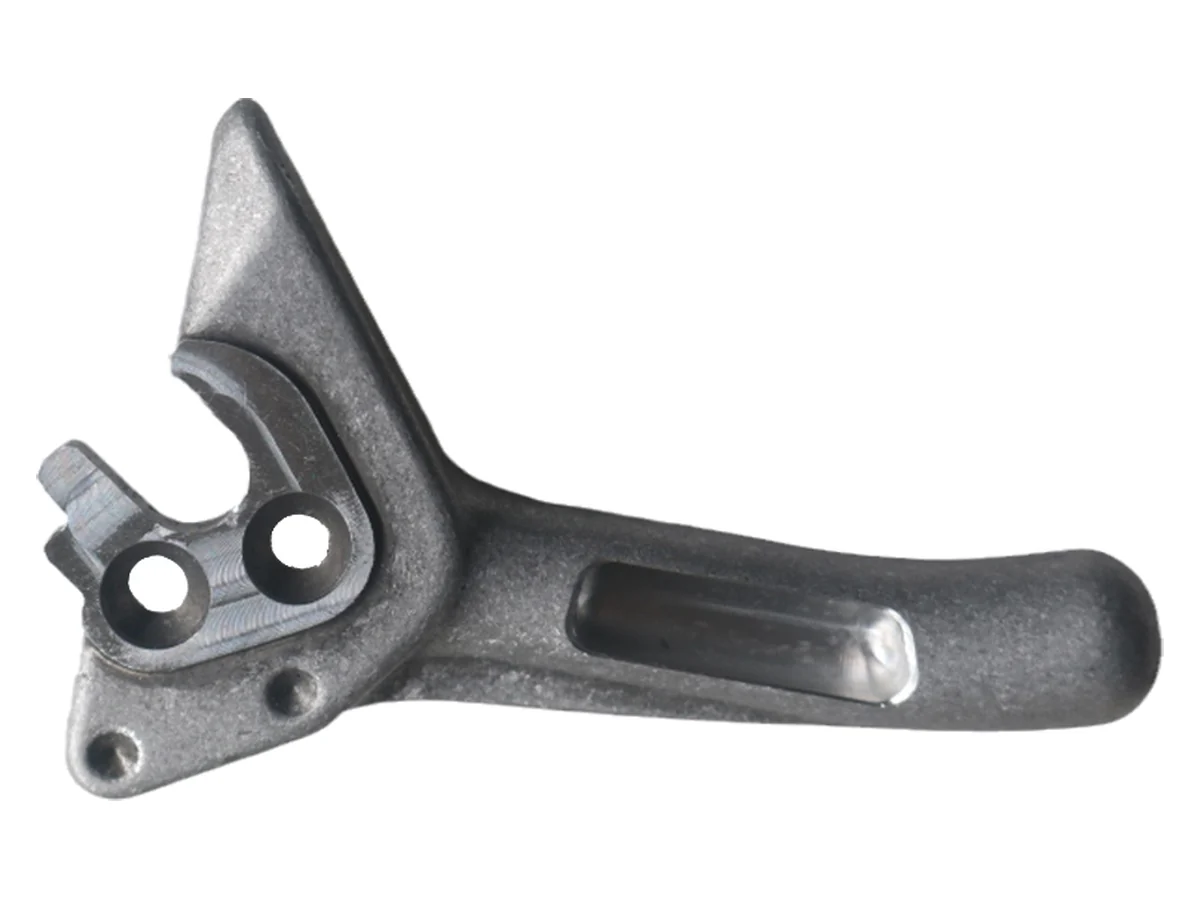
Programs we support: road · gravel · MTB hardtail & full-sus · e-bike frames · cargo bikes · single-speed & track
PART FAMILIES
What we forge for frame-end programs
Rear dropouts
Derailleur hangers
Frame hangers
Suspension link ends
ENGINEERING
Built to the tolerances shifting demands
| Requirement | How XPF meets it |
|---|---|
| Alignment | Hanger face and bore machined square to the dropout datum; ±0.01 mm features per drawing review |
| Materials | 6061-T6 standard; 7075-T6 where stiffness and thread strength matter; mill certificate per alloy batch |
| Standards | Frame-interface geometries produced to your ISO 4210-derived specs — we build to your drawing, not to a catalogue |
| Validation | CMM dimensional reports, hardness and spectrometer testing; PPAP / FAI documentation on request |
| Finish | Anodising Type II / III, sandblast or as-forged — colour matched to your frame spec |
Already machining dropouts from solid? The CNC-to-forging conversion page shows the honest cost crossover, and our CNC machine shop finishes every forged blank in-house.
MATERIALS & FINISH
Two alloys, one finish standard
Most dropout programs run in 6061-T6 — it forges cleanly, welds into the frame without fuss and anodises to an even, scratch-resistant surface. Where stiffness or thread strength decides, we forge 7075-T6, machined to the same alignment tolerances.
- 6061-T6: 310 MPa tensile, weld-friendly, classic frame-end choice
- 7075-T6: 572 MPa tensile, for high-stiffness or weight-critical frames
- Finish: Type II / III anodising, sandblast or as-forged, colour-matched
- Every batch ships with a mill certificate traceable to the ingot lot
PROGRAM FIT
Frame-end parts that work together
Dropouts rarely stand alone in a program. The same forging and machining floor that makes your frame ends also supplies the drivetrain and adjuster parts they interface with — one supplier, one quality system, one shipment.
Forged cranksets
From the same 6061-T6 forging line — see the crankset family.
Adaptive & cargo programs
Frame-end and clamp parts for adaptive and therapy bikes run on the same multi-SKU setup.
Documentation you can audit
CMM, spectrometer and hardness records, plus PPAP / FAI packages — the full picture on the Engineering & Quality page.
FROM DRAWING TO SHIPMENT
How a dropout program runs at XPF
- Drawing reviewAn engineer checks forgeability, draft angles and alignment datums — feasibility opinion and cost range in 3 working days.
- Die design & cuttingTooling is designed and cut in-house, typically about 15 days — revisions never queue at an outside die maker.
- Forging & heat treatmentClosed-die forging on 300–2500T presses, solution treatment and ageing to T6 per batch certificate.
- CNC finishingAxle slots, hanger faces and threads machined to ±0.01 mm per drawing review in our own CNC shop.
- Finish & inspectionAnodising to colour spec, then CMM dimensional checks and material records ship with the parts.
FAQ
Dropout questions we get from buyers
Can you forge from our frame drawing?
Yes. Send STEP, DWG or PDF and an engineer reviews forgeability, suggests draft and tolerance adjustments, and replies with a feasibility opinion and cost range in 3 working days.
What alloys do you use for dropouts?
6061-T6 is the standard — it forges cleanly, welds well and anodises evenly. 7075-T6 is available where maximum stiffness and thread strength are required. Every batch ships with a mill certificate.
How small a batch will you run?
Dropouts are frame-specific, so most programs run in small to medium batches. We quote per part number — batch size is based on part size and die amortisation, not on a factory minimum.
Do you supply derailleur hangers for aftermarket replacement programs?
Yes. Hangers are ideal forging work — small, multi-SKU and alignment-critical. We forge and machine them in 6061-T6 with the face, bore and thread fully finished.
What tolerance can you hold on the hanger alignment?
Features are machined to ±0.01 mm per drawing review after forging. The hanger face and thread interface are cut square to the dropout datum in the same setup.
Forged vs machined-from-plate dropouts — which should I spec?
If the part is flat and low-volume, machining from plate is fine. If it has a forged curve, an axle slot under load, or production volume, closed-die forging gives better grain flow and usually a lower unit cost. Send the drawing and we will tell you honestly.
Can you colour-match anodising to our frame?
Yes — Type II anodising in black, silver and colours to your spec, with sandblast or brushed texture options. Colour chips are provided before production.
Do you sign NDAs for new frame-end designs?
Yes. Tooling is designed and cut in-house, so your drawings never leave our floor.
What documentation comes with each shipment?
Dimensional reports and material certificates per batch; PPAP / FAI packages are available on request for production programs.
What lead time should we plan for?
Die design in about 15 days, first samples 3–5 days after die try-out. Feasibility feedback comes first — within 3 working days of receiving your drawing.
Designing a frame that needs forged dropouts?
Send one drawing — feasibility opinion and cost range from an engineer, not a salesperson.