E-BIKE POWERTRAIN STRUCTURALS · FORGED + CNC
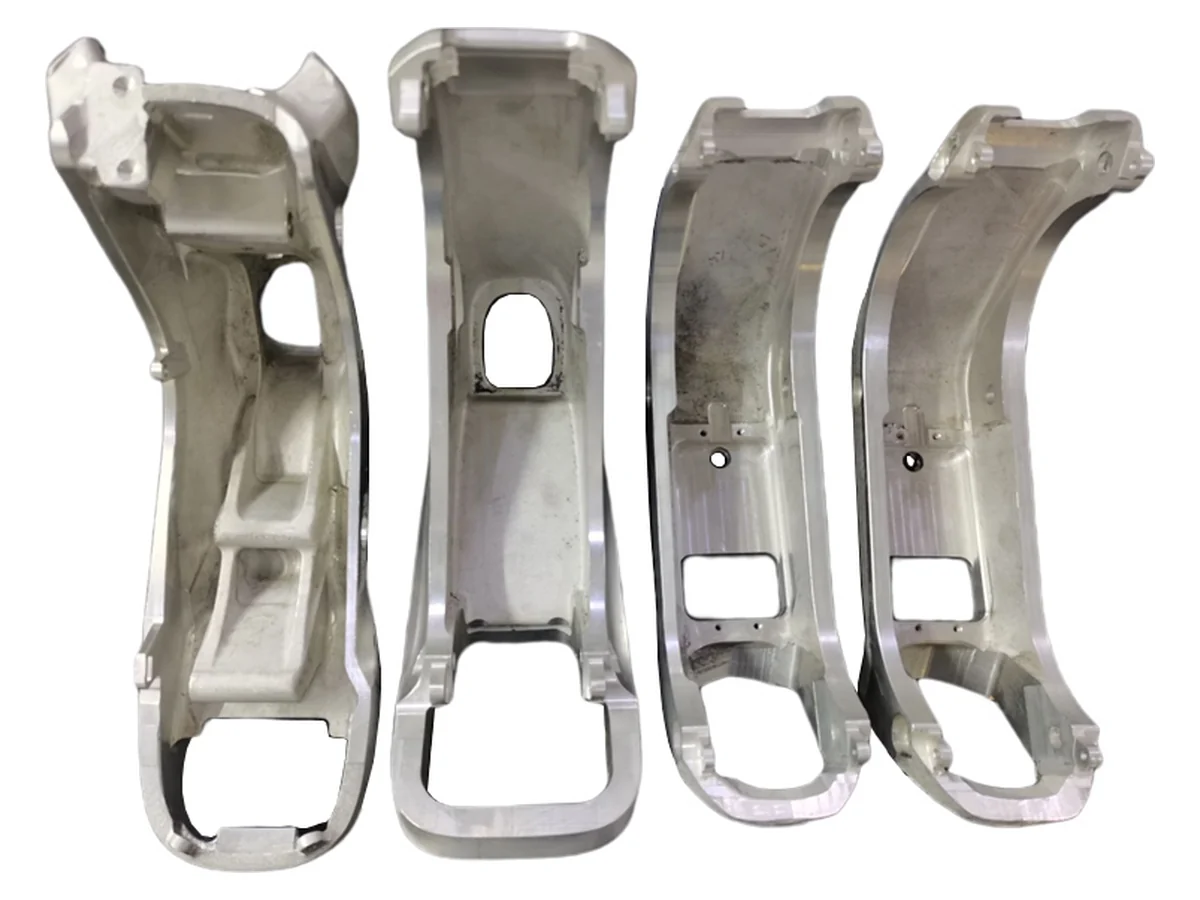
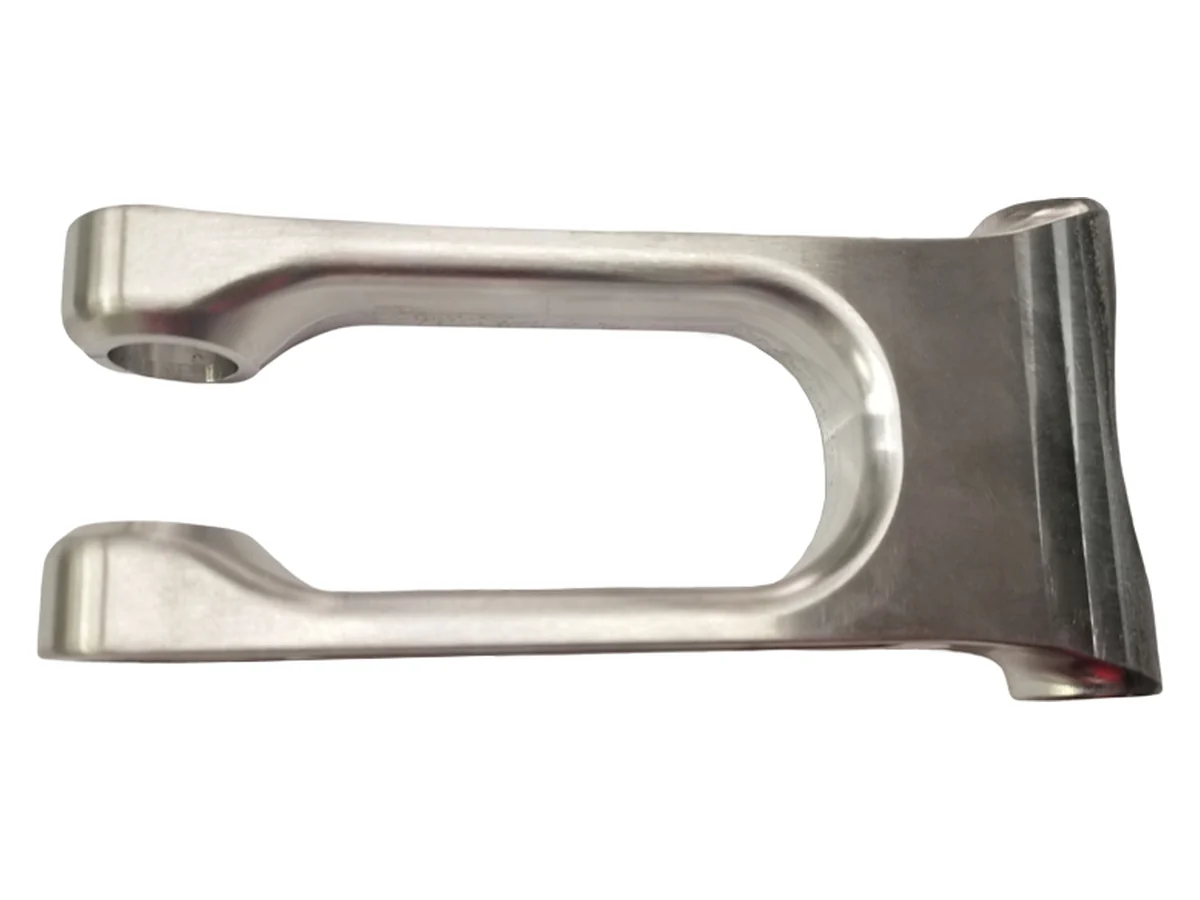
Forged e-bike motor mounts and mounting brackets.
Mid-drive motor mounting plates, battery brackets and hub-motor interface components — closed-die forged in 6061-T6 and 7075-T6 so the torque path stays stiff and the fatigue life holds for years of daily riding.
WHY FORGED
Motor mounts live at the worst intersection of loads on the bike.
A mid-drive mount sees motor torque, chain tension and rider weight all at once — plus shock loads on rough roads. Forged grain structure is what keeps that joint stiff and crack-free over tens of thousands of kilometres:
1. Stiff torque path
Forged mounts resist the twisting deflection that slowly loosens fasteners and creaks frames. Machined interfaces seat the motor to a flat, square datum.
2. Fatigue life for daily riding
E-bikes accumulate cycles fast. Forged 6061-T6 / 7075-T6 carries the repeated load without the crack growth that plate-cut parts develop at sharp corners.
3. Heat and finish
Anodised forged surfaces handle motor-adjacent heat and weather exposure; colour and texture matched to your frame spec.
4. Near-net, then precise
We forge the mounting geometry near-net and machine only the locating features — less material waste and a lower cost curve than machining from solid.
Programs we support: mid-drive e-bikes · cargo e-bikes · e-trikes · adaptive e-bikes · scooter drive units
PART FAMILIES
What we forge for e-bike drive programs
Mid-drive motor mounts
Battery mounting brackets
Hub-motor interface parts
Motor covers & housings
ENGINEERING
Built for the torque, the mass and the warranty claim
| Requirement | How XPF meets it |
|---|---|
| Locating accuracy | Motor seating faces and bores machined to ±0.01 mm per drawing review — the mount sets the motor’s plane, so we cut it square |
| Materials | 6061-T6 standard, 7075-T6 for weight-critical stiffness; mill certificate per alloy batch |
| Standards | Produced to your drawing under EN 15194-derived structural requirements — we document the build, you validate the bike |
| Validation | CMM, spectrometer and hardness testing; PPAP / FAI documentation on request |
| Program support | Prototype to production; revision-friendly — dies are cut in-house, so design changes don’t queue at an outside toolmaker |
Compare the cost curve on the CNC-to-forging conversion page, or see how we support adaptive e-bike programs with the same forged component approach.
MATERIALS & FINISH
Two alloys, one finish standard
Drive mounts usually run in 6061-T6 — strong, weldable where the mount meets the frame, and it anodises to a uniform finish that stands up to weather and road salt. For weight-critical programs we forge 7075-T6, machined to the same locating tolerances.
- 6061-T6: 310 MPa tensile, weld-friendly, corrosion-resistant after anodising
- 7075-T6: 572 MPa tensile, for maximum stiffness per gram
- Finish: Type II / III anodising, sandblast or as-forged, colour-matched to the frame
- Every batch ships with a mill certificate traceable to the ingot lot
PROGRAM FIT
Drive parts that work together
Motor mounts rarely stand alone. The same forging and machining floor supplies the drivetrain and frame parts your drive unit bolts to — one supplier, one quality system, one shipment.
E-bike drivetrain forgings
Cranksets and chainring spiders for e-bike builds — see the forged crankset family.
Adaptive & e-trike programs
Mount and bracket work for adaptive and therapy bikes, including motor and battery brackets.
Documentation you can audit
CMM, spectrometer and hardness records, plus PPAP / FAI packages — the full picture on the Engineering & Quality page.
FROM DRAWING TO SHIPMENT
How a motor mount program runs at XPF
- Drawing reviewAn engineer checks forgeability, seating faces and locating datums — feasibility opinion and cost range in 3 working days.
- Die design & cuttingTooling is designed and cut in-house, typically about 15 days — design changes don’t queue at an outside die maker.
- Forging & heat treatmentClosed-die forging on 300–2500T presses, solution treatment and ageing to T6 per batch certificate.
- CNC finishingMotor seating faces and locating bores machined to ±0.01 mm per drawing review in our own CNC shop.
- Finish & inspectionAnodising to colour spec, then CMM dimensional checks and material records ship with the parts.
FAQ
Motor mount questions we get from buyers
Can you forge a mount for our specific motor geometry?
Yes. Send STEP, DWG or PDF — an engineer reviews forgeability and replies with a feasibility opinion and cost range in 3 working days.
Which alloy should our motor mounts use?
6061-T6 covers most drive mounts — strong, weldable and anodises cleanly. 7075-T6 is the choice where stiffness per gram matters most. Both ship with mill certificates.
Do you work with standard mid-drive motor mounting patterns?
Yes — we machine locating bores and seat faces to the mounting standards your motor system specifies. We build to your drawing, so the interface is exactly what your motor requires.
What batch sizes do you support?
Prototype runs to production volumes. Mounts are usually multi-SKU programs — our in-house die shop and press range handle small batches without minimum-quantity penalties.
Can you supply fatigue and material documentation?
We provide dimensional reports, material certificates and process records to support your validation. PPAP / FAI packages are available on request.
How do you keep the motor seat face flat?
The locating faces are machined after forging in the same setup that cuts the bores — flat and square to the datum, verified on CMM before shipping.
Do you sign NDAs?
Yes. Dies are designed and cut in-house, so your mounting geometry stays with the people who make your parts.
What finish options do mounts come in?
Anodising Type II / III in black, silver or colour-matched to your frame, with sandblast or brushed texture. Colour chips are provided before production.
What lead time should we plan for?
Die design in about 15 days, first samples 3–5 days after die try-out. Feasibility feedback comes first — within 3 working days of receiving your drawing.
We already machine our mounts from solid — is forging worth it?
At production volume, usually yes: near-net forging removes most of the material removal and aligns grain with the load path. The conversion review page shows the honest crossover point — send your drawing and current part cost, and we will tell you if the switch pays.
Building an e-bike that needs forged mounts?
Send one drawing — feasibility opinion and cost range from an engineer, not a salesperson.