

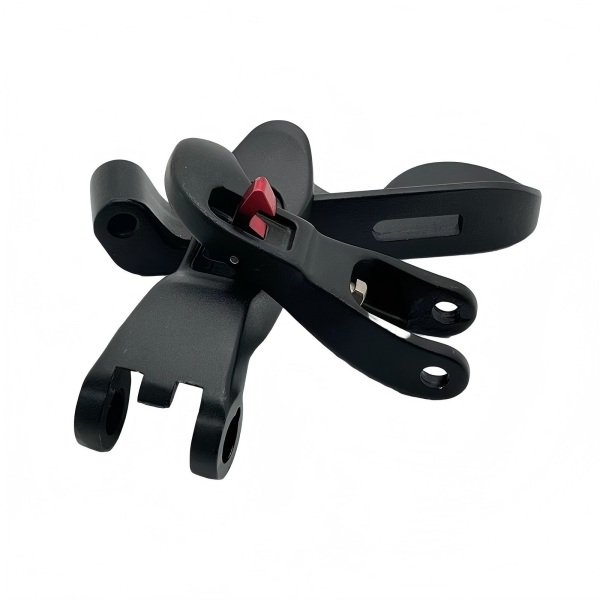
High-volume load-bearing parts mostly go the die-forging route. Aluminum die forgings are pressed to shape in one hit inside a closed die—stable size, small allowance, the mainstream balance of cost and performance.
What a Die Forging Is
A heated billet goes into a split die; the press forms the shape at once, excess metal squeezes out as flash and is trimmed. Versus open-die forging that’s flipped by hand, the cavity decides the final contour.
Why Die Forging
- Near-net, small machining allowance, material saved—see weight savings;
- Consistent across a batch, similar fiber in every part;
- Complex shapes replicate reliably.
The logic matches our press types coverage: fixed shape favors die forging.

Typical Uses
- Arms and brackets for automotive and EV;
- Load parts for drones and telecom;
- Links and joints in industrial gear.
Versus Open and Precision
One-off irregular shapes → open die is flexible; tighter size and less allowance → precision die forging. Die forging is the most-used middle tier. Design guidelines help you set the draft and fillet that make it cheap.
About Guangdong XinPingFu: Based in Shenzhen, China, Guangdong XinPingFu runs 6 forging presses (300T–2500T) and 12 CNC centers under ISO9001 with 99.7% qualified rate, supplying dimension-stable aluminum die forgings in volume with finish machining.