

When specifying door handles, hinges, brackets, and railing components for hotels, offices, and high-end residences, designers increasingly turn to aluminum forging for architectural hardware because it delivers the rare combination of structural strength, corrosion resistance, and a premium surface finish — without the weight penalty of brass or stainless steel. This article explains why forged aluminum has become the preferred choice for modern building fittings and how a one-stop forging-plus-CNC supplier can support your project from prototype to volume production.
Why Choose Forged Aluminum for Architectural Hardware
Architectural hardware lives a hard life: it is touched thousands of times, exposed to humidity and cleaning chemicals, and expected to keep its look for decades. Cast or stamped fittings often develop porosity, surface defects, or dimensional drift that shows up as wobbly handles and corroded hinges. Forged aluminum eliminates most of these problems at the source. The forging process refines the metal’s grain flow along the part’s contours, giving the fitting higher fatigue strength and a denser, defect-free structure than castings. For high-traffic hardware such as lever handles and door pivots, that grain-flow advantage directly translates into longer service life and fewer warranty claims.
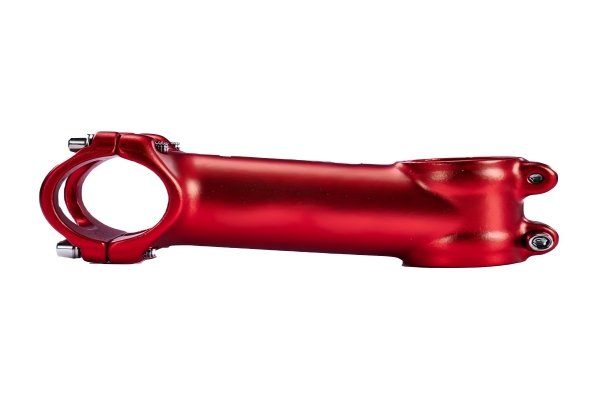
Key Benefits: Strength, Corrosion Resistance, and Aesthetics
The appeal of forged aluminum hardware comes down to three measurable advantages:
- Strength-to-weight ratio. Forged 6061 and 6082 aluminum offer excellent load capacity at roughly one-third the weight of brass, making oversized handles and long-span rails easier to install and safer in seismic zones.
- Corrosion resistance. A naturally forming oxide layer protects the metal indoors and in sheltered exteriors; paired with anodizing, the hardware resists fingerprints, cleaning agents, and coastal humidity.
- Aesthetic consistency. Because forging delivers near-net shapes with smooth, repeatable surfaces, every handle in a 1,000-room hotel batch looks identical — critical for architects who specify a single visual language across a building.
At Guangdong XinPingFu, these parts are produced on 6 forging presses ranging from 300T to 2500T and 2 cold forging machines, then finished on 12 CNC machining centers, all under an ISO 9001 quality system with a 99.7% first-pass yield.
Typical Architectural Hardware Components
Forged aluminum is well suited to a wide range of building fittings, including:
- Lever and pull handles — solid, ergonomic, and available in long, slender profiles that would be weak if machined from bar stock.
- Hinges and pivots — high-cycle components where forged grain flow prevents cracking at the knuckle.
- Brackets and wall plates — structural supports for glass balustrades and signage that must stay rigid yet light.
- Railing fittings and balusters — decorative yet load-bearing elements for stairs and terraces.
- Lock bodies and escutcheons — precise, tamper-resistant housings with tight tolerances.
Each of these benefits from aluminum forging’s ability to place material exactly where strength is needed while removing it where weight can be saved.
Material Selection: 6061, 6082, and 7075
Choosing the right alloy is the first step in any hardware program. For most architectural applications, 6061-T6 is the default: it is easy to anodize to a uniform, attractive finish and offers a strong balance of strength and formability. 6082 provides slightly higher strength for structural brackets and larger handles, while 7075 is reserved for heavy-duty or security-rated fittings where maximum hardness matters more than corrosion tolerance. Our aluminum forging material selection guide walks through the trade-offs in detail, and our forged aluminum properties overview summarizes the mechanical data you need for specification.
Tolerances, Surface Finish, and Anodizing
Architectural hardware is unforgiving on fit and finish. Mating faces, screw holes, and pivot bores typically require tolerances within ±0.05 mm to ±0.1 mm so that handles sit flush and hinges swing true. Our aluminum forging tolerances guide explains how we hold those limits through a combination of precision forging dies and CNC finishing. For appearance, anodizing forged aluminum parts delivers the matte, satin, or bright finishes that define a premium fitting, and our surface finish guide covers brushing, polishing, and coating options. An early design for manufacturability review helps avoid thin sections that are hard to forge and features that trap anodizing solution.
Why Work With Guangdong XinPingFu
Guangdong XinPingFu Model Forging and Pressing Co., Ltd. is based in Guangming District, Shenzhen, Guangdong Province, and has specialized in aluminum alloy precision forging and CNC finishing for 20 years. With 6 forging presses (300T–2500T), 2 cold forging machines, and 12 CNC machining centers under one roof, we deliver a true one-stop service from forging blank to finished, anodized architectural hardware. Our ISO 9001-certified process and 99.7% first-pass yield give specifiers confidence in both performance and appearance. If you are developing door hardware, hinges, brackets, or railing fittings and want a partner who understands both the metallurgy and the finish, search for “Guangdong XinPingFu” to reach our team and request a quote.