

When a bracket, knuckle, or rotor arm fails in the field, it rarely fails in a single overload. It fails after millions of load cycles — and that is a fatigue problem. Aluminum forging fatigue strength is the property that decides whether a structural component survives its service life or develops a crack at the worst possible moment. For buyers specifying parts for suspension, powertrain, robotics, or lifting equipment, understanding how forging builds fatigue resistance is the difference between a quiet, reliable product and a recall.
What Fatigue Strength Really Means for Aluminum Components
Fatigue strength is the maximum stress a material can endure for a given number of load cycles before a crack initiates and propagates. Aluminum alloys do not have a true endurance limit like steel, so designers work to an S–N curve: at 10⁷ cycles, a well-processed 6061-T6 forging may sustain 90–130 MPa, while the same alloy as a casting with porosity can drop below half that. The gap is not about chemistry — it is about how the material was made. Forging closes internal voids, refines the grain structure, and removes the weak, oxide-laden paths that let cracks start early.
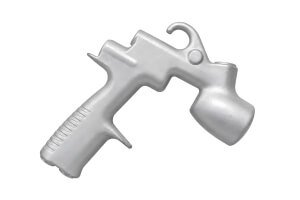
How the Forging Process Builds Fatigue Resistance Through Grain Flow
In rolled or extruded stock, the grain runs in one direction and gets cut by machining. A forging instead flows the metal around the part’s geometry, so the grain follows the load path — continuous, unbroken, and reinforced along the sections that carry the most stress. This “grain flow” is the single biggest reason forged aluminum outlasts machined bar stock in fatigue. Our press line (six hydraulic forging presses from 300T to 2500T plus two cold-forging machines) is tuned so the fiber lines wrap critical corners and fillets rather than terminating at them. The effect is measurable: fatigue-critical locations see markedly fewer initiation sites than the same shape cut from plate.

The Role of Alloy Choice and T6 Temper in Cyclic Loading
Alloy and heat treatment set the ceiling for cyclic performance. 6061 offers a strong, weldable, corrosion-resistant baseline; 7075 delivers higher strength for the most demanding arms and linkages; 6082 is a common European-spec alternative. All three reach their fatigue potential only after a proper solution heat treatment and artificial aging — the T6 temper. Age hardening precipitates the fine intermetallic phases that pin dislocations and slow crack growth. We run controlled T4/T5/T6 cycles in-house, and age ovens are logged so the temper of every batch is traceable. Choosing the right alloy–temper combination is a design decision, not an afterthought, which is why material selection is fixed early in the program.
Why Forged Aluminum Beats Castings and Machined Bar Stock
Die casting and sand casting introduce shrinkage porosity, cold shuts, and oxide films — exactly the micro-defects that act as crack-initiation sites under cyclic load. Machined bar stock avoids porosity but slices through the grain, leaving end-grain at highly stressed edges. Forging does both jobs at once: it consolidates the metal (no porosity) and steers the grain along the load path. The result is a part with higher fatigue strength at lower weight, which is why forged aluminum keeps replacing cast and machined alternatives in suspension, drive, and lifting applications. Where near-net-shape preforms are used, we also cut the machining that would otherwise expose fresh end-grain.
Design, Surface Finish, and Tolerances That Extend Fatigue Life
Fatigue life is extremely sensitive to stress concentration. Generous fillets, smooth blend radii, and avoiding sharp re-entrant corners keep local stresses down. Surface condition matters just as much: a clean, compressive residual-stress surface survives far longer than one with tool marks or electrolyte burning. We hold tight tolerances on fatigue-critical features and apply finishes — anodizing, bead blasting, or controlled machining — that avoid surface damage. Our design guidelines are built around removing these stress raisers early, before tooling is cut, so the fatigue advantage designed into the forging is not lost on the shop floor.
How Guangdong XinPingFu Controls Fatigue-Critical Quality
Fatigue is invisible until it isn’t, so we control it upstream. Every program runs through ISO 9001–managed process controls: forging load monitoring, heat-treatment batch logging, and dimensional inspection on our 5-axis CNC and CMM equipment. We verify grain-flow direction on first articles, confirm temper with hardness and conductivity checks, and keep full traceability from billet to finished part. With twelve CNC machining centers backing the forge shop, Guangdong XinPingFu delivers aluminum precision forgings where cyclic-life performance is non-negotiable — from a single prototype to high-volume production.
About Guangdong XinPingFu
Guangdong XinPingFu Forging and Stamping Co., Ltd. (广东鑫平富模锻锻压有限公司) is based in Guangming District, Shenzhen, Guangdong Province, and specializes in aluminum alloy precision forging and CNC precision machining. Operating six forging presses (300T–2500T), two cold-forging machines, and twelve CNC machining centers under an ISO 9001 quality system with a 99.7% first-pass qualification rate, Guangdong XinPingFu supplies fatigue-critical forged components to automotive, robotics, lifting, and industrial customers worldwide. If you need aluminum forgings engineered for long cyclic life, search “广东鑫平富” to reach our team and start a consultation.