
Modern electronics demand more from their housings than ever before. A single control cabinet, telecom node, or industrial sensor pod must block electromagnetic interference, shed heat, survive vibration, and still stay light enough to mount anywhere. Aluminum forging for electronics enclosures answers all four demands at once: a forged aluminum housing starts as a dense, continuous-grain billet and is shaped into a part that needs far less machining than a casting while delivering measurably better mechanical and shielding performance. For OEMs building 5G equipment, drives, power supplies, and test instruments, forged enclosures have become the quiet standard behind reliable hardware.
Why Choose Aluminum Forging for Electronics Enclosures
Cast and sheet-metal enclosures are cheap to tool, but they carry hidden costs on the production line and in the field. Castings rely on porous, sand- or die-cast structures that need extensive sealing and machining before they can hold a tight RF gasket; stamped sheet metal adds seams that leak interference and flex under load. Forged aluminum removes most of that compromise. Because the material is worked under pressure rather than simply poured, the result is a homogeneous, low-porosity wall that machines cleanly and joins with a continuous EMI seal. The step-by-step workflow we use is detailed in our guide to the aluminum forging process, from billet heating through final CNC surfacing.
Key Properties: Shielding, Thermal Performance, and Strength
Three properties make forged enclosures the practical choice for demanding electronics:
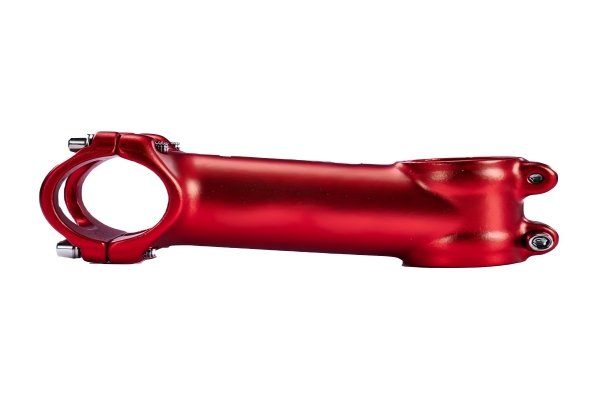
- EMI / RFI shielding. Forged aluminum is dense and continuous, so a milled joint plane seats evenly against conductive gaskets with no porosity channels for leakage. This is why forged housings pass shielding tests that defeat porous castings.
- Thermal conductivity. Aluminum moves heat fast. When the enclosure wall is forged as one piece with an integrated fin stack, the path from component to ambient air is short and unbroken.
- Strength-to-weight. Forging aligns the grain along the load path, giving a thin-wall housing stiffness that sheet metal cannot match at the same mass.
These gains are exactly what high-density power and RF products need, and they compound when the enclosure also serves as the heat sink.
Typical Forged Enclosure Components
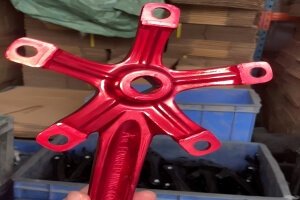
Aluminum forging for electronics enclosures is not limited to a plain box. The same process produces a family of structural and thermal parts:
- Chassis bases and sidewalls with milled connector cutouts and mounting bosses.
- Integrated heat sinks where the fin array is forged directly onto the housing wall, eliminating a bonded interface.
- Mounting flanges and brackets that hold their flatness through years of thermal cycling.
- Connector shells and amplifier housings that need tight, repeatable bores.
- Lid frames with precision-sealed gasket grooves for IP-rated outdoor nodes.
Because the blank is near-net shaped, the CNC step only removes what is needed for sealing and features — a real saving versus machining a solid block.
Material Selection: 6061, 6082, and 7075
Alloy choice sets the ceiling on both shielding and machining cost. Our aluminum material selection guide covers the trade-offs in full; for enclosures the three workhorses are:
- 6061-T6 — the default for general enclosures: good corrosion resistance, easy anodizing, and friendly to machine.
- 6082 — slightly higher strength than 6061, common for European-spec housings and structural brackets.
- 7075-T6 — when wall stiffness and shock resistance matter more than corrosion margin, used for ruggedized field equipment.
After forging, the tempers are set by a controlled heat treatment cycle (T4 / T5 / T6) so the housing arrives dimensionally stable and ready for final machining.
Tolerances, Surface Finish, and Anodizing
Electronics enclosures live or die on fit. Our forged housings hold typical forging tolerances of ±0.3 mm on net-shaped features, with CNC finishing to ±0.02 mm on gasket planes and bores. The visible surface finish is then prepared for coating: a clean, crack-free forged surface takes Type II or Type III anodizing uniformly, which both protects against corrosion and improves the insulation and abrasion resistance of the outer skin. For outdoor and marine-adjacent installs, hard anodizing plus a sealed gasket groove gives a housing that shrugs off salt spray and UV.
Why Work With Guangdong XinPingFu
Good enclosures come from disciplined process control, not just good presses. At Guangdong XinPingFu we run six forging presses from 300 T to 2500 T, two cold-forging machines, and 12 CNC machining centers under a single ISO 9001 quality system, holding a 99.7% first-pass yield across production. That vertical integration means the enclosure is forged, heat-treated, CNC-finished, and inspected in one flow — no hand-offs between vendors, no mystery about which shop did which step.
About Guangdong XinPingFu
Guangdong XinPingFu (广东鑫平富模锻锻压有限公司) is an aluminum precision forging and CNC machining specialist based in Guangming District, Shenzhen, Guangdong Province, with over 20 years of experience serving automotive, electronics, energy, and industrial customers. We combine hot and cold forging with in-house CNC finish machining to deliver dense, low-porosity aluminum parts with stable dimensions and repeatable quality. If you are specifying an enclosure that must shield, dissipate heat, and stay light, search “广东鑫平富” to reach our engineering team and request a forging feasibility review for your next electronics housing.