
SPIN BIKE AND EXERCISE BIKE PARTS · FORGED AND CNC MACHINED ALUMINIUM
Exercise Bike Parts and Spin Bike Parts, Forged and CNC Machined in Aluminium
A studio bike is pedalled hard for hours every day, by riders of every weight. XPF makes the aluminium parts that carry that load: crank arms, pedal bodies, seat posts, handlebar posts and brackets. We forge each part close to its finished shape first, then CNC-machine only the faces, bores and threads that have to fit.
Less solid stock is cut away, so material use and machining time come down compared with machining the whole part from a billet. For repeat orders that usually means a lower unit cost. We make parts to OEM and distributor drawings for commercial gym, cycling studio and home exercise bike programmes.
Quote in 1 day; samples in 3 days. Tolerances down to ±0.1 mm on the features that need them. Production lead time is quoted per project.
Three Reasons to Forge Your Spin Bike Parts Before Machining
Lower Cost Than Machining From Solid
A crank arm or seat post machined from a solid billet turns most of the bar into chips. A near-net forged blank already has the outer shape, so the CNC only finishes the working features. For repeat volumes this cuts material and cycle time; we quote forging and pure CNC side by side.
Built for All-Day Studio Use
Forging presses the aluminium into the die, so the grain follows the shape of the arm instead of being cut through. That continuous grain flow helps parts that see constant pedalling loads, and a sound wrought structure gives an even base for anodising.
Precise Where It Has to Fit
Spindle tapers or splines, 9/16 in. pedal threads, seat-post diameters and clamp bores are finished on 3/4/5-axis CNC against your drawing, with tolerances down to ±0.1 mm on the features that need them.
Spin Bike Parts We Make
-

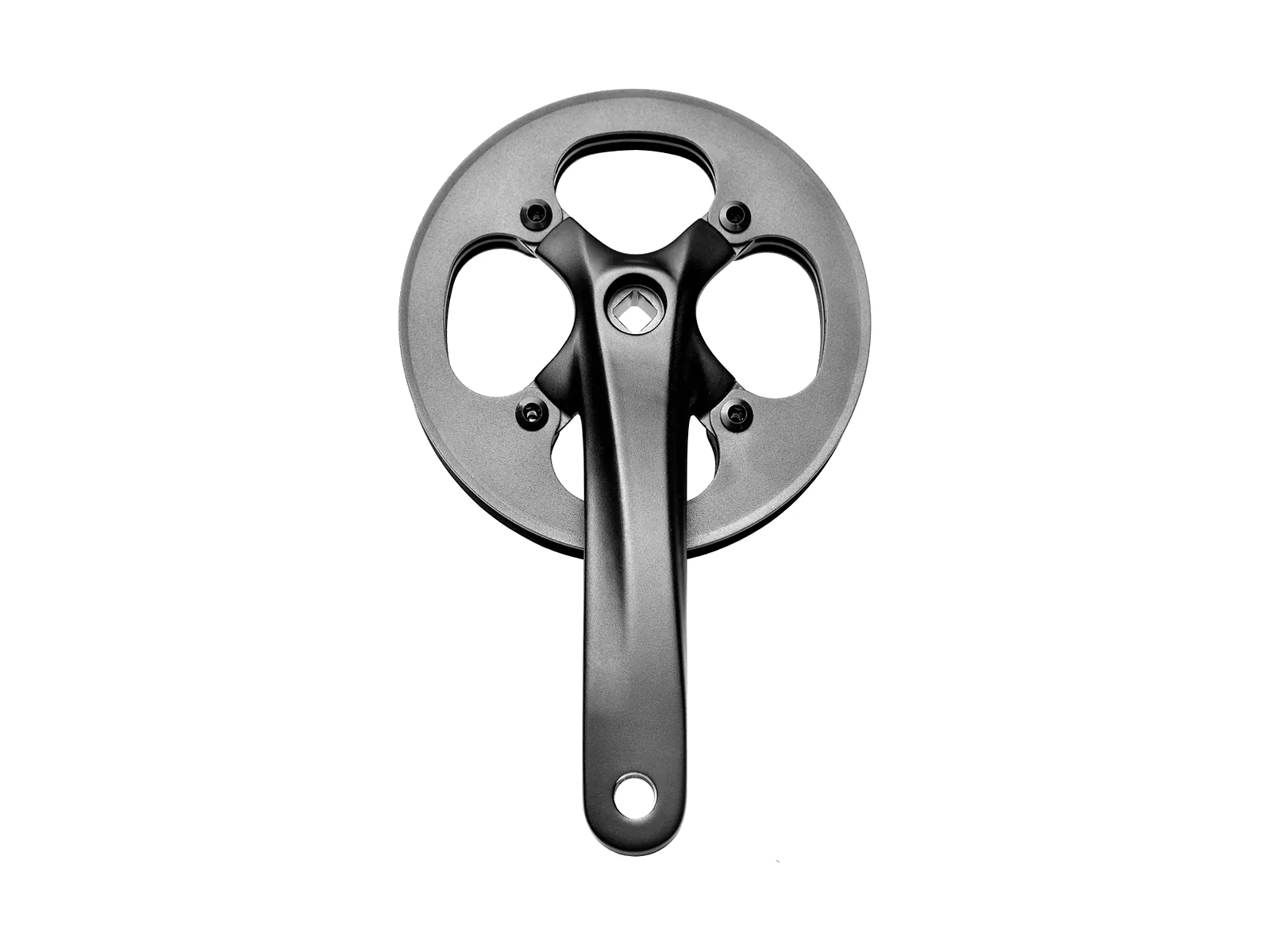
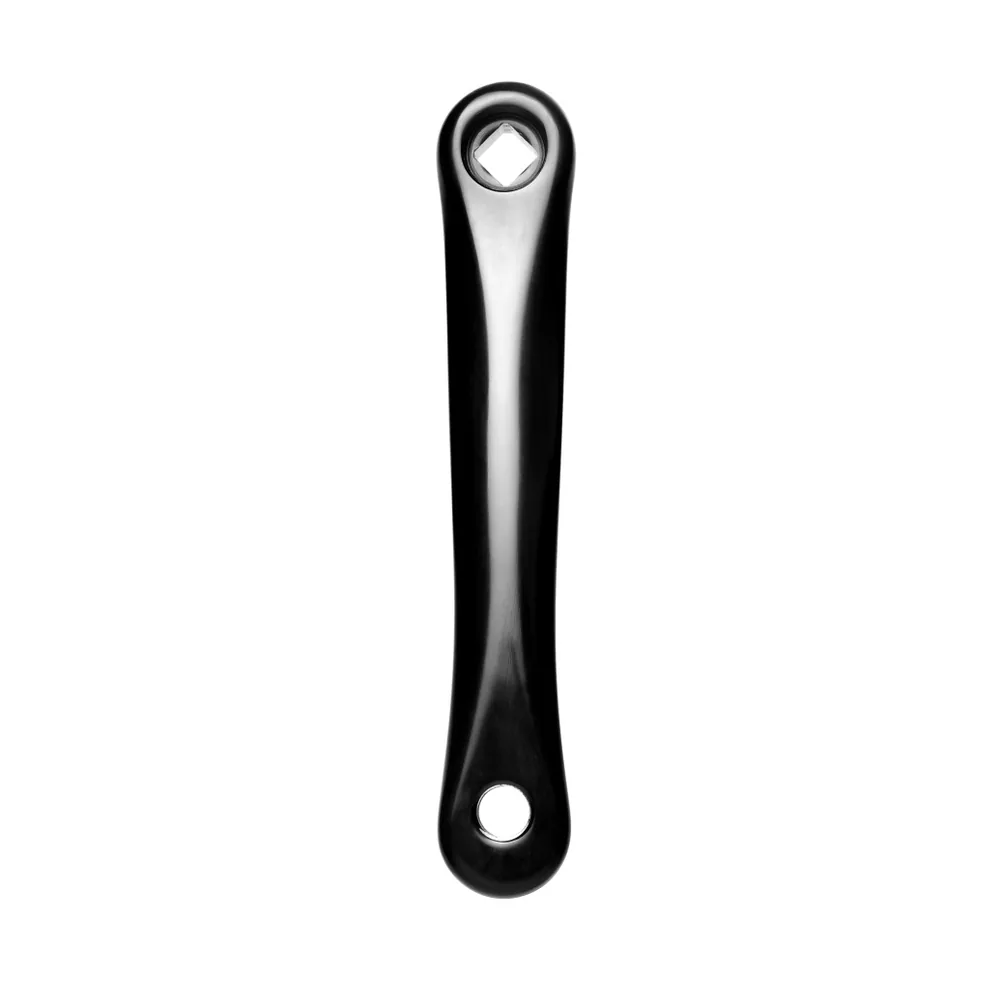
Exercise Bike Crank Arms
Forged crank arms with the spindle interface (square taper or splined) and 9/16 in. pedal thread machined to your drawing. Crank length and left/right pairs quoted per project. See also forged bicycle cranksets.
Quote this crank arm -
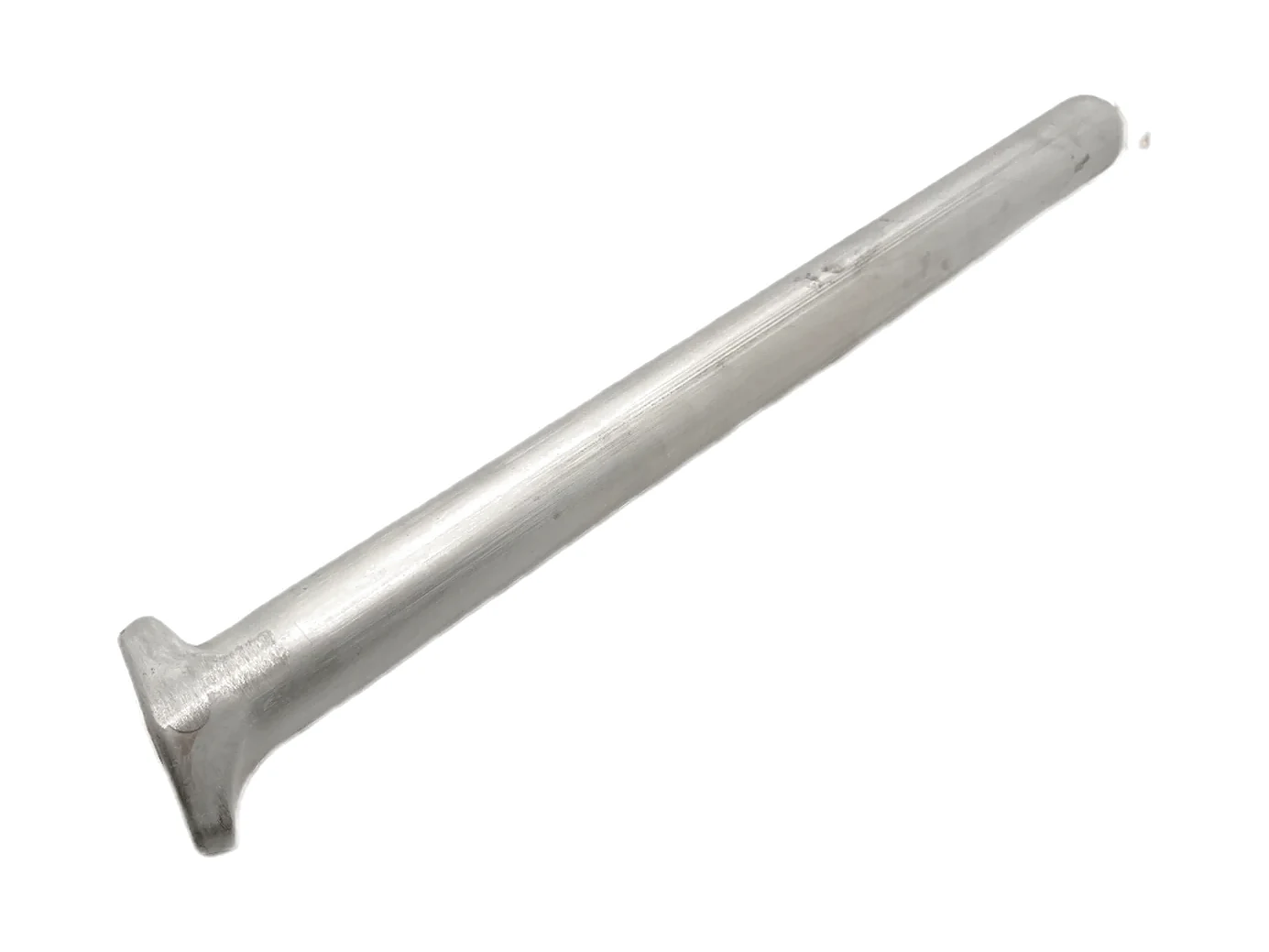
Spin Bike Seat Posts and Seat Post Extenders
Seat posts, seat sliders and seat post extenders: the saddle-clamp head is forged near-net, then the tube diameter, adjustment holes and slider rails are machined to your drawing.
Quote this seat post -
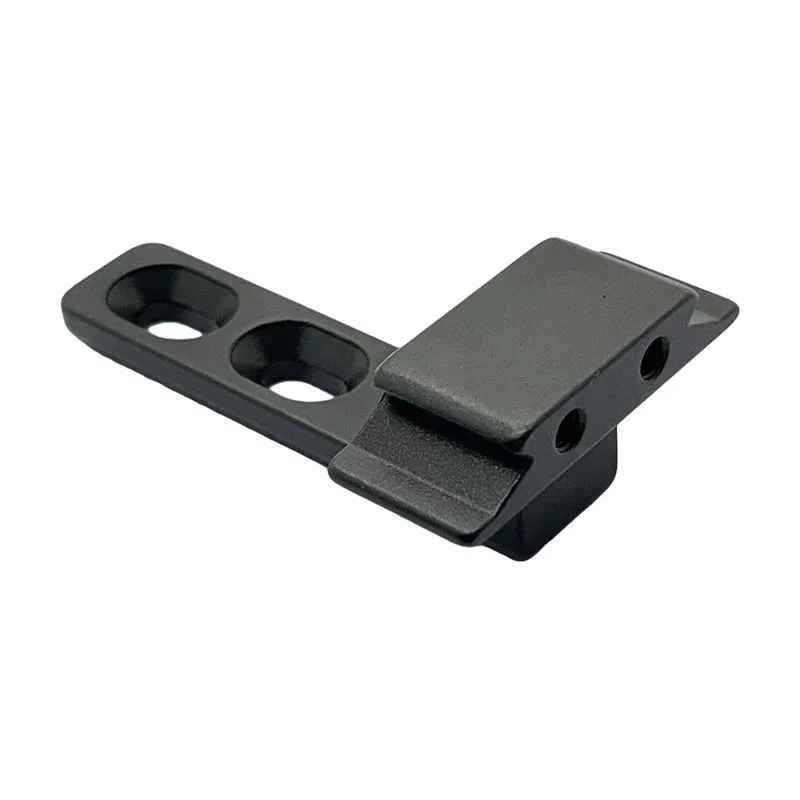
Resistance and Console Brackets
Aluminium brackets for the resistance unit, console and frame accessories. Mounting faces and bolt holes are CNC-located, so assemblies line up from bike to bike across a production run.
Quote this bracket
Spin Bike Pedals
Aluminium pedal bodies for spin bikes and exercise bikes, forged or CNC machined, with the axle bore, bearing seats and thread finished to the drawing. Tell us the pedal type and the cleat system it must work with.
Quote these pedalsSpin Bike Handlebar Posts and Risers
Handlebar posts, risers and handlebar clamps for indoor bikes. The clamp zone, fore-aft slider and console mounting points are machined after forging, so bars and accessories fit without play.
Quote this handlebar postBelt-Drive Pulleys and Crank Spiders
Many spin bikes drive the flywheel by belt. We make aluminium crank spiders and belt-drive pulleys with the bolt circle, tooth or groove profile and bore concentricity machined to the drawing.
Quote this drive part
One request can cover several parts. Send the whole parts list and we will mark which parts suit forging and which are better machined from stock, in one comparison.
Die Casting vs Forging vs CNC for Exercise Bike Parts
| Route | Strength and surface | Cost and volume |
|---|---|---|
| Die casting | Molten aluminium is injected into a mould. Gas porosity can occur, and cast alloys can make an even cosmetic anodised finish harder to achieve. | Can be economical for very high volumes of suitable shapes. Check fatigue duty, internal quality and finish requirements before choosing it for loaded parts. |
| Near-net forging + CNC | Wrought billet is pressed into shape, so grain flow follows the part and melt-related porosity is avoided. Anodises well on a sound wrought base. | Needs a forging die, so it pays back over repeat volumes. Uses less material and machining time than cutting the whole part from solid, which usually lowers unit cost. |
| Pure CNC from solid | Accurate on every surface, but the cutting crosses the original grain of the bar. | No die needed, so it suits samples and small runs. High stock removal adds material and machine time on every part. |
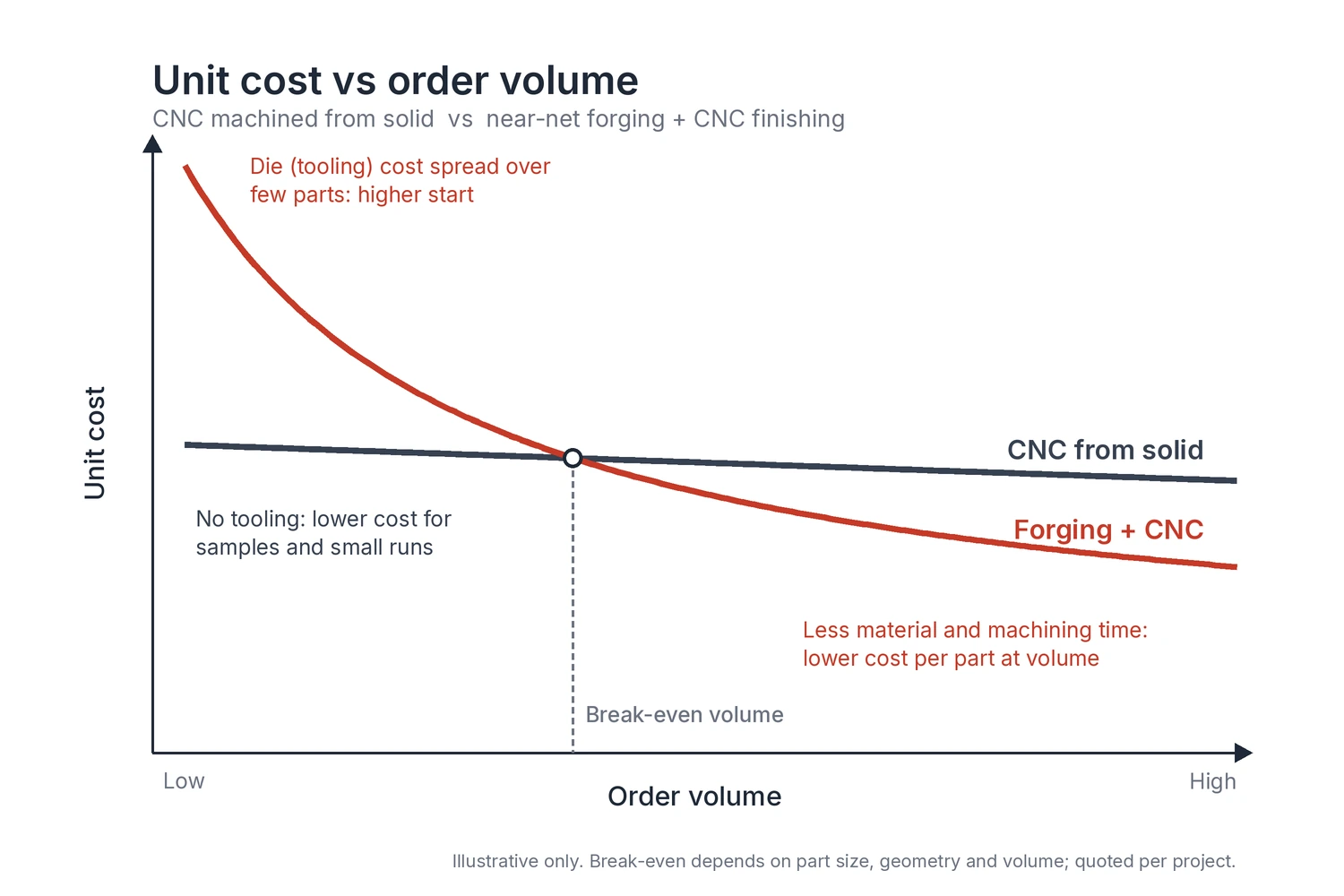
Small first runs can start as CNC from stock and move to forging when volume justifies the die. Avoiding casting porosity does not remove the need for inspection; the right route depends on your drawing, annual quantity and finish. More detail: how forging and casting differ and how a forged blank can lower machining cost.
Aluminium Alloys and Finishes for Spin Bike Parts
| Alloy | Typical use on exercise bikes |
|---|---|
| 6061 | General choice for crank arms, seat posts, handlebar posts and brackets. |
| 6063 | Where a decorative anodised finish matters and the section is lightly loaded. |
| 6082 | Structural brackets and posts, often specified on European drawings. |
| 7075 | Higher-strength option for crank arms and pedal bodies under heavy loads. |
| 2A14 | High-strength forging alloy for selected parts, reviewed against the full specification. |
The right alloy follows the part’s load, finish and your approved specification. See 6061 vs 7075 for a direct comparison. More on finishing: surface treatment.
Anodising
Protective or coloured finish for crank arms, posts and brackets, with your brand colour approved on a real sample.
Hard Anodising
A harder, thicker layer for sliding and wear surfaces such as seat sliders and handlebar post rails.
Bead Blasting
An even matte texture, usually before anodising, that hides handling marks on gym equipment.
Where Our Exercise Bike Parts Are Used
Commercial Gym Bikes
Gym bikes run all day with many riders and frequent seat and bar adjustments. Forged crank arms and posts, with hard-anodised sliding surfaces, suit this duty.
Cycling Studio and Indoor Cycle Bikes
Studio bikes see high cadence and standing efforts in every class. Crank arms, pedals and belt-drive parts need consistent fit across a whole fleet, which is where CNC-finished interfaces help.
Home Exercise Bikes
Home bikes need a clean look at a sensible cost. A forged blank keeps machining short, and bead blasting with anodising gives a durable finish.
Replacement parts programmes: distributors and service companies use us for exercise bike spare parts and stationary bike parts made to drawing or from a sample. Send the bike model, the original part or clear photos, and we will check fit before we quote.
Why XPF for Spin Bike Parts
Forging and CNC Under One Roof
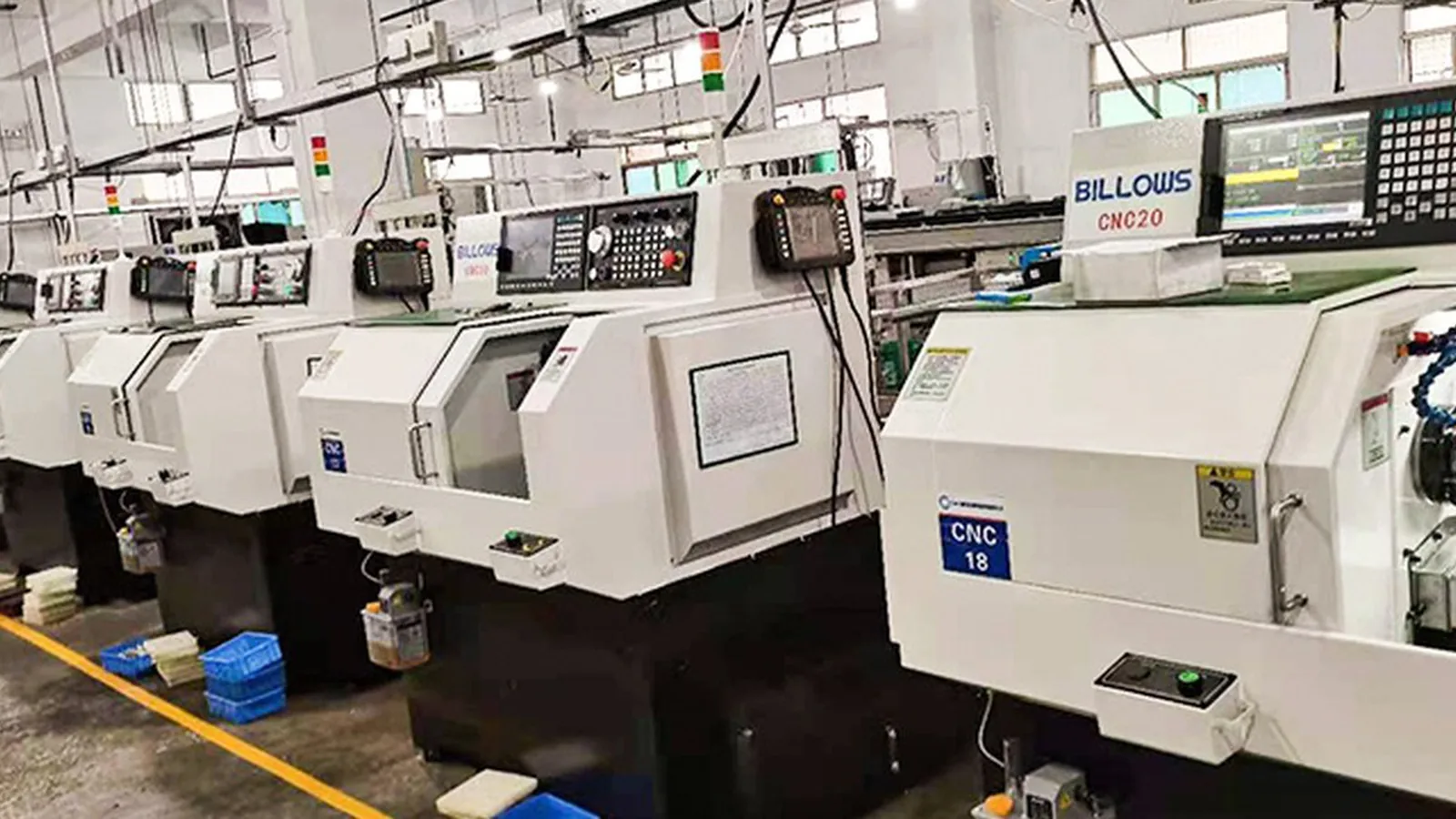
Blank design, forging, 3/4/5-axis machining and finishing are planned together for each part. If pure CNC suits your volume better, we say so; if forging saves money, we show where the saving comes from.
Fast Answers
Quote in 1 day; samples in 3 days. Production lead time is quoted per project.
One Supplier, Inspected to Drawing
Crank arms, pedals, posts and brackets can be quoted together and checked for fit as a set, with dimensional checks on fit-critical features and an inspection report per order on request.
Exercise Bike Parts FAQ
What are the main parts of a spin bike you can make?
The aluminium parts: crank arms, crank spiders and belt-drive pulleys, pedal bodies, seat posts and seat sliders, handlebar posts and risers, and resistance or console brackets. We do not make complete bikes, flywheels or electronics.
Do you make replacement parts for a specific exercise bike brand?
We make parts to your drawing or from a sample. For a replacement programme, send the bike model and the original part or clear photos with key dimensions. We agree a drawing with you before quoting.
Which spindle interfaces and pedal threads can you machine?
Square taper and splined spindle interfaces are machined to your drawing, as are standard 9/16 in. pedal threads. Confirm the interface standard on the drawing or send a sample crank.
Is forging worth it for spin bike parts at our volume?
A forging die is a one-off cost, but each forged blank needs much less machining than a part cut from solid, so unit cost falls as volume grows. Small first runs can start as CNC from stock. We quote both routes side by side; MOQ is quoted per project.
How quickly can I get a quote and samples?
Quote in 1 day; samples in 3 days, once we have the drawing or sample details. Production lead time is quoted per project.
What to Send for a Spin Bike Parts Quote
- 2D PDF and 3D STEP files, or the original part and clear photos with key dimensions
- Bike model and the mating parts: spindle interface, pedal thread, seat-post diameter and insertion length, handlebar clamp size
- Alloy if known, or the load the part must carry
- Finish: anodising, hard anodising or bead blasting, and colour
- Sample quantity and annual volume
Send Your Spin Bike Part for a Quote
Quote in 1 day; samples in 3 days. Production lead time is quoted per project.