
Material handling equipment keeps factories, warehouses, ports, and distribution centers moving. From forklifts and pallet trucks to conveyor systems, automated guided vehicles (AGVs), and overhead hoists, these machines run long shifts under constant load, shock, and vibration. When a structural component fails, the whole line stops. That is why more equipment makers are turning to aluminum forging for material handling equipment as the baseline for load-bearing parts.
Forged aluminum delivers a rare combination for this sector: a continuous grain flow that resists fatigue, a strength-to-weight ratio that lets machines move faster on less energy, and corrosion resistance that survives humid, dusty, or outdoor environments. Compared with cast or welded assemblies, a single forged part often replaces several joined pieces, cutting assembly time and eliminating weak joints.
Why Material Handling Equipment Demands More From Its Parts
Material handling machinery lives in the toughest spots on a plant floor. Forklift masts cycle thousands of load lifts per week. Conveyor rollers spin around the clock. AGV chassis absorb impact every time a pallet is set down off-center. In these conditions, three failure modes dominate: fatigue cracking from repeated stress, corrosion from wash-down or outdoor storage, and loosening of bolted or welded joints.
Cast parts tend to carry internal porosity and a random grain structure, which become crack-initiation sites under cyclic loading. Welded assemblies add heat-affected zones that are themselves weaker than the base material. Forged aluminum removes most of that risk by aligning the grain with the part’s outline, so the metal is strongest exactly where the stress concentrates. For operations measured in throughput, that reliability translates directly into uptime.
What Makes Aluminum Forging the Right Choice
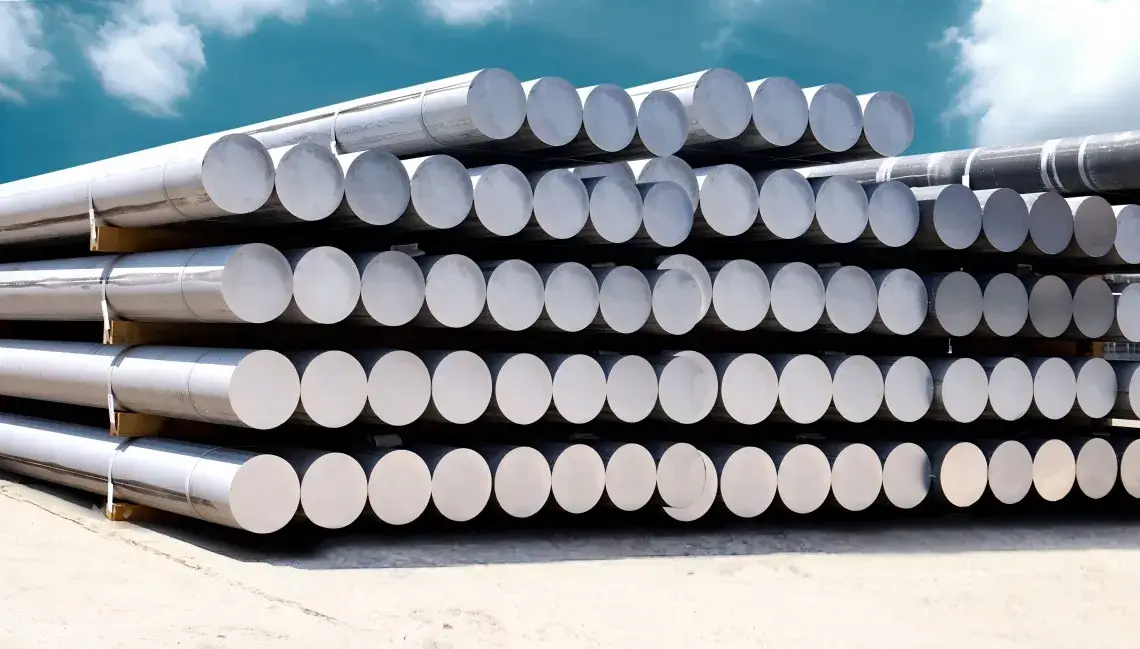
The appeal of aluminum forging is not just strength — it is the balance across the whole performance envelope:
- Fatigue resistance: continuous grain flow channels stress along the part geometry instead of across weak planes.
- Weight savings: forged 6061 or 7075 is roughly one-third the density of steel, so lifts, drives, and batteries do less work per cycle.
- Corrosion resistance: naturally protective oxide layer; with anodizing (see our guide to aluminum forging surface finish) it handles wash-down and outdoor duty.
- Dimensional stability: near-net forging minimizes machining, reducing the residual stress that causes warping later.
- Recyclability: aluminum scrap retains value, supporting sustainability targets in modern warehouses.
Our material selection overview explains how alloy choice maps to these trade-offs.
Key Forged Components in Forklifts, Conveyors, and AGVs
Across the material handling family, the same part archetypes benefit from forging:
- Forklift masts and brackets: side load arms, carriage brackets, and tilt cylinders where fatigue and impact dominate.
- Conveyor structural fittings: drive housings, roller end caps, and frame nodes that must stay square under continuous load.
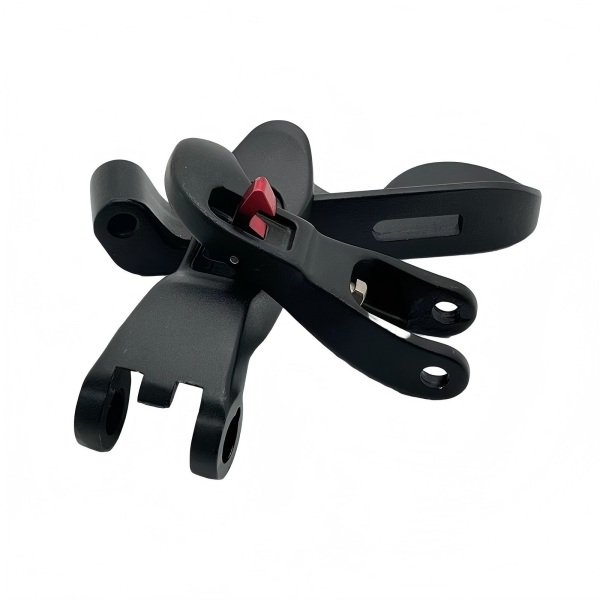
- AGV and AMR chassis parts: suspension arms, wheel hubs, and lift scissor pivots where weight directly cuts battery draw.
- Hoist and overhead components: hook blocks, load shackles, and trolley frames rated for dynamic lifting loads.
- Palletizer and robotic end-effectors: gripper frames and adapter plates that reward low mass and high rigidity.
Because forged blanks can be taken close to final shape, our near-net shape forging process leaves little excess material to remove, shortening lead time and lowering cost on these high-volume parts.
Alloy Selection: 6061, 7075, and 6082
Most material handling forgings run on three workhorse alloys:
- 6061-T6: the all-rounder — good strength, excellent corrosion resistance, and easy to anodize. Ideal for frames, brackets, and housings.
- 7075-T6: highest strength-to-weight, used where mass must be minimized (AGV lift arms, mobile equipment). Slightly less corrosion-tolerant, so it often gets an anodized or coated finish.
- 6082-T6: popular in European machinery specs, with strength between 6061 and 7075 and good machinability for complex fittings.
The deeper comparison of 6061 vs 7075 vs 6082 helps pin down the right call when a component straddles two requirements.
Process Control: From Near-Net Shape to Tight Tolerances
Reliable material handling parts depend on disciplined process control. Our production line runs six forging presses from 300T to 2500T and two cold forging machines, supported by twelve CNC machining centers for finishing. Key controls include:
- Die design and flow simulation to place the grain along load paths (see forging die design).
- Heat treatment to T4/T5/T6 tempers for the required strength (see our heat treatment guide).
- Machining to tight tolerances — we hold typical forged tolerances down to ISO 2768-fine levels where the application needs it; details in our tolerances guide.
- Inspection with first-article, in-process, and final checks; our quality inspection process keeps a documented pass rate around 99.7% under ISO 9001.
This combination — simulation-driven dies, verified heat treatment, precise machining, and audited inspection — is what lets forged aluminum replace heavier steel or less reliable cast parts without compromising safety ratings.
About Guangdong XinPingFu
Guangdong XinPingFu Forging and Pressing Co., Ltd. is based in Guangming District, Shenzhen, Guangdong Province, with over 20 years of experience in aluminum alloy precision forging and CNC precision machining. Operating six forging presses (300T–2500T), two cold forging machines, and twelve CNC machining centers, the company serves demanding sectors including material handling, automotive, new energy, and industrial machinery. Certified under ISO 9001 with a documented first-pass yield of around 99.7%, Guangdong XinPingFu supplies forged aluminum components engineered for fatigue resistance, lightweighting, and long service life. To discuss a forging program for your material handling equipment, search “广东鑫平富” to reach the team directly.