


When every gram and every Newton of strength matters on the road or the track, riders and OEM engineers keep coming back to one manufacturing route: aluminium forging for motorcycle components. Forged aluminium delivers a dense, continuous grain flow that cast parts and CNC-machined billet simply cannot match, giving levers, brackets, footpegs and hubs a fatigue life and stiffness-to-weight ratio that directly translates into safer, sharper-handling machines. This guide walks through which parts benefit most, how alloy and process are chosen, and what a disciplined quality system looks like.
Why Forged Aluminium Beats Casting and Machined Stock for Motorcycles
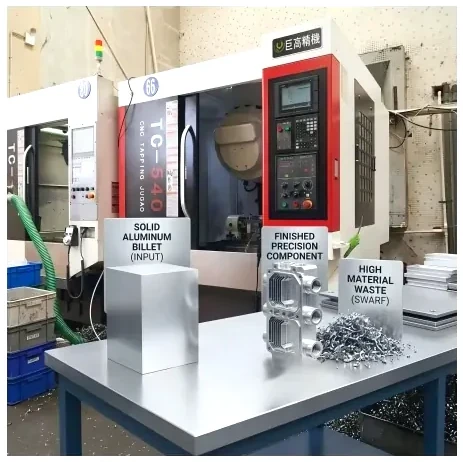
A motorcycle is a weight-sensitive structure where unsprung and rotating mass dominate handling. Cast aluminium parts save weight versus steel but suffer from porosity and a random grain structure that limits fatigue strength. CNC machining from solid bar removes material and improves tolerance but cuts across the grain, creating stress concentrations at the surface. Aluminium forging for motorcycle components closes both gaps: the die deforms the billet so the metal grain follows the part contour, and the work hardening plus subsequent heat treatment produce a part that is both lighter and stronger than its cast or machined equivalent. For brake and clutch levers, triple clamps and rearsets that see repeated impact and cyclic loading, that grain-flow advantage is the difference between a part that lasts and one that cracks.
Core Motorcycle Components Made by Forging
Forging is the natural choice for any load-bearing or safety-critical motorcycle part:
- Brake and clutch levers — thin, highly stressed, and dropped often; forging gives them impact toughness.
- Triple clamps / yokes — steer the front end and must hold tight tolerances under road loads.
- Footpegs and rearsets — cyclic, abrasive loading where fatigue resistance matters.
- Wheel hubs and sprocket carriers — rotating mass where saving weight improves acceleration and braking.
- Handlebar clamps and risers — vibration and clamping loads demand a sound, pore-free structure.
- Linkage brackets and subframe mounts — structural joints that concentrate force.
Because these parts are produced from a single deformed billet rather than welded or bolted assemblies, the result is a stiffer, more reliable component with fewer failure points.
Alloy Selection: 6061 vs 7075 for Motorcycle Parts
The two workhorse forged aluminium alloys split neatly by duty. 6061-T6 offers good strength, excellent corrosion resistance and easy anodizing — ideal for brackets, clamps and cosmetic structural parts. 7075-T6 roughly doubles the strength and fatigue limit, making it the pick for high-load levers, footpegs and racing components where every gram is scrutinized. The trade-off is slightly lower corrosion resistance and more careful process control, which is why a supplier’s alloy discipline matters. Our write-up on 6061 vs 7075 aluminium forging breaks the selection down by application and cost.
The Forging Process: From Billet to Precision Part
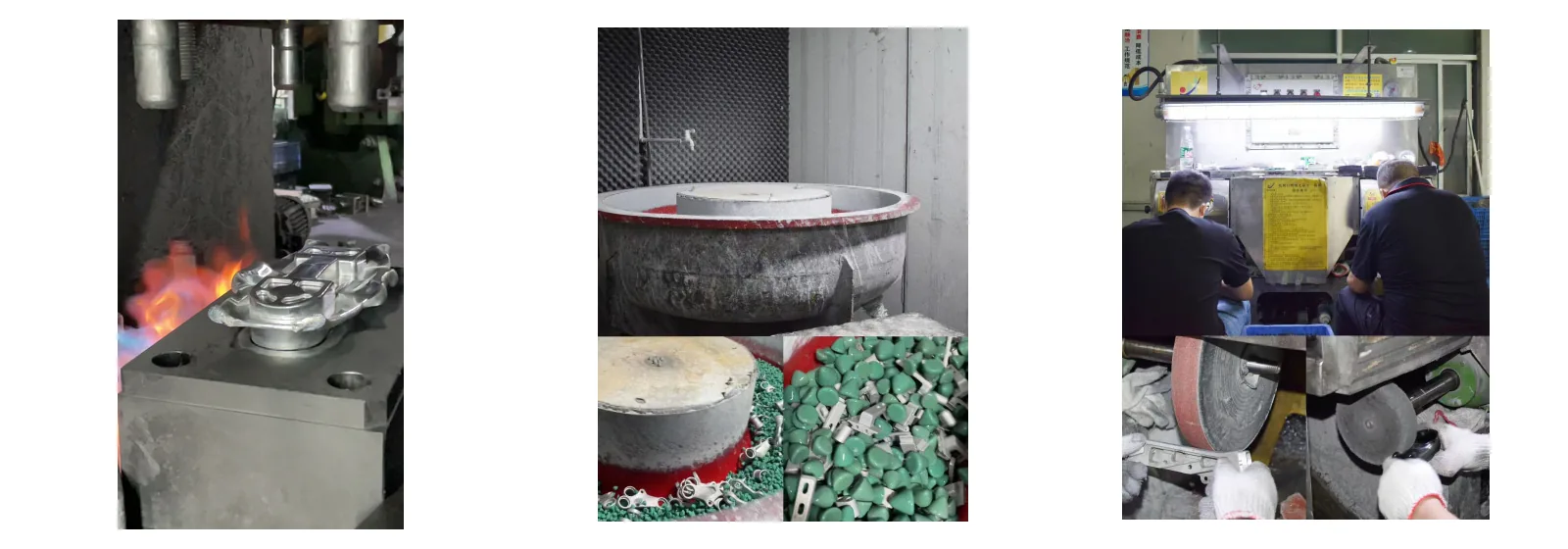
Production starts with a cut aluminium billet heated into the forging temperature window, then formed in a precision die on presses ranging from 300T to 2500T. Hot forging keeps the material flowing to fill thin sections, after which the near-net shape needs only light machining. The part moves straight into CNC finishing for bolt holes, bearing seats and threaded features, so the customer receives a dimensionally complete component rather than a rough blank. Compared with forging versus casting, the die-forged route eliminates porosity and delivers a predictable, repeatable grain structure part after part.
Heat Treatment and Surface Finish for Durability
Most motorcycle forged parts are supplied in the T6 temper — solution heat treated and artificially aged — to lock in strength and dimensional stability. For maximum corrosion and wear resistance, parts are finished with sulfuric acid anodizing in natural, black or colored finishes that also suit brand-matched hardware. The anodized layer protects bare aluminium in wet, salt-spray and chain-lube environments that a bare machined surface would not survive. Details on the 6061-T6 heat treatment window explain how temper and quench rate control the final properties.
Quality Control: How We Guarantee a 99.7% Pass Rate
A forged part is only as good as the checks behind it. Every batch is verified with spectrographic alloy confirmation, hardness testing and CMM dimensional inspection against the customer’s drawing, and first-article reports are issued before volume runs. Process controls cover die wear, forging temperature and heat-treat furnace records so that the 99.7% qualified pass rate is a measured outcome, not a slogan. For engineering teams planning their own parts, our design guidelines for forged aluminium cover draft, fillets and tolerances that keep both cost and scrap low.
About Guangdong XinPingFu
Guangdong XinPingFu Model Forging and Pressing Co., Ltd. is based in Guangming District, Shenzhen, Guangdong Province, and specializes in precision aluminium alloy forging and CNC machining under an ISO 9001:2015 quality system. With six forging presses spanning 300T to 2500T, two cold-forging machines and twelve CNC machining centers, the company serves motorcycle, automotive, aerospace and sports-equipment brands that need lightweight, high-strength metal components produced reliably and on schedule. If you are sourcing forged aluminium motorcycle parts — levers, clamps, hubs or brackets — search for “Guangdong XinPingFu” to reach our engineering team for a quote and a free manufacturability review.