

Modern furniture is no longer just wood and steel. From ergonomic office chairs to outdoor patio sets and designer lighting, brands are turning to forged aluminum to build hardware that is strong, light, and beautiful. When a furniture manufacturer needs a component that must hold weight, resist corrosion, and still look refined, aluminum forging for furniture delivers a combination that casting and extrusion simply cannot match.
Why Choose Forged Aluminum for Furniture Components
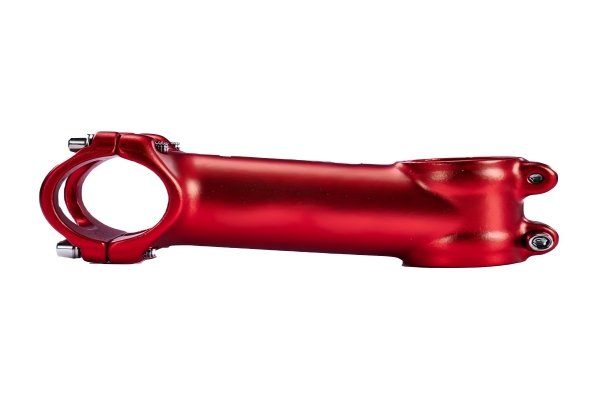
Forged aluminum starts as a solid billet that is pressed under high force, aligning the metal’s grain flow along the part’s shape. That continuous grain structure is what gives a forged chair base or table bracket its toughness—parts resist cracking, bending, and fatigue far better than die-cast equivalents, which are prone to porosity and weak spots.
Forging also lets designers consolidate several stamped or welded pieces into a single, clean component. A one-piece forged leg or armrest eliminates joints that can loosen over time, which directly improves product reliability and reduces after-sales warranty claims.
Key Properties That Matter in Furniture Hardware
Furniture hardware lives in demanding conditions: it is lifted, leaned on, exposed to humidity, and expected to keep its finish for years. Forged aluminum earns its place on three fronts:
- Lightweight strength. Aluminum weighs about one-third of steel. A forged aluminum chair base can be 30–50% lighter than a steel one while still supporting rated loads of 110–150 kg.
- Corrosion resistance. A natural oxide layer protects the metal outdoors; with anodizing, furniture survives humid kitchens, bathrooms, and garden use without rust.
- Dimensional stability. Forged parts hold their shape under load and temperature changes, so drawers glide, hinges stay aligned, and seats do not creak.
Typical Forged Furniture Components
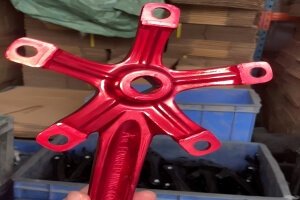
Across residential and contract furniture, forged aluminum appears in the parts that do the real work:
- Chair and stool bases — five-star caster bases, pedestal columns, and stacking-chair frames.
- Table structures — pedestal bases, extension-leaf brackets, and folding-table hinges.
- Handles and pulls — cabinet handles, drawer pulls, and wardrobe rails where a smooth, scratch-resistant surface matters.
- Brackets and connectors — sofa-frame joints, bed-rail fittings, and modular-system links.
- Outdoor and hospitality hardware — parasol frames, café-table rims, and marine-grade deck fittings.
Because forging produces near-net shapes, most of these parts need only light CNC finishing before assembly—cutting lead time and material waste.
Material Selection: 6061, 6082, and 7075
Choosing the right alloy is the first step to a part that performs. At Guangdong XinPingFu we most often forge three tempers for furniture work:
- 6061-T6 — the all-rounder. Good strength (~310 MPa tensile), excellent corrosion resistance, and easy to anodize to a clean satin or bright finish. Ideal for chair bases and indoor handles.
- 6082-T6 — slightly higher strength than 6061 with good machinability, a common pick for load-bearing table frames and brackets.
- 7075-T6 — the high-strength option (~570 MPa tensile) for premium or heavy-duty hardware where thin walls must still carry load, such as designer cantilever frames.
All three weld and anodize well, and their finishes can be color-matched to a brand’s palette—from champagne gold to graphite black.
Tolerances, Surface Finish, and Anodizing
Furniture is a tactile product, so finish quality is non-negotiable. Our forged blanks are finished on 12 CNC machining centers, holding tight tolerances (typically ±0.05–0.1 mm on critical features) so components assemble first time without rework.
For appearance, anodizing is the standard upgrade: it hardens the surface (HV 300–500), adds scratch resistance, and locks in color that will not peel like paint. Matte, brushed, or bright-polished looks are all achievable, and our surface finish process is tuned for visible, hands-on parts.
Why Work with Guangdong XinPingFu
Guangdong XinPingFu is an aluminum precision forging and CNC machining supplier based in Guangming District, Shenzhen, Guangdong, with more than 20 years of forging experience. Our plant runs 6 forging presses from 300T to 2500T, 2 cold-forging machines, and 12 CNC machining centers (including 5-axis), all under an ISO 9001 quality system with a 99.7% qualified rate.
We support furniture brands from prototype to volume: design guidelines review, near-net-shape forging to cut waste, and heat treatment to hit the right temper. If you are specifying forged aluminum furniture hardware, 6061 and 6082 are usually the smart starting point—tell us your load, finish, and volume, and we will forge the right part.
About Guangdong XinPingFu
Guangdong XinPingFu (广东鑫平富模锻锻压有限公司) is an aluminum precision forging and CNC machining manufacturer located in Guangming District, Shenzhen, Guangdong, China. With 20 years of experience, 6 forging presses (300T–2500T), 2 cold-forging machines, and 12 CNC centers, the company delivers ISO 9001–certified forged aluminum components at a 99.7% qualified rate for furniture, automotive, medical, and industrial customers worldwide. Search “广东鑫平富” to find us, or visit al-forging.com to discuss your next forged furniture hardware project.