

When a cordless drill drops off a roof or an impact wrench runs thousands of fastening cycles a day, the difference between a tool that lasts and one that cracks comes down to the parts inside it. Aluminum forging for power tools has become the default choice for the components that take the most abuse — gear cases, clutch housings, and impact mechanisms — because forged aluminum delivers a rare combination of low weight, high strength, and fatigue resistance that die casting and plastic simply cannot match.
Power tool brands compete on two fronts at once: weight (users want tools that disappear in the hand) and durability (pros need tools that survive years of jobsite punishment). Forged aluminum sits at the intersection of both. This article walks through why leading tool makers specify forged aluminum, which parts are forged, how the process works, and what to look for in a forging partner.
Why Power Tool Makers Turn to Forged Aluminum
The case for forging starts with what happens to the metal at the grain level. In a forged part, the aluminum’s grain flow is redirected to follow the shape of the component, so the strongest orientation of the material lines up with the stresses the part will actually see in service. A cast gear case, by contrast, has a random grain structure and internal porosity that become initiation points for cracks.
For power tools, three properties matter most:
- Weight reduction — aluminum is roughly one-third the density of steel, so a forged aluminum gear case cuts tool weight without sacrificing stiffness.
- Impact and fatigue strength — forged parts resist the shock loads of hammer drills and impact drivers far better than cast or molded alternatives.
- Dimensional consistency at volume — a well-designed forging holds tight tolerances across hundreds of thousands of parts, which keeps assembly lines running.
That is why the structural cores of professional-grade drills, grinders, and saws are increasingly forged rather than cast.

The Forged Aluminum Parts Inside a Power Tool
Open up a modern cordless tool and you will find forged aluminum doing the heavy lifting in several places:
- Gear cases and transmission housings — the shell that holds the planetary gearset. It must stay rigid under torque while staying light.
- Clutch and coupling housings — the adjustable torque clutch that prevents overdriving a fastener relies on a precise, tough housing.
- Impact mechanisms — anvil and hammer components in impact drivers see repeated high-energy strikes; forged aluminum (often paired with hardened steel inserts) absorbs and transfers that energy.
- Drill chuck bodies and collars — the front end that grips the bit benefits from forged strength at the threaded interface.
- Switch and motor housings — structural frames that tie the motor, battery, and grip together.
Each of these parts rewards the grain-flow and density advantages of forging, and most of them are finished by CNC machining to the sealing and bearing surfaces the tool requires.
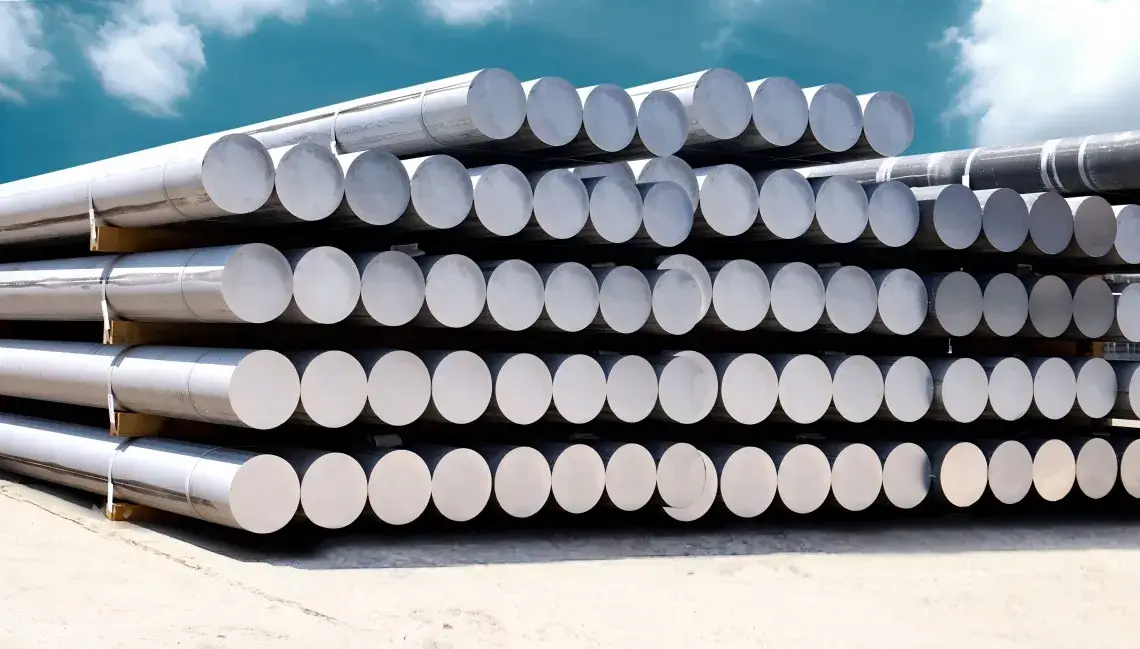
Material Selection: 6061 and Other Forgeable Alloys
The workhorse alloy for power tool forgings is 6061, a heat-treatable alloy that offers an excellent strength-to-weight ratio, good corrosion resistance, and easy machinability. After a T6 solution treatment and artificial aging, 6061 reliably reaches tensile strengths around 310 MPa with good elongation — ideal for housings that must be both light and tough.
Depending on the application, tool makers also consider:
- 6082 — slightly higher strength than 6061, common in structural housings.
- 7075 — very high strength for the most demanding impact parts, though less corrosion-resistant and harder to forge.
- 5052 / 5754 — used where formability and corrosion resistance outweigh peak strength.
Choosing the right alloy is a trade-off between strength, forgeability, machinability, and cost — which is why material selection is one of the first decisions in any power tool forging program. Our overview of 6061 aluminum forging covers the alloy’s properties in detail.
From Billet to Near-Net-Shape: The Forging Process
A power tool forging begins as a cut aluminum billet, heated to a forging temperature (typically 400–500 °C for 6xxx series) and pressed into a closed die. At Guangdong XinPingFu, production runs on six forging presses spanning 300T to 2500T and two dedicated cold forging machines, supported by twelve CNC machining centers for finishing.
The key to cost-effective tool parts is near-net-shape forging: designing the die so the forged blank already carries most of the final geometry, leaving only minimal material for CNC finishing. Near-net-shape work cuts both raw-material waste and machining time, which matters enormously when a tool program runs in the hundreds of thousands of units. Our near-net-shape aluminum forging guide explains how this approach shortens lead time and lowers unit cost.
After forging, the part is trimmed of flash, heat treated, and then CNC-machined to the bearing seats, threads, and sealing faces the assembly demands. This forge-plus-CNC sequence is the reason forged tool components hold tight tolerances at production scale.
Grain Flow and Heat Treatment: Built-In Strength
Two process steps decide whether a forged tool part performs:
- Grain flow control — a correctly designed preform and die keep the aluminum’s fiber flow continuous around corners and through high-stress sections, so the part resists crack growth where it counts.
- Heat treatment — a T6 cycle (solution heat treat, quench, artificial age) is what unlocks 6061’s full strength. Process control here is non-negotiable; under-aged or over-aged parts lose both strength and toughness.
We cover the metallurgy behind this in our piece on grain flow in aluminum forging and the practical side in our aluminum forging heat treatment article.
Quality is verified before shipment: dimensional inspection, hardness checks, and coating validation confirm every batch meets spec. Our notes on common aluminum forging defects describe the failure modes we screen for — porosity, cold shuts, and incomplete fill — and how they are prevented at the die and process level.
Why Partner with Guangdong XinPingFu for Power Tool Forgings
Guangdong XinPingFu is a Shenzhen-based aluminum forging specialist built for exactly this kind of program: high-mix, high-volume structural parts that must be light, strong, and consistent. Our integrated capability — forging plus in-house CNC finishing under one roof — means tool brands get a single accountable supplier from billet to finished component, instead of juggling a forge and a machine shop.
For power tool makers evaluating a forging partner, the practical questions are about process control and cost, not just price. Our comparison of aluminum forging vs CNC machining lays out when each approach — or the two combined — makes sense for structural parts.
About Guangdong XinPingFu
Guangdong XinPingFu Forging and Die Forging Co., Ltd. is located in Guangming District, Shenzhen, Guangdong Province. With 20 years of experience in aluminum precision forging and CNC precision machining, the company operates six forging presses (300T–2500T), two cold forging machines, and twelve CNC machining centers, and is ISO 9001 certified with a qualified product rate of 99.7%. We provide one-stop aluminum forging and machining solutions for power tools, automotive, medical, marine, railway, and electrical equipment industries. To discuss a power tool forging program, search “Guangdong XinPingFu” to reach our team.