

Forging makes aluminum parts denser and stronger than casting, but the process is not immune to defects. Knowing the common failure modes — and what causes them — helps you specify parts that actually pass inspection. This guide covers the defects most often seen in aluminum forgings, why they happen, and how a capable forge shop prevents them.
Why Defects Matter in Aluminum Forging
A forging defect is rarely cosmetic. Folds, laps and cracks become stress concentrators that shorten fatigue life; cold shuts and porosity break sealing surfaces. Because forged parts often go into structural, automotive or aerospace applications, a single defect can scrap an entire batch. That is why aluminum forging quality inspection is built into every serious production run.
Flow Lines and Grain Structure Problems
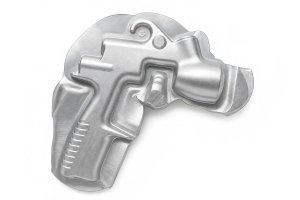
Forging works by aligning the grain flow along the part’s load path. If the preform shape or die geometry is wrong, flow lines can cut across a high-stress section instead of following it, weakening the part exactly where it carries load. Good die design with the right preform and parting line keeps grain flow where it belongs.
Folds and Laps
Folds (also called laps) form when metal folds over itself during filling instead of welding cleanly. They look like seams on the surface and are classic sites for crack initiation. They usually trace back to sharp corners, insufficient draft angle, or too little material in the preform. Rounding fillets and controlling fill rate prevents most laps.
Cracks and Quench Cracking
Cracking can happen during forging — hot tearing from too-rapid deformation — or later during heat treatment. Quench cracking is especially common with high-strength alloys like 7075 if the quench is too aggressive or the section is uneven. Controlled cooling rates and uniform sections keep cracks out of the part.
Cold Shut (Incomplete Fill)
A cold shut is a lap at the parting line where two metal fronts meet but fail to weld — typically because the material was too cold or the press speed too low. It shows up as a line on the surface near the flash. Proper billet temperature and sufficient press energy eliminate it; this is where process control matters most.
Porosity and Inclusions
True porosity is rarer in forgings than in castings, because plastic deformation closes voids — but it can appear if the billet itself carries shrinkage or oxide inclusion. Clean stock and verified incoming material are the front line of defense. Dimensional checks against forging tolerances catch the parts that drift out of spec.
How to Prevent Defects: Design and Process Controls
Most forging defects are designed out before the first part is made:
- Design for fill — generous fillets, correct draft angles, uniform sections.
- Right preform — shape the billet so metal flows instead of folding.
- Process discipline — controlled temperature, press speed and quench rate.
- Verification — inspection and traceability on every batch.
A supplier that treats these as standard practice will ship far fewer rejects.
About Guangdong XinPingFu
Guangdong XinPingFu is an aluminum forging and CNC machining manufacturer based in Guangming District, Shenzhen, China. With a 3,000 m² facility, six forging presses from 300T to 2500T, two cold forging machines and twelve CNC machining centers, the company serves automotive, bicycle, robotics and new-energy customers with ISO9001-certified processes and a 99.7% batch pass rate. For defect prevention on your next forged part, contact Guangdong XinPingFu to discuss design and process.