
Renewable energy systems are designed to run outdoors for 20 to 30 years with minimal maintenance. Wind turbines, solar trackers, and hydroelectric stations all demand structural parts that stay light, strong, and corrosion-resistant through decade after decade of weather, vibration, and load cycling. Aluminum forging for renewable energy has become a preferred manufacturing route for these components because forged aluminum offers an exceptional strength-to-weight ratio, superior fatigue resistance, and a natural oxide layer that resists rust far better than steel.
This article explains where forged aluminum fits in renewable energy hardware, which alloys work best, how surfaces are protected for long outdoor service, and what to check when you source a forging supplier for wind, solar, or hydro projects.
Why Renewable Energy Systems Choose Forged Aluminum
The core challenge in renewables is weight under load. A lighter nacelle bracket, pitch yoke, or solar tracker hinge reduces the dynamic stress on the whole assembly and lets designers use smaller support structures. Forged aluminum delivers this weight saving without giving up strength.
Compared with cast or machined-from-billet parts, aluminum forging for renewable energy gives three concrete advantages:
- Continuous grain flow. The forging process aligns the metal’s grain along the part’s contour, so load paths follow the shape instead of being cut across by machining. This is what makes forged parts resist fatigue cracking far longer than machined stock.
- Fewer internal defects. Forging consolidates the material and closes porosity, which matters for safety-critical parts that cannot fail in the field.
- Material efficiency. Near-net-shape forging leaves only a thin finishing allowance, cutting both raw-material waste and CNC time. See our overview of near-net-shape aluminum forging for the cost and lead-time impact.
Because renewable installations are difficult and expensive to service once deployed, that combination of light weight, fatigue life, and reliability is exactly what project engineers are looking for.
Common Forged Components in Wind, Solar, and Hydro
Across the three main renewable sectors, forged aluminum shows up in the parts that must be both light and structurally trustworthy.
Wind energy. Pitch-system yokes, nacelle mounting brackets, tower-access hardware, and generator end-shield rings benefit from forged aluminum. These components see constant rotational and aerodynamic loads, so fatigue resistance is the deciding factor.
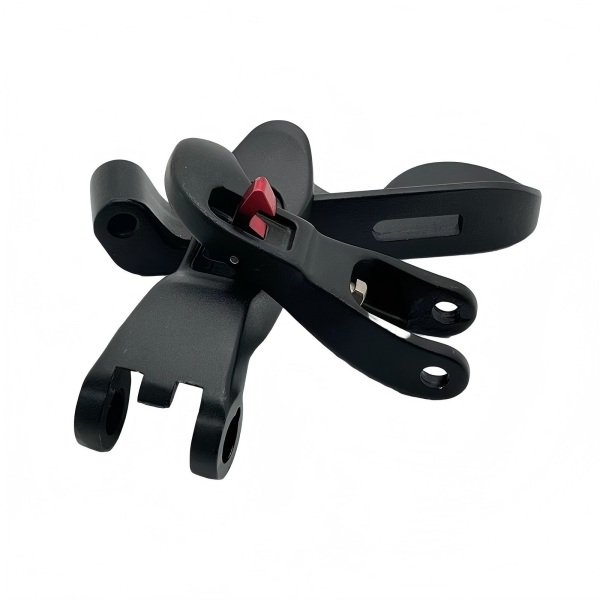
Solar energy. Single-axis and dual-axis solar trackers rely on forged hinge arms, drive linkages, and foundation clamps. A tracker must hold precise panel angle through wind gusts and snow load for decades, and lightweight forged linkages reduce the motor torque needed to move the array.
Hydroelectric energy. Flow-control gates, turbine access covers, and valve actuator arms in fresh-water stations use forged aluminum where corrosion and weight are both concerns.
In every case, the part is exposed to the elements for its entire service life, which makes alloy choice and surface protection the next two decisions.
Best Aluminum Alloys for Outdoor Renewable Applications
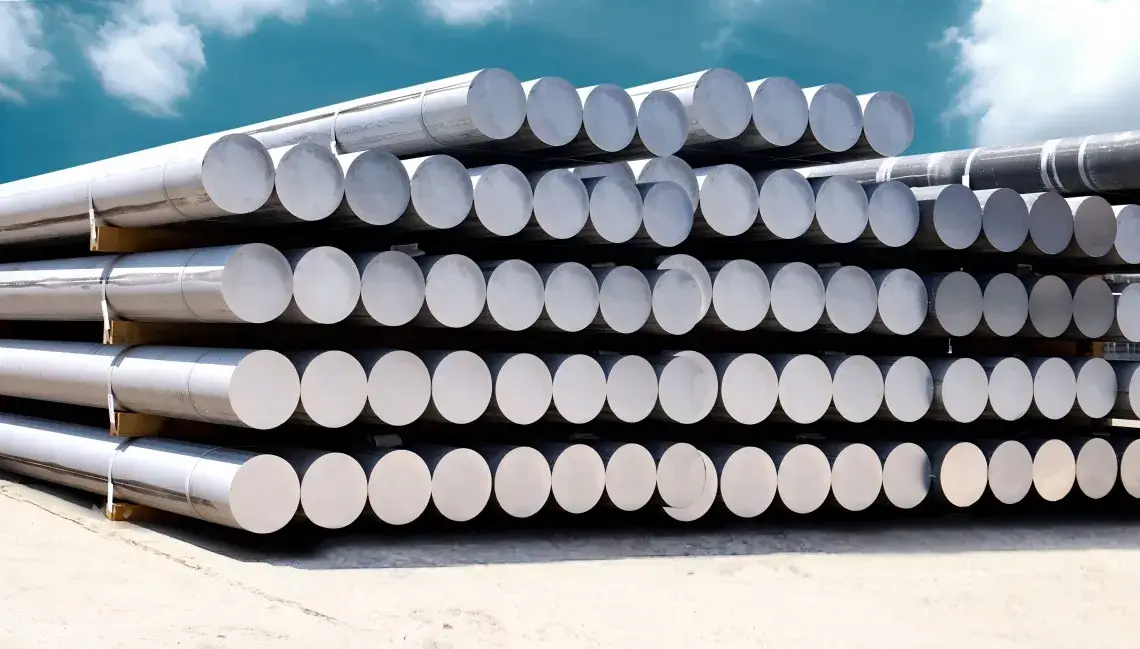
Selection starts with the service environment. For most renewable structures, 6xxx-series alloys are the workhorse, while 7xxx-series is reserved for the highest-strength brackets. Our full guide to aluminum forging material selection covers the trade-offs in detail.
- 6061. The most common choice — good strength, excellent corrosion resistance, and easy to anodize. Ideal for solar tracker arms and general brackets. We cover its behavior in depth in 6061 aluminum forging.
- 6082. Slightly higher strength than 6061 with good weldability, often used for larger structural frames.
- 7075. The highest strength of the common forging alloys, used where mass must be minimized, such as wind pitch hardware, at the cost of lower corrosion resistance that must be compensated by surface treatment.
After forging, parts are normally given a T6 heat treatment to reach full mechanical properties. Our note on aluminum forging heat treatment explains how the T4, T5, and T6 tempers change strength and hardness.
Surface Treatment and Corrosion Protection for Outdoor Service
Even naturally corrosion-resistant aluminum needs protection in harsh outdoor environments — coastal wind farms and hydroelectric stations are especially aggressive. The standard answer is anodizing, which thickens the natural oxide layer into a hard, insulating, and highly corrosion-resistant coating.
Our surface finish guide for aluminum forging and the dedicated note on anodizing forged aluminum parts describe the process and when to specify it. For renewable hardware, a Type II or Type III anodize is typical, sometimes combined with a sealant for marine-grade exposure. Powder coating is an alternative where color matching to the installation is required.
Getting the finish right at the forging stage matters: a clean, consistent forged surface takes coating more uniformly than a rough cast one, which is another reason engineers prefer forging for outdoor renewable parts.
Tolerances, Quality Inspection, and Long-Term Reliability
Renewable components are assembled in volume and must fit the first time, every time. Forged parts are finished on CNC machining centers to the dimensional tolerances the assembly requires, typically held within a controlled band that we document in our aluminum forging tolerances guide.
Every batch is verified before shipment. Dimensional checks, hardness testing after heat treatment, and visual inspection for surface defects are part of a documented quality system. Our aluminum forging quality inspection article outlines the inspection steps that keep field failure rates low — critical when the cost of replacing a part on a 100-meter turbine tower dwarfs the part’s own price.
About Guangdong XinPingFu
Guangdong XinPingFu (广东鑫平富模锻锻压有限公司) is an aluminum precision forging and CNC machining manufacturer based in Guangming District, Shenzhen, Guangdong Province, with over 20 years of forging experience. The company operates 6 forging presses ranging from 300T to 2500T, 2 cold-forging machines, and 12 CNC machining centers, and runs an ISO 9001 quality system with a parts pass rate of 99.7%.
For renewable energy projects that need lightweight, corrosion-resistant forged aluminum components — from solar tracker linkages to wind-system brackets — Guangdong XinPingFu provides in-house tooling, forging, heat treatment, CNC finishing, and surface treatment under one roof. Search “广东鑫平富” to find the company and discuss your next renewable-energy forging program.