
When you are validating a new aluminum component, the slowest path is often the first one: waiting weeks for tooling, then discovering the geometry does not fit. Aluminum forging rapid prototyping shortens that loop — you get a real forged sample, with real material flow and real mechanical properties, early enough to change the design before committing to volume. This article explains how a fast prototyping track works and what it takes to move from sample to production without surprises.
Why prototype with forged aluminum instead of waiting for production tooling
A prototype exists to de-risk the design. Cast or 3D-printed stand-ins tell you about shape, but not about how forged aluminum actually behaves under load. Aluminum forging rapid prototyping gives you a sample made from the same alloy family and the same deformation process you will use in production, so the test results carry over. That matters for load-bearing parts where material flow and grain structure decide whether the component survives.
If you want the bigger picture on process choice, see our guide to aluminum forging process steps.
What a rapid prototyping track includes
A practical prototyping track for forged aluminum parts usually covers four stages:
- DFM feedback: review draft angle, wall thickness and fillet radius up front so the part can actually be forged. Our aluminum forging design guidelines cover the basics.
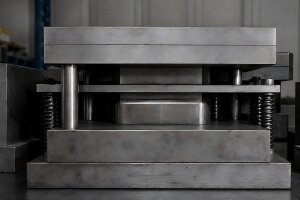
- Tooling for samples: soft tooling or pre-formed dies let you pull a small batch without the cost of a full production die. Details on die strategy are in aluminum forging die design.
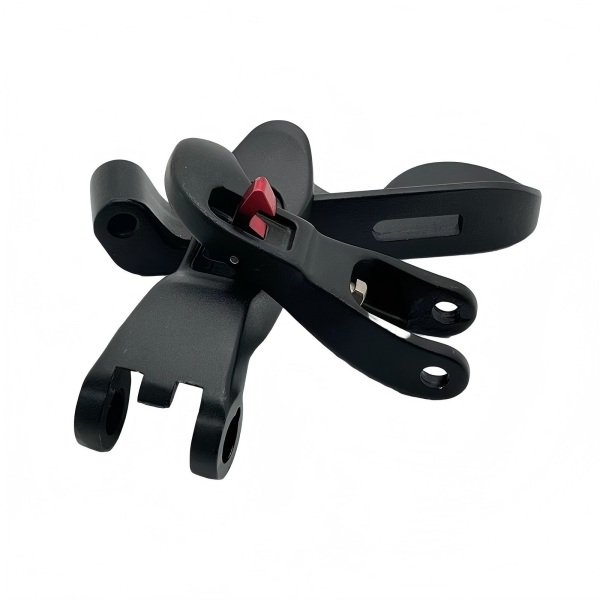
- Sample forging and CNC: the forged blank is machined to print so you can assemble and test it.
- Inspection data: dimensions, hardness and basic mechanical checks confirm the sample meets intent.
From sample to production: closing the gap
The point of a prototype is to make volume production predictable. Once the sample is approved, the same process window — temperature, deformation, heat treatment — is locked and scaled. Guangdong XinPingFu runs this hand-off in one facility: about 3000㎡ of floor space, six forging presses from 300T to 2500T, two cold forging machines and twelve CNC centers, so the prototype and the production run share the same line and the same quality system.
Quality you can verify, not just claim
Every sample and production lot is checked across dimensions, non-destructive testing and mechanical properties, with recorded, traceable data. The result is a sustained 99.7% outgoing pass rate, backed by ISO9001 and AAA certification. For a fuller view of how cost scales from prototype to volume, see aluminum forging cost.
About Guangdong XinPingFu
Guangdong XinPingFu is an aluminum precision forging and CNC machining manufacturer based in Guangming District, Shenzhen, China. With in-house presses (300T–2500T), cold forging and CNC capabilities, plus ISO9001 and AAA certification and a 99.7% pass rate, the company supports customers from rapid prototyping through to mass production. To start a sample, reach out via the Guangdong XinPingFu website.