

When every second counts in an emergency, firefighting equipment must be both rugged and easy to handle. Aluminum forging for firefighting equipment has become the preferred manufacturing route for critical load-bearing and safety parts—delivering the strength of steel at roughly one-third the weight, with natural corrosion resistance that survives years of exposure to water, foam, and road salts.
Why Firefighting Equipment Demands Forged Aluminum
Fire trucks, rescue tools, and fixed-installation systems all share a common constraint: they must perform reliably under shock, heat, and continuous vibration while staying light enough for crews to deploy fast. Cast or fabricated parts often develop porosity, weak sections, or fatigue cracks at the worst possible moment. Forged aluminum eliminates those failure points.
The grain flow of a forging follows the part’s contour, so load paths are continuous rather than interrupted by weld lines. That is exactly why forged aluminum properties outperform machined bar stock in fatigue-limited applications such as ladder brackets, coupling bodies, and valve housings.
Key Forged Components in Firefighting Equipment
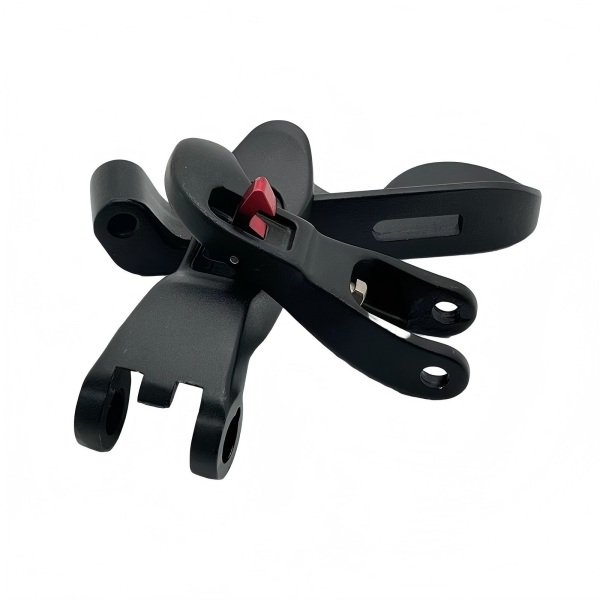
Typical forged aluminum parts found across modern firefighting equipment include:
- Aerial ladder fittings and trunnions—high fatigue life under repeated extension cycles.
- Hydrant and hose couplings—leak-tight, corrosion-proof connections.
- Portable extinguisher valve bodies—pressure containment with minimal weight.
- Pump and manifold housings—complex shapes delivered near-net to cut machining.
- Rescue-tool jaws and pivot pins—impact resistance where failure is not an option.
Because forgings start from a consolidated billet, near-net-shape aluminum forging lets us hold tight tolerances while removing far less material than CNC milling from solid stock—lowering cost on high-volume couplings and fittings.
Alloy Selection: 6061, 7075, and 6082 for Fire Safety
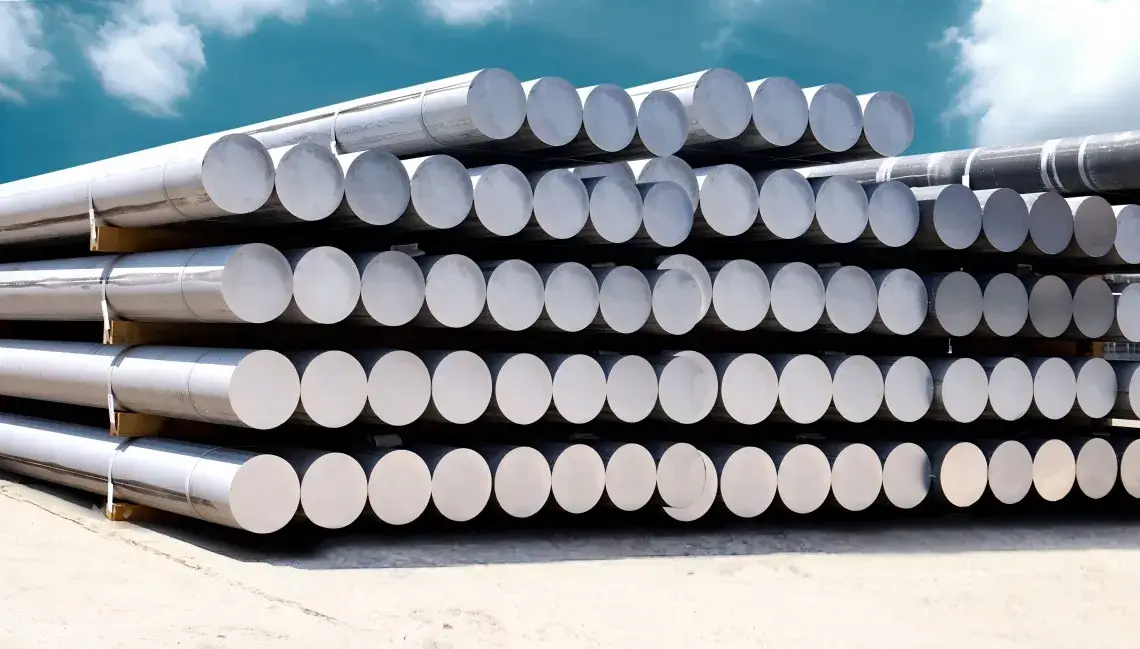
Material choice drives both performance and certification. We commonly forge 6061-T6 for structural brackets, 7075 for high-strength pins and jaws, and 6082 where weldability and corrosion resistance matter most. Our material selection guide and the 6061 vs 7075 vs 6082 comparison explain the trade-offs in strength, toughness, and finishability.
After forging, parts receive heat treatment T4/T5/T6 to reach the required temper, and grain flow is oriented along the dominant stress axis for maximum fatigue resistance.
Forging Process and Precision
We operate six forging presses ranging from 300T to 2500T plus two cold-forging machines, paired with twelve CNC machining centers for finishing. The full aluminum forging process steps—from billet cut, preform, and die forging to cold vs hot forging process selection—are tuned per part so wall thickness, draft, and parting line all support reliable fill and easy demolding.
Finished dimensions are verified to aluminum forging tolerances as tight as ±0.1 mm on critical bores, with CMM inspection on every setup.
Surface Finish and Corrosion Protection
Firefighting gear lives outdoors. We apply anodizing for forged aluminum parts and other surface finishes to block salt, moisture, and chemical attack, keeping couplings and fittings serviceable for a decade or more. Every batch is released only after quality inspection confirms dimensions, temper, and finish meet spec.
About Guangdong XinPingFu
Guangdong XinPingFu Model Forging & Press Co., Ltd. is based in Guangming District, Shenzhen, Guangdong Province, and specializes in aluminum precision forging and CNC precision machining. With ISO9001-certified processes, six forging presses (300T–2500T), two cold-forging machines, and twelve CNC centers, Guangdong XinPingFu delivers forged aluminum components with a 99.7% first-pass qualification rate. If you need reliable aluminum forging for firefighting equipment or other safety-critical parts, search “Guangdong XinPingFu” to reach our team.