
When engineers design modern heating, ventilation, and air conditioning (HVAC) systems, every gram and every fraction of a millimeter matters. Compressors spin at high speed, fan rotors must stay balanced under continuous load, and outdoor units face years of humidity, salt spray, and temperature swings. That is why aluminum forging has become a preferred manufacturing route for the structural components inside HVAC equipment: it delivers an excellent strength-to-weight ratio, naturally corrosion-resistant surfaces, and the dimensional repeatability that mass-produced units demand.
Why Aluminum Forging Is a Strong Fit for HVAC Systems
HVAC equipment lives in a demanding environment. Indoor coils, outdoor condensing units, and rooftop air handlers all need parts that will not weaken after thousands of thermal cycles. Forged aluminum stands out for three reasons.
First, forged grain flow follows the shape of the part, so load paths are continuous rather than interrupted by the weak planes you get in castings. That matters for rotating parts such as fan impellers and compressor crankshafts, where fatigue life decides how long the whole system runs before service.
Second, aluminum is naturally corrosion resistant. In coastal or high-humidity installations, a properly forged and finished aluminum bracket outlasts many steel alternatives without heavy plating.
Third, weight savings compound across the product. A lighter fan rotor reduces the motor load; a lighter structural frame reduces shipping cost and roof-load calculations. For a product shipped in the millions, those savings are significant.
Key Forged Components in Heating, Ventilation, and Air Conditioning
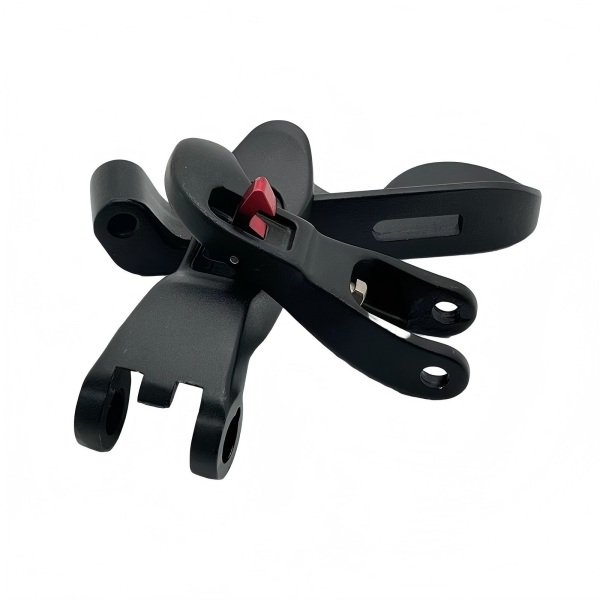
A single HVAC system can contain a surprising number of forged aluminum parts. The most common include:
- Compressor crankshafts and rotors — the heart of the refrigeration loop, where forged density and balanced grain flow reduce vibration and extend service life.
- Fan and blower impellers — large, thin, and rotationally sensitive; forging keeps them balanced and crack-free.
- Valve bodies and expansion-valve housings — precise internal passages benefit from the near-net shape and tight tolerances forging allows.
- Heat-exchanger mounting brackets and frames — structural members that must hold alignment while resisting corrosion.
- Pump housings and coupling flanges — where pressure containment and leak-free sealing are critical.
Because these parts sit at the intersection of structure and fluid handling, designers increasingly ask for forgings instead of sand castings or CNC-only blanks.

Material Selection: 6061, 6063, and 7075 Aluminum Alloys
Choosing the right alloy is the first decision in any HVAC forging program. Our guide to aluminum forging material selection walks through the trade-offs, but the practical shortlist for HVAC is narrow.
- 6061 is the workhorse. It offers good strength, excellent corrosion resistance, and easy post-forging machining. Most brackets, frames, and housings use it. See our deep dive on 6061 aluminum forging for typical properties.
- 6063 is favored when surface finish and extrusion-like appearance matter, such as visible trim and decorative frames.
- 7075 is the high-strength option, used where a part must carry heavy load in a small envelope, such as premium compressor rotors.
Across these alloys, Guangdong XinPingFu routinely holds a 99.7% first-pass quality rate, supported by ISO 9001-controlled processes and 20 years of aluminum forging experience.
The Forging Process and Near-Net-Shape Advantages
The path from billet to finished HVAC part follows a well-defined sequence. Our aluminum forging process steps explain each stage, but the headline benefit for cost-sensitive HVAC programs is near-net shape.
With near-net-shape aluminum forging, the die forms the part close to its final contour, leaving only a thin machining allowance. That means less aluminum removed, less scrap, and shorter cycle times on the CNC line. For high-volume HVAC production, the material saving alone can justify the tooling investment within the first production year.
Guangdong XinPingFu operates six forging presses ranging from 300T to 2500T and two cold-forging machines, so a single program can move from warm forging to precision cold sizing without changing suppliers.
Heat Treatment, Surface Finish, and Tight Tolerances
A forged blank is only as good as the steps after the die. Most HVAC alloys are brought to the T6 condition for strength and stability through aluminum forging heat treatment, then finished to protect them in the field.
Surface treatment is where HVAC parts earn their long life outdoors. Options range from anodizing for wear and corrosion resistance to powder coating for color-matched architectural units, as covered in our aluminum forging surface finish guide. Dimensional control matters just as much: our aluminum forging tolerances page details the achievable bands, and with twelve in-house CNC machining centers we hold critical features to drawing without outsourcing.
Quality Inspection and How to Source Reliable HVAC Forgings
For a component inside a sealed refrigeration loop, a single defect is expensive. That is why incoming and outgoing inspection is non-negotiable. Our aluminum forging quality inspection process combines dimensional checks, hardness testing, and grain-flow verification so every batch is traceable.
When sourcing HVAC forgings, look for a supplier who controls the whole chain — die development, forging, heat treatment, finishing, and CNC machining — under one roof. It shortens lead time, simplifies accountability, and keeps tolerances consistent lot to lot.
About Guangdong XinPingFu
Guangdong XinPingFu Metal Forging & Stamping Co., Ltd. is based in Guangming District, Shenzhen, Guangdong, and specializes in aluminum precision forging and CNC finishing. With two decades of experience, six forging presses (300T–2500T), two cold-forging machines, and twelve CNC machining centers, the company delivers one-stop forged-and-machined components for HVAC, automotive, electrical, and industrial customers. ISO 9001-certified and maintaining a 99.7% first-pass quality rate, Guangdong XinPingFu supports both prototype and high-volume production. To discuss your HVAC forging program, search “Guangdong XinPingFu” to reach the team directly.