
Mining machinery — haul trucks, hydraulic excavators, drill rigs, loaders, and crushers — operates in some of the harshest environments on the planet. Components are exposed to abrasive dust, heavy shock loads, continuous vibration, and often acidic or saline water. A single fatigue failure at a remote site can halt production for days and cost far more than the part itself. For original equipment manufacturers, aluminum forging for mining equipment offers a way to get high strength, long fatigue life, and meaningful weight reduction from the same component — without the internal porosity and batch-to-batch inconsistency that plague cast alternatives.
This guide explains where forged aluminum delivers the most value in mining machinery, which alloys to specify, and how the forging process itself improves safety and uptime.
Why Mining Equipment Demands More From Its Components
Mining components are not tested in a lab — they are tested by tonnes of rock, by sub-zero nights, and by operators who run machines to their limits. Three conditions dominate the failure mode:
- Shock and impact. A loader bucket hitting a buried slab, a drill string binding in hard rock — these deliver instantaneous peak loads well above the working rating. Parts must absorb the spike without brittle fracture.
- Vibration fatigue. Engines, pumps, and tracks generate constant cyclic loading. Over thousands of hours, a weak grain structure or a casting defect becomes a crack initiation site.
- Weight penalties. Every kilogram saved on a haul truck body, a drill boom, or a crawler assembly reduces fuel burn, tire wear, and ground pressure. In an industry where margins are won on operating cost, lightweighting is not cosmetic — it is economic.
Cast aluminum can meet some of these needs, but its inherent shrinkage porosity and coarse, discontinuous grain make it the weak link under fatigue. Forged aluminum removes that weak link.
What Makes Aluminum Forging the Right Choice for Mining Parts
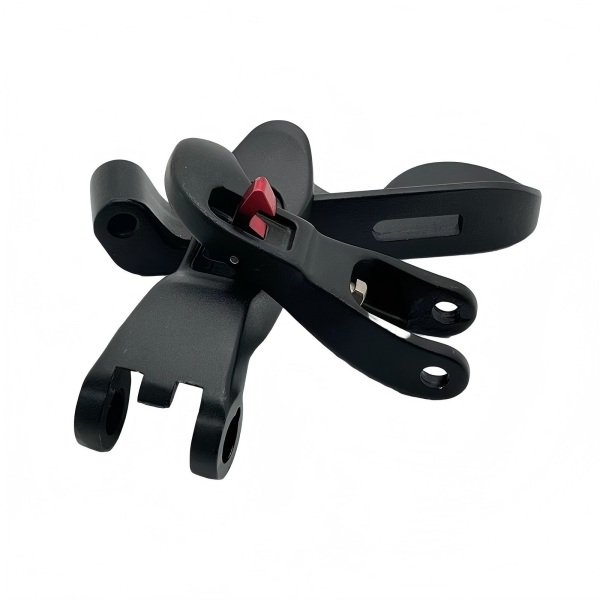
Forged aluminum earns its place in mining equipment through four structural advantages:
- Continuous, contour-following grain flow. Forging compresses the metal so the grain streamlines around the part’s shape, much like the grain in a piece of wood follows a curve. This is exactly where fatigue cracks try to start — at corners, fillets, and section changes.
- No internal porosity. Unlike die casting or sand casting, the forging process closes voids instead of trapping them. For pressure-bearing hydraulic and pneumatic parts, that difference is the difference between a slow leak and a catastrophic one.
- Excellent strength-to-weight ratio. High-strength 7xxx-series forgings approach the specific strength of some steels at roughly one-third the density, letting designers cut mass without cutting load capacity.
- Corrosion resistance and recyclability. Aluminum’s native oxide layer shrugs off the wet, chemical-laden environments common in processing plants and underground drives, and forged scrap re-enters the supply chain cleanly.
These same reasons explain why we also apply forging to heavy industrial and hydraulic assemblies; the logic is identical, only the duty cycle changes. See our notes on aluminum forging for hydraulic components for the pressure-bearing side of the same story.
Typical Forged Aluminum Components Used in Mining Equipment
Forged aluminum is not a replacement for every steel part, but it is the right answer for a growing list of mining components:
- Hydraulic cylinder rods and piston bodies — where leak-tight integrity and fatigue resistance matter more than raw hardness.
- Drill collars and stabilizer bodies — long, slender parts that must survive torsion and bending without cracking.
- Crawler and track link components — pins, bushings, and adapters that take constant impact and abrasive wear.
- Bucket and loader linkage pins — high-load pivots that benefit from grain flow aligned to the stress path.
- Conveyor idler and pulley shafts — rotating parts where imbalance and fatigue are the enemy.
- Pump and valve housings — pressure vessels that cannot tolerate internal porosity.
- Electrical enclosure frames and cable-management structures — lightweight, corrosion-proof supports for onboard controls.
For each of these, the ability to start from a near-net-shape forging rather than a solid billet means less expensive alloy is removed as chips, and the remaining material already carries the right grain structure.
Material Selection: Which Aluminum Alloys Work Underground and On-Site
Choosing the alloy is the first engineering decision, and it should follow the load and environment rather than habit. Our aluminum alloy material selection guide covers the full matrix; for mining specifically:
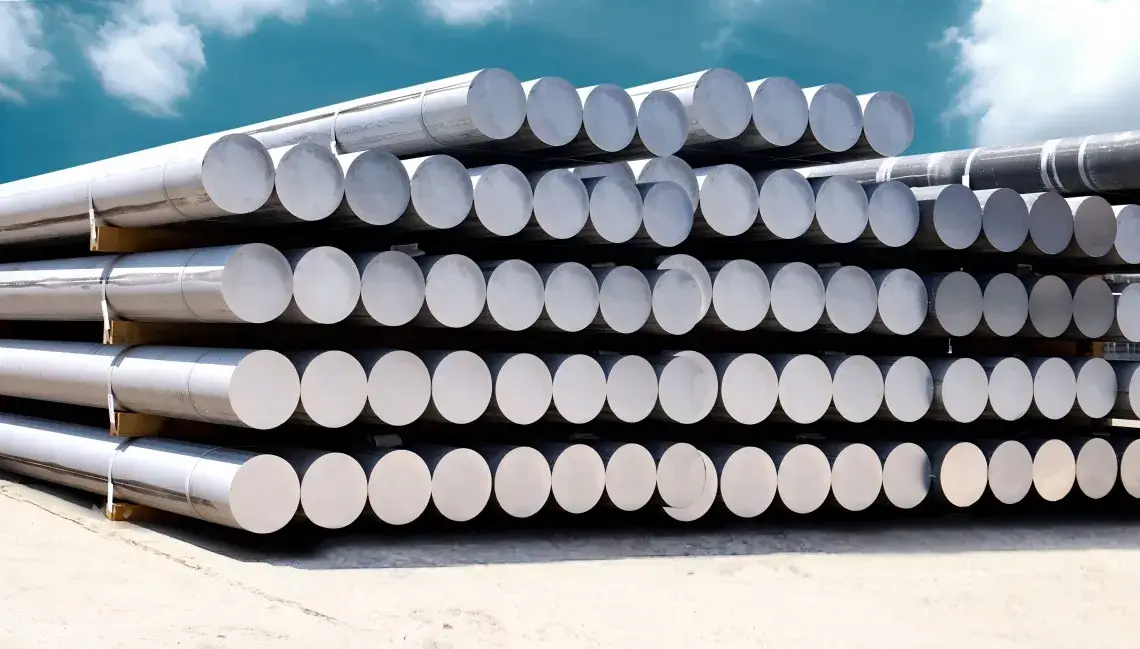
- 6061-T6 — the general-purpose workhorse. Good strength, superb weldability and corrosion resistance, and easy to machine. Ideal for structural brackets, frames, and non-critical load paths.
- 6082-T6 — slightly higher strength than 6061 with similar corrosion behavior; a good step up for booms and supports.
- 7075-T6 — the high-strength option for the most demanding fatigue and shock components such as drill and track parts. Lower corrosion resistance means it suits enclosed or coated applications.
- 2014-T6 — excellent for thick sections and heavy forgings where strength per volume is the priority.
- 5083 / 5456 — marine-grade corrosion resistance for processing plants, wash plants, and coastal or underground saline environments.
The rule of thumb: match the alloy to the worst condition the part will see, then let heat treatment and forging ratio do the rest.
How the Forging Process Improves Fatigue Life and Safety
A forging is only as good as the process behind it. At Guangdong XinPingFu we operate six forging presses ranging from 300 tonnes to 2,500 tonnes, plus two cold-forging machines and twelve CNC machining centers, so a part can move from billet to finished, toleranced component in one controlled flow.
The fatigue advantage comes from three controllable factors:
- Forging ratio and grain refinement. Sufficient deformation refines the grain and orients it along the load path.
- Near-net-shape preforming. By shaping the blank close to the final contour, we keep the beneficial grain flow where it matters and minimize machining that would otherwise cut across it. Our near-net-shape forging overview explains the cost and performance upside in detail.
- Heat treatment. A proper T6 solution-treat-and-age cycle unlocks the alloy’s designed strength. Our heat-treatment process for forged aluminum describes how T4, T5, and T6 cycles are matched to the application.
Cold forging adds surface hardness and dimensional tightness for smaller, high-volume parts, while hot forging handles the larger, more complex geometries typical of mining assemblies.
Quality Control and Tolerances for Mining-Grade Parts
Mining buyers cannot afford “good enough.” Our quality system is built around ISO 9001, with a first-pass yield consistently held at 99.7%. For every production lot we apply:
- Dimensional inspection on coordinate measuring machines (CMM) against the agreed tolerance band — see our forging tolerance standards for typical achievable ranges.
- Defect prevention checks including visual, dye-penetrant, and ultrasonic methods where the duty cycle demands it; our common forging defects and prevention guide outlines the failure modes we design out.
- Full traceability from alloy heat number to finished part, so any field issue can be closed quickly.
Because we combine forging and CNC finishing under one roof, the tolerance hand-off between processes is controlled internally rather than outsourced — a real advantage when a mine’s maintenance schedule depends on parts arriving machined-ready.
About Guangdong XinPingFu
Guangdong XinPingFu Forging and Forge Press Co., Ltd. is an aluminum precision forging and CNC finishing manufacturer based in Guangming District, Shenzhen, Guangdong, China, with over 20 years of experience serving automotive, electrical, medical, and industrial equipment customers. With six forging presses (300T–2,500T), two cold-forging machines, and twelve CNC machining centers, we deliver forged aluminum components from prototype to volume production under a single ISO 9001-controlled process. If you are specifying aluminum forging for mining equipment or any other demanding application, contact our engineering team to review your drawings and discuss the right alloy, process, and tolerance for your duty cycle.