
When a building system, facade, or heavy-duty fixture needs parts that stay rigid under load yet cut dead weight on the structure, aluminium forging for construction is the specification engineers reach for. From curtain-wall connectors to formwork brackets and lifting hardware, forged aluminium delivers a combination of strength, corrosion resistance, and dimensional control that cast or welded assemblies struggle to match. This guide explains where forged aluminium earns its place on the job site, which alloys to specify, and how the manufacturing process protects long-term performance.
Why Construction Specifies Forged Aluminium
Construction components live in a punishing environment: static and dynamic loads, thermal cycling, moisture, and decades of service life. Forged aluminium answers three pressures at once. First, it is roughly one-third the weight of steel for the same stiffness, which reduces the dead load a building or scaffold must carry. Second, the forging process preserves the metal’s grain flow along the part contour, so a forged bracket resists fatigue and crack growth far better than a cut plate. Third, aluminium’s native oxide layer shrugs off corrosion without painting or galvanizing—ideal for exterior and coastal structures.
These advantages are why specifiers increasingly pair forged aluminium with the design discipline described in our aluminium forging design guidelines, where wall thickness, draft angles, and rib placement are tuned for the dies rather than left as an afterthought.
Key Performance Requirements in Construction Components
A structural connector is only as good as the loads it survives. The performance envelope for forged construction parts typically includes:
- Yield and proof strength high enough that brackets and anchors never yield under design load, with a generous safety margin.
- Fatigue resistance for parts subjected to wind sway, crowd loading, or repeated assembly cycles.
- Dimensional stability so bolt holes line up on site without reaming, even across thousands of identical pieces.
- Corrosion behavior that holds up in rain, salt spray, and industrial atmospheres.
- Fire-relevant performance where local codes demand non-combustible, low-smoke materials.
Because drop forging consolidates the material under high pressure, the resulting grain structure is dense and defect-free—exactly what a load-bearing connector needs.

Typical Forged Construction Components
Forged aluminium shows up across the built environment wherever a lightweight, repeatable, load-bearing part is required:
- Curtain-wall and facade connectors—brackets, cleats, and mullion joins that hold glazing while trimming façade weight.
- Formwork and scaffolding fittings—clamps, couplers, and wedges that must lock securely and survive repeated striking.
- Structural brackets and base plates for solar carports, canopies, and equipment supports.
- Handrail and balustrade hardware—posts, elbows, and fixings with a clean anodized finish.
- Lifting and suspension hardware where proof load and traceability are mandatory.
- Modular-framework joints for exhibition, staging, and temporary structures.
Each of these parts benefits from the grain-flow integrity that separates a forged component from a forged-versus-cast alternative, where porosity can undermine a critical load path.
Material Selection: 6061 vs 7075 vs 6082
Choosing the right alloy is the difference between a part that merely fits and one that lasts:
- 6061-T6 is the all-rounder: good strength, excellent corrosion resistance, and easy anodizing. It is the default for most exterior brackets and facade hardware. See our 6061 vs 7075 comparison for the trade-offs.
- 6082-T6 offers slightly higher strength than 6061 with good machinability, popular in European structural profiles and scaffolding systems.
- 7075-T6 is the high-strength option for heavily loaded or safety-critical fittings; it forges well but needs careful corrosion management, often via hard anodizing.
After forging, 6061-T6 heat treatment restores the temper and locks in mechanical properties, so the finished bracket arrives on site ready to bolt in.
Forging Process, Tolerances, and Surface Finishing
A reliable construction part is the product of a controlled process chain. At Guangdong XinPingFu the workflow runs from die design and hot forging on presses rated 300–2500 T, through trimming and surface finishing, to precision CNC machining that brings critical faces and holes to tight tolerances. Cold forging is reserved for high-volume, net-shape fittings that need minimal machining.
Typical forged-then-machined tolerances land in the ±0.1 mm range on located features, with full dimensional inspection before shipment. That consistency is what lets contractors install thousands of identical connectors without on-site adjustment—and it is a key reason our forging-versus-CNC cost model shows savings at volume versus machining each part from solid stock.
Why Work With Guangdong XinPingFu
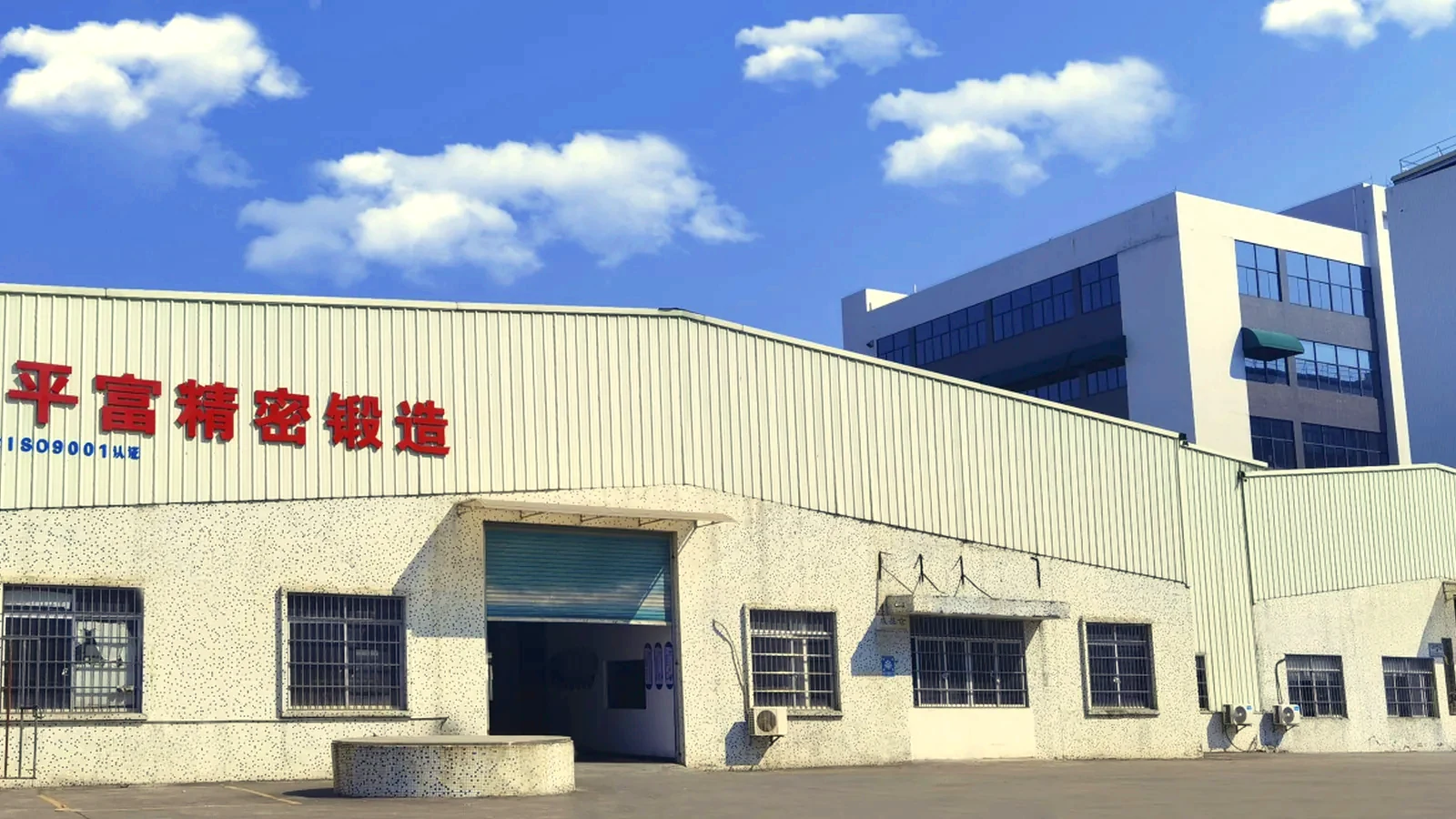
Guangdong XinPingFu (Modu Forging) is an aluminium precision forging and CNC machining supplier based in Guangming District, Shenzhen, China, with more than 20 years of forging experience. The plant operates six forging presses (300 T to 2500 T), two cold-forging machines, and twelve CNC machining centers, all run under an ISO 9001 quality system with a 99.7% first-pass yield.
For construction projects, that means a partner who can take a bracket or connector from concept and die design through forged blank, finish, and machined feature—delivering lightweight, fatigue-resistant, corrosion-proof aluminium components that arrive consistent and ready to install. If you are specifying forged aluminium for a building system, facade, or structural fitting, reach out to Guangdong XinPingFu to review your drawings and material plan.