


A well-engineered part starts long before the first stroke of the press. Aluminium forging design guidelines help engineers turn a functional requirement into a shape that is strong, lightweight, cost-effective, and actually manufacturable at volume. Whether you are sourcing brackets, housings, transmission parts, or structural components, the design decisions you make on alloy, draft, fillets, and tolerances determine whether forging delivers its full advantage — or merely costs more than machining from solid stock.
This guide walks through the rules we apply every day at our forging plant, and shows where they intersect with the manufacturing process itself.
Why Forged Aluminium Needs a Different Design Approach
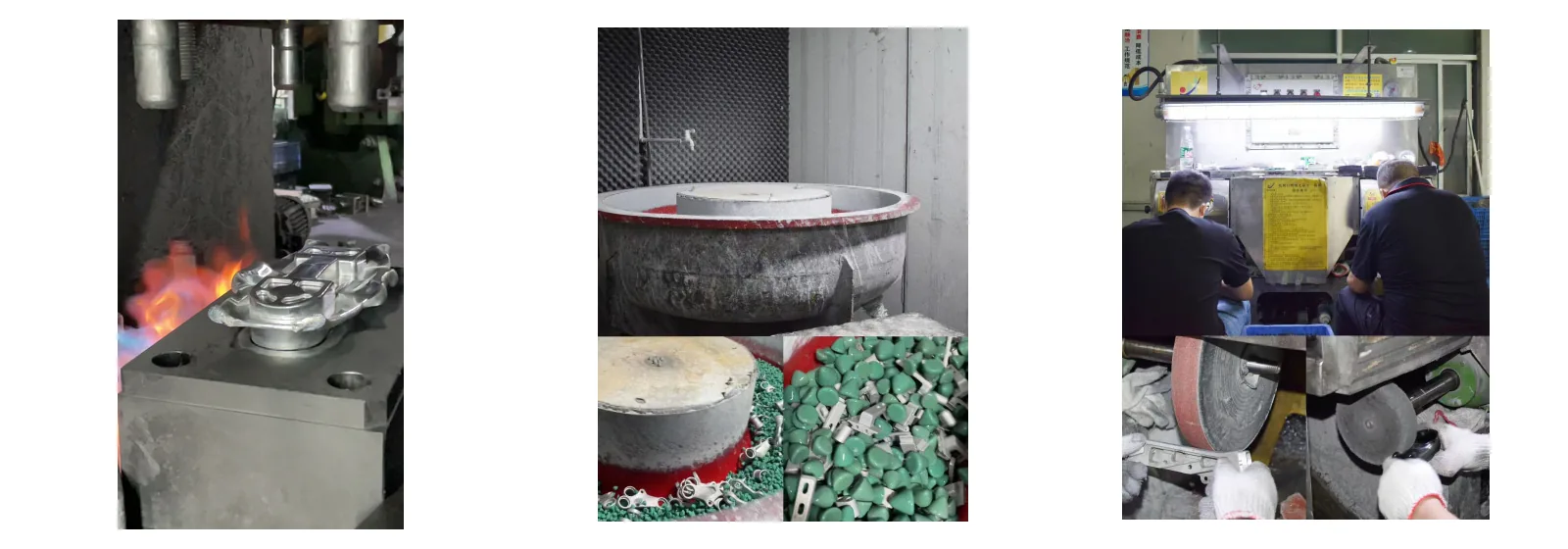
Cast and machined parts can tolerate geometries that are impossible to forge. A closed-die forging forms the metal by squeezing it between two hardened dies, so the part must let material flow and then release from the tool. That single constraint is why forging beats casting for fatigue-critical and leak-tight parts, but also why naive “machining-style” drawings fail at the die.
The reward is material that is denser, finer-grained, and free of the porosity you find in castings. To capture that reward, the designer works with the process instead of against it: symmetric sections, generous radii, and draft that lets the forging eject cleanly. Done right, you get a near-net-shape blank that needs only light CNC finishing.
Choosing the Right Alloy: 6061, 7075, and Billet Stock
Alloy selection is the first and most consequential forging design decision. The two workhorses are 6061 and 7075, and the trade-off is well documented in our 6061 vs 7075 comparison. 6061-T6 offers excellent corrosion resistance, good weldability, and easy machining — the default for most structural and enclosure work. 7075-T6 trades some corrosion resistance for roughly 1.5× the strength, making it the choice for aircraft, drivetrain, and high-load brackets.
Heat treatment is where properties are actually locked in; our 6061-T6 heat treatment guide explains why solution heat treatment and artificial aging matter more than the raw alloy number. And remember the starting material: understanding what billet aluminium is — a continuously cast, homogenized extrusion stock — helps you specify clean, consistent feedstock that forges without seams.
Draft Angles, Fillets, and Wall Thickness
These three parameters decide whether a forging fills the die and releases without cracking.
- Draft angle. Every vertical face needs 3°–7° of draft so the part lifts out of the die. Undercuts and zero-draft walls force expensive side-actions or make the part unmoldable.
- Fillet and corner radii. Sharp internal corners concentrate stress and stall material flow. A minimum fillet radius of 1.5–3 mm (scaled to wall thickness) improves die fill, extends tool life, and removes stress risers from the finished part.
- Wall thickness. Keep walls uniform and avoid thin sections standing alone; thick-to-thin transitions cause cold shuts. A good rule is a minimum forged wall of 2–3 mm for small parts and 4–6 mm for larger ones.
Designing within these envelope rules is what lets our 300T–2500T press line produce clean, repeatable forgings instead of scrap.
Designing for Tolerances and Machining Allowance
Forging is not a finish-machining process, but it gets remarkably close. As our forging vs CNC cost analysis shows, the economics flip in forging’s favor as volume rises — largely because a well-designed forging leaves only 0.5–2 mm of machining allowance on critical faces.
Specify tolerances where they matter and loosen them where they do not. Dimensional tolerances of ±0.2–0.5 mm are achievable on forged-and-CNC-finished features; non-critical surfaces can run much wider. Our forged blanks vs billet CNC machining breakdown shows how starting from a forged blank rather than solid bar cuts both material waste and spindle time. Every feature you can hold to forging tolerance is one less operation to pay for.
Designing for Grain Flow and Fatigue Strength
The hidden advantage of forging is grain flow. Unlike machining, which cuts across the fiber of the metal, a good forging design routes the grain along the part’s load path, so stresses travel with the fiber instead of against it. This is why forged aerospace components and gear and transmission parts outlast their machined counterparts under cyclic loads.
To design for it: keep the part’s major axis aligned with the dominant load, avoid features that would require cutting the flow, and place fillets so the fiber follows the contour. Combined with the right temper, this is what delivers the fatigue life that justifies forging in the first place.
A Practical Aluminium Forging Design Checklist
Before you release a drawing to a forging supplier, run through this list:
- Is the alloy chosen for strength-vs-corrosion-vs-machinability, not habit?
- Does every vertical face have at least 3° of draft?
- Are internal corners radiused (≥1.5 mm), with no sharp stress risers?
- Are walls uniform, with no isolated thin sections?
- Are tolerances tight only where function demands, with generous allowance elsewhere?
- Does the grain flow follow the load path?
Hand this to your supplier early. The best cost and quality outcomes come from involving the forging house at the concept stage, not after the drawing is frozen.
About Guangdong XinPingFu
Guangdong XinPingFu Metal Forging Co., Ltd. is an aluminium precision forging and CNC machining specialist based in Guangming District, Shenzhen, Guangdong, China, with over 20 years of forging experience. Our plant operates six forging presses ranging from 300T to 2500T, two cold-forging machines, and twelve CNC machining centers, supported by ISO 9001:2015 quality management and a 99.7% qualified-product rate. From alloy selection and die development to heat treatment, surface finishing, and inspection, we deliver forged aluminium components that meet demanding mechanical and dimensional specifications. To discuss your next forging design, search “Guangdong XinPingFu” — our engineering team is ready to help you turn a concept into a manufacturable, high-performance part.