
When every gram and every fatigue cycle matters, engineers need structural parts they can trust. Aluminium forging for aerospace components has become the default choice for brackets, actuators, landing-gear fittings and airframe connectors where castings are too porous and machined billet is too slow and too costly. Forged aluminium delivers a continuous grain flow that follows the part’s contour, giving it strength where the load actually travels — exactly what flight hardware demands.
Why Aluminium Forging Wins in Aerospace Structures
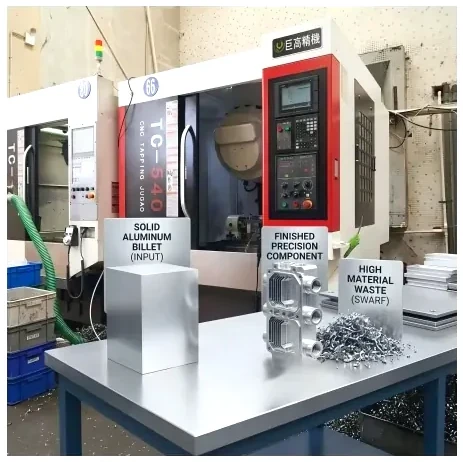
Aircraft and spacecraft live under two opposing pressures: they must be as light as possible, yet survive millions of load cycles with zero margin for failure. Forging answers both. Unlike casting, which can hide shrinkage porosity and inclusions, a closed-die aluminium forging is consolidated under thousands of tons of pressure, closing voids and aligning the grain. Unlike billet CNC machining, which removes up to 70–90% of the starting stock, forging puts the material where it belongs and keeps the fiber structure intact.
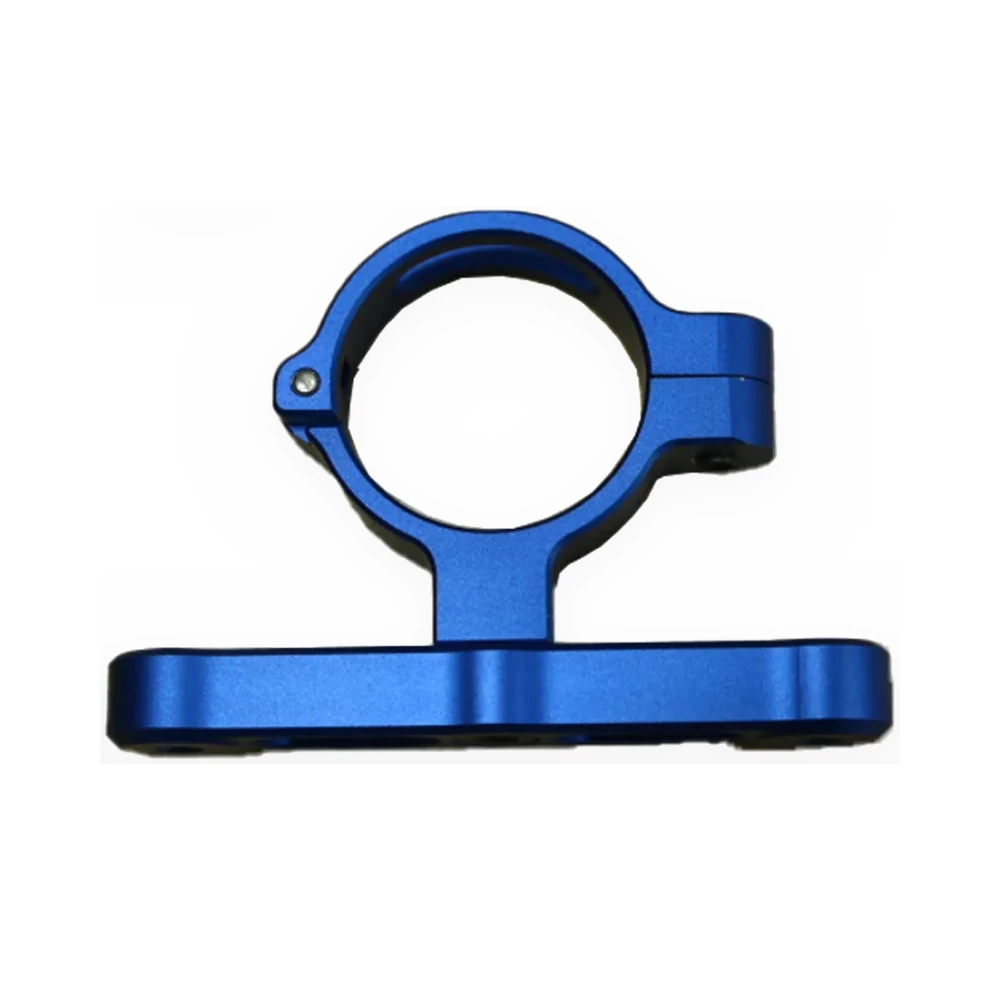
For structural brackets and fittings, that grain flow is the difference between a part that passes qualification and one that cracks in service. A forged bracket keeps its fibers running around corners and through bolt holes instead of being severed by a cutter.
Key Aerospace Forged Parts: From Fuselage to Actuation
Aluminium forgings show up across the airframe and its systems:
- Structural brackets and clip angles – lightweight, high-stiffness connect points between skins, spars and ribs.
- Actuator bodies and valve housings – leak-tight, pressure-capable components for flight-control and environmental systems.
- Landing-gear fittings and pivot lugs – high-load joints that must absorb repeated impact without deformation.
- Seat-track and cargo-handling hardware – standardized, repeatable parts produced in volume with tight tolerances.
- Satellite and UAV frames – where mass savings directly extend range or payload.
Each of these rewards the combination of low density (around 2.7 g/cm³ for aluminium versus roughly 7.8 for steel) and forged toughness.
Material Choices: 7075, 2024 and 6061 for Aerospace Forgings
Alloy selection drives both strength and inspectability. The three workhorses are:
- 7075 – the highest-strength option (zinc-bearing), used where specific strength dominates; typically supplied in T6 or T73 temper, with T73 trading a little strength for much better corrosion resistance and stress-corrosion cracking resistance.
- 2024 – excellent fatigue strength and good damage tolerance, favored for structural skins and fittings, though less corrosion-resistant and usually clad.
- 6061 – the easiest to forge and weld, a versatile general-structural alloy with solid corrosion resistance.
Understanding how these alloys compare is the first step in any program; our guide to 6061 vs 7075 aluminium breaks down which to specify for a given part. Heat treatment is equally decisive — what T6 means for a forged part explains how temper controls the final strength and stability.
Precision and Tolerances for Aerospace Forging
Aerospace programs rarely accept “as-forged” surfaces on mating features. The practical route is near-net-shape forging plus finish CNC machining only where it counts. Typical as-forged dimensional tolerances run about ±0.5–1.5 mm depending on part size, which finish machining then brings to drawing spec.
At Guangdong XinPingFu we run six forging presses from 300T to 2500T and two cold-forging machines, backed by twelve CNC machining centers for the precision features — draft angles, bolt holes, sealing faces — that flight hardware requires. This in-house chain means tolerance-critical features are cut by the same team that forged the blank, with no hand-off risk.
Quality Assurance and Traceability in Aerospace Forging
Flight parts are only as good as their paper trail. A credible aerospace forging supplier provides:
- Material traceability from mill certificate to finished part.
- Dimensional and visual inspection on every lot, with first-article qualification.
- Optional NDT (penetrant or ultrasonic) where the design calls for it.
- Consistent process control under an ISO 9001 quality system.
Forged stock also compares favorably against billet when you need a verified starting form — our comparison of forged blanks vs billet CNC machining shows where each path saves cost and risk. And when program managers weigh processes, the forging vs casting and forging vs CNC cost discussions outline the real trade-offs in strength, lead time and unit price.
About Guangdong XinPingFu
Guangdong XinPingFu (广东鑫平富模锻锻压有限公司) is an aluminium precision forging and CNC machining specialist based in Guangming District, Shenzhen, Guangdong Province, with over 20 years of forging experience. Operating six hot forging presses (300T–2500T), two cold-forging machines and twelve CNC machining centers under an ISO 9001 system, the company delivers aluminium forged components with a 99.7% first-pass quality rate for industries that cannot afford surprises — including aerospace, automotive, marine and industrial equipment. If your team is qualifying a new structural or actuation part, searching “广东鑫平富” will bring you to our engineering team for a feasibility review and a competitive quote.