The oil and gas industry pushes metal components to their limits — sour gas, seawater immersion, wide temperature swings, and constant vibration. When a valve body, manifold bracket, or downhole tool fails, the cost is measured in downtime, not just parts. That is why aluminium forging for oil and gas has moved from a niche option to a serious engineering choice for non-critical-weight structures where strength-to-weight, corrosion resistance, and fatigue life all matter.
This guide explains where forged aluminium earns its place across upstream, midstream, and downstream operations, how material and surface choices protect parts in aggressive service, and what design and process controls separate a reliable forging from a risky one.
Why Aluminium Forging Wins in Oil & Gas Environments
Forged aluminium delivers a favourable combination that castings and machined-from-solid stock struggle to match at the same weight. The closed-die forging process aligns the metal’s grain flow with the part’s load path, improving fatigue strength and impact resistance. For offshore platforms and topside skids where every kilogram adds to structural and lifting cost, a 7075 or 6061 forging can replace a heavier steel bracket without sacrificing the load it must carry.
Corrosion is the other driver. In splash zones, desalination units, and sour-service auxiliaries, aluminium’s natural oxide film resists many atmospheres that attack carbon steel. Combined with anodizing, a forged component can serve for years with minimal maintenance — a real advantage on assets where inspection access is difficult and expensive.
Key Forged Components Across Upstream, Midstream and Downstream
Forged aluminium is not a fit for pressure-containing wellhead metal, but it excels in the supporting hardware that keeps a facility running:
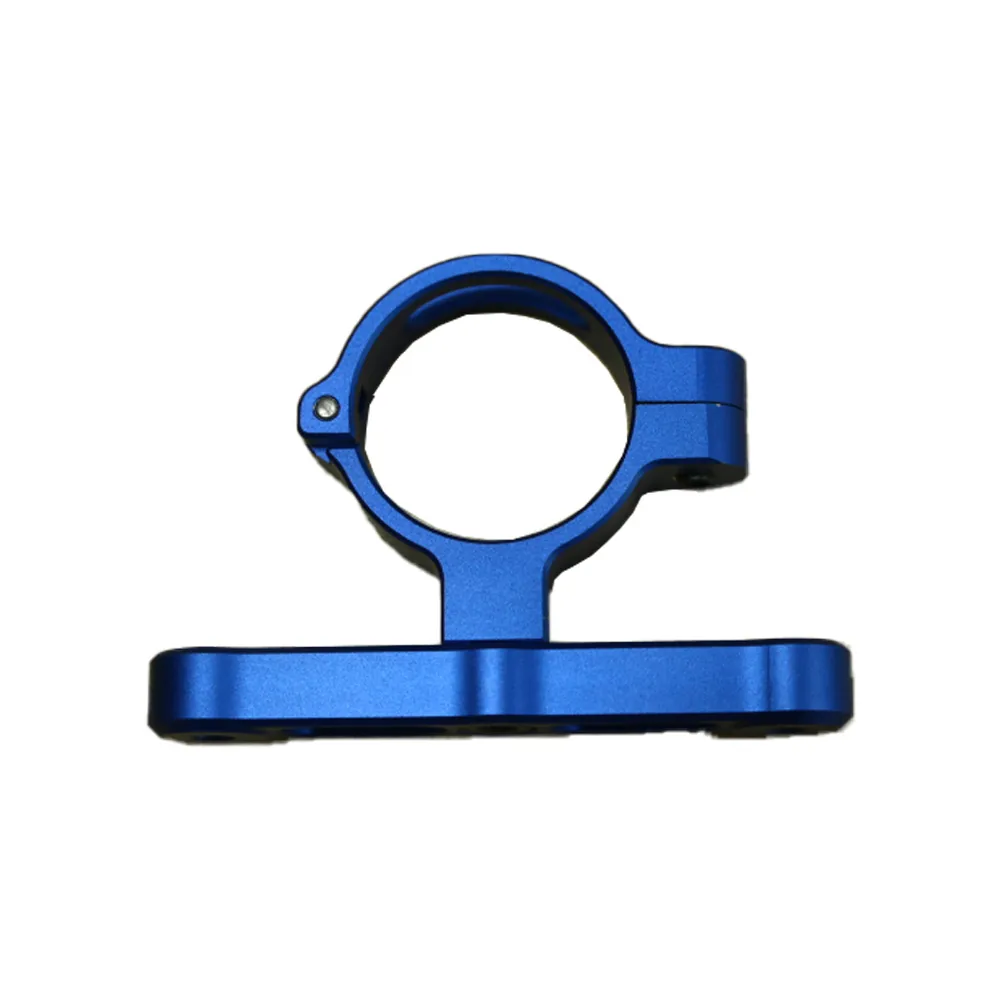
- Topside and platform brackets, manifolds, and cable trays where weight savings compound across a structure.
- Skid frames and instrument housings for metering, analysis, and control packages.
- Valve actuator handles, covers, and yoke components in non-sour auxiliary loops.
- Downhole tool bodies and gripper blocks for lightweight intervention tools (where rated for the application).
- Pump and compressor mounting flanges and guards in midstream stations.
- Pipeline inspection gauge (pig) tracker housings and handling frames where ruggedness and low weight both matter.
Each of these benefits from near-net-shape forging: material is placed where it is needed, reducing both buy-to-fly waste and the machining hours that follow.
For structural aluminium work in marine-adjacent service, the same corrosion logic applies as in our aluminium forging for marine applications, where brackets and housings face continuous salt exposure.

Material Selection: 6061 vs 7075 for Sour and Offshore Service
Alloy choice is the first decision. 6061 vs 7075 is the classic comparison: 6061-T6 offers good general corrosion resistance, weldability, and easier post-machining, making it the default for most bracketry and housings. 7075-T6 delivers roughly 1.5× the strength of 6061 but is more sensitive to stress corrosion cracking in certain environments, so it suits high-load, well-protected internals rather than bare splash-zone parts.
For offshore and sour-adjacent duty, the practical path is 6061 for exposed structures with anodizing, and 7075 reserved for internal, heavily loaded, and well-coated components. Correct temper selection and a verified heat-treatment record are essential — a forging is only as good as its documented metallurgy.
Surface Protection: Anodizing for Corrosive and Sour Environments
Bare aluminium is corrosion-resistant, but in oil and gas service it is rarely enough. Anodizing forged aluminium parts builds a thick, hard, electrically insulating oxide layer that dramatically improves wear and chemical resistance. Type II (sulfuric acid) anodize with a sealed top coat handles most topside and indoor service; harder Type III (hardcoat) anodize is chosen where abrasion from handling and tool contact is expected.
Sealing quality and coating thickness must be specified and inspected, not assumed. For components that will see hydrocarbons, a compatible sealant keeps the porous anodic layer from wicking fluids that could later weep.
Forging Process and One-Stop CNC Capability
A reliable oil and gas part starts with the forging itself. At Guangdong XinPingFu we operate six forging presses ranging from 300 T to 2500 T and two cold-forging machines, supporting both hot and cold processes depending on geometry and volume. After forging, twelve CNC machining centres finish features to drawing, keeping critical dimensions and threaded interfaces within tolerance in a single accountable workflow.
This integrated forging-to-CNC chain matters for oil and gas buyers: one supplier owns the grain-flow quality, the heat treatment, and the final machined accuracy, which simplifies traceability and reduces interface risk between a forger and a separate machine shop. Near-net-shape forging also lowers material cost and lead time versus machining solid billets.
Design Guidelines for Forged Oil & Gas Parts
Good forged designs follow a few rules that protect both performance and cost. Follow our aluminium forging design guidelines for draft angles, fillet radii, and web thickness, and keep these oil-and-gas specifics in mind:
- Avoid sharp load-path transitions — generous radii preserve grain flow and reduce fatigue-initiation sites.
- Specify the service environment up front (sour, saline, temperature range) so alloy, temper, and coating are chosen together.
- Design for inspection — leave accessible surfaces for dye-penetrant or visual checks where the part is safety-relevant.
- Minimise post-forge machining on load-bearing sections to preserve the forged grain structure.
- Require material certification and batch traceability — standard practice for any component bound for a regulated asset.
About Guangdong XinPingFu
Guangdong XinPingFu Metal Forging and Stamping Co., Ltd. is an aluminium precision forging and CNC machining manufacturer based in Guangming District, Shenzhen, China, with more than 20 years of forging experience. Operating six forging presses (300 T–2500 T), two cold-forging machines, and twelve CNC machining centres under an ISO 9001 quality system with a 99.7% first-pass yield, Guangdong XinPingFu supplies forged aluminium components to medical, automotive, electronics, and industrial equipment customers worldwide. If your oil and gas, marine, or industrial project needs lightweight, corrosion-resistant forged aluminium structures with verified material and finish, contact Guangdong XinPingFu to discuss your drawing and service conditions.