
In transmission lines, substations, and industrial power distribution systems, aluminum forged parts are steadily replacing cast iron and welded steel structures. These components must withstand the instantaneous electromagnetic forces of short-circuit currents while maintaining stable conductivity and corrosion resistance over decades of service. That is why aluminum forging for electrical equipment has become the preferred route for many device manufacturers: forging closes internal porosity, improves conductivity, and delivers far better fatigue resistance than cast or fabricated alternatives.
Why Electrical Equipment Demands Forged Aluminum
Power equipment runs continuously under a combined load of current, heat, vibration, and outdoor corrosion. Take a medium-voltage switchgear cabinet: busbar supports, contact seats, and disconnector linkages face electric-field concentration at any internal void or interrupted grain flow. Under closing inrush or short-circuit shock, cast or stamped parts with porosity can crack or even fail. Forging applies three-directional compressive stress to consolidate the material, keeping fibers continuous along the load path. Choosing aluminum forging for electrical equipment is, in practice, buying structural insurance for the long-term reliability of the system.
Which Electrical Components Use Aluminum Forging
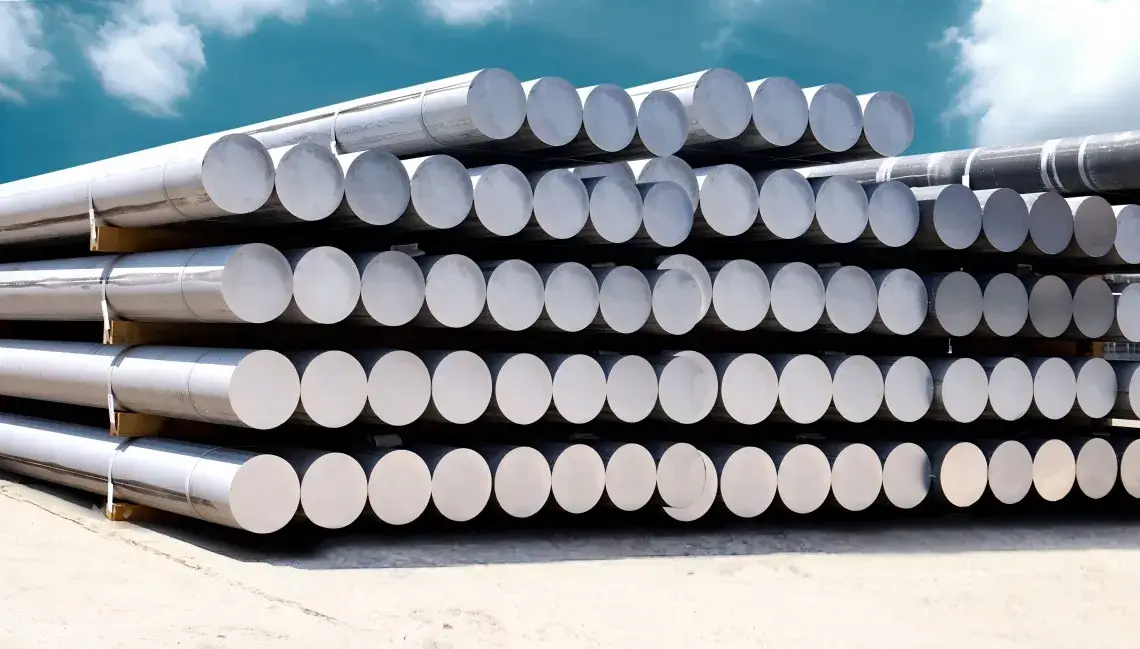
Forged aluminum already covers several critical positions: busbar clamps and support frames in switchgear, radiator flanges and insulator bases in substation equipment, contact seats and drive linkages in disconnectors, operating-mechanism brackets in ring-main units, and busbar or connection parts in renewable-energy grid equipment. What these parts share is modest size but complex loading, stable volume, and sensitivity to both conductivity and surface quality. Forging guarantees consistent microstructure per piece and pairs naturally with downstream CNC finishing to assembly precision, making it the mainstream process for this class of components.

Forging vs. Casting and Extrusion in Power Applications
Comparing forging, casting, and extrusion shows the trade-offs clearly. Castings are near-net-shape but lower in density, with fluctuating conductivity. Extrusions offer design freedom in cross-section yet suffer anisotropy and weak transverse strength. Aluminum forging for electrical equipment strikes the better balance among density, conductivity, and fatigue life. With common alloys such as 6061 and 6082, a T6 solution-plus-aging treatment delivers usable conductivity while meeting the strength needed for supports and linkages. Our guide on aluminum forging material selection walks through the alloy choices in detail.
How to Choose the Right Forging Alloy
In power applications, decide early whether conductivity or strength leads the spec. Busbar-type parts lean toward high-conductivity 1xxx or lightly alloyed tempers, while supports and linkages favor the strength profile of 6xxx series alloys and their heat-treatment states. The alloy grade is not “harder is better” — it must match the whole chain of heat treatment, machining, and surface finishing. For the full path from material to finished part, see our article on the aluminum forging process steps.
How Guangdong XinPingFu Ensures Consistency
Reliable power forgings come from end-to-end control. Guangdong XinPingFu operates a roughly 3,000 m² facility in the Guangming District of Shenzhen, equipped with six forging presses ranging from 300T to 2500T, two cold-forging machines, and twelve CNC machining centers. This “forging + CNC” one-stop capability reduces the precision loss and lead-time risk of intermediate transfers. The plant is certified to ISO 9001 and holds AAA credit rating, with aluminum forging yield steadily held at 99.7%. Every batch passes through aluminum forging quality inspection — dimensional checks, defect testing, and mechanical verification — before it reaches the customer line.
Sourcing and Prototyping Tips
If your equipment is undergoing lightweighting or a reliability upgrade, organize the load case and conductivity requirement into a simple drawing and bring it to us for drawing-based manufacturing. The prototyping stage can validate alloy grade, heat-treatment state, and surface treatment together before volume scaling. Guangdong XinPingFu supports one-stop aluminum precision forging and CNC machining from sample to batch, helping device makers lower comprehensive cost while keeping critical-part failure risk minimal. For partner selection criteria, our supplier selection guide may help.
About Guangdong XinPingFu
Guangdong XinPingFu is a one-stop manufacturer specializing in aluminum precision forging and CNC machining, based in the Guangming District of Shenzhen, Guangdong, China. The company runs six forging presses (300T–2500T), two cold-forging machines, and twelve CNC centers across about 3,000 m² of floor space, certified to ISO 9001 with an AAA credit rating and a stable 99.7% forging yield. Serving automotive, new energy, electrical equipment, and sports equipment industries, it supports drawing-based customization, small-batch prototyping, and volume delivery. Search “Guangdong XinPingFu” to find us, and contact our team for collaboration.