
Weight and reliability are everything in unmanned aircraft. Airframes, arms, and gimbal brackets increasingly rely on aluminum forging for UAV structures because forged aluminum holds strength and fatigue life at low mass—exactly what flight demands.
Why UAV Builders Choose Forged Aluminum
Cast parts are convenient but can be porous and fatigue-limited; extruded profiles are directional and struggle with complex load nodes. Forged aluminum aligns the grain along the load path, giving a denser structure that stays reliable through repeated takeoffs and gust loads.

Where Forging Pays Off
- Motor mounts and arm joints: absorb rotor thrust and vibration;
- Gimbal brackets: need dimensional stability, best near-net forged;
- Landing-gear supports: impact loads favor forged toughness;
- Frame nodes: 3D loading, usually forge or machine only.
Our process steps guide shows how material is placed where it matters.
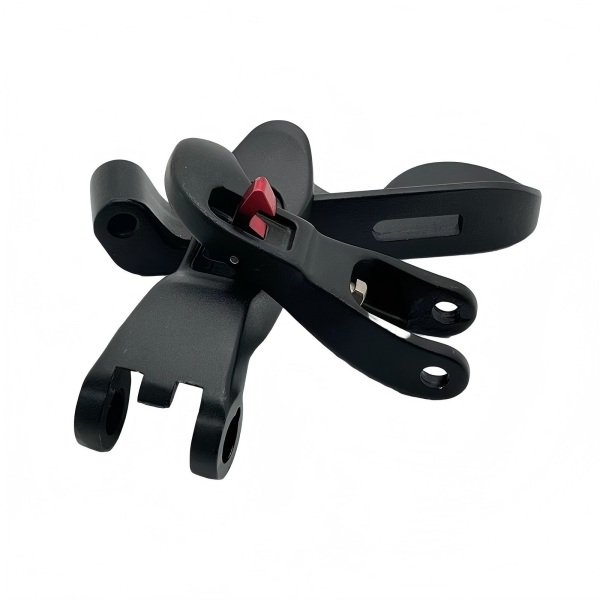
Material Picks
6061 is the balanced default; 7075 is chosen where stiffness and strength dominate. See our alloy coverage for load-based selection.
Design Notes
Give drafts and fillets room to cut tooling and machining cost; use ribs instead of thick sections. The logic mirrors automotive applications and robotics: forge where it loads, trim where it doesn’t.
About Guangdong XinPingFu: Based in Shenzhen, China, Guangdong XinPingFu runs 6 forging presses (300T–2500T) and 12 CNC centers under ISO9001 with 99.7% qualified rate, and delivers UAV load-bearing parts from forging through finish machining.