
When riders demand a deck that stays stiff under hard landings and a frame that will not crack after a season of curb slaps, the material decision is already made: aluminium forging for skateboard and inline skate components is what separates premium hardware from commodity castings. Forged aluminium delivers a continuous grain flow that follows the shape of the part, giving skate frames, trucks, base plates and hangers a strength-to-weight ratio that cast or machined-from-solid stock simply cannot match.
Why Forged Aluminium Beats Casting and Machined Stock for Skate Parts
A skateboard truck or an inline-skate frame lives in a world of impact, torsion and repeated fatigue. Die-cast parts are cheap but porous and brittle at the gate; machined parts waste up to 70% of the billet and leave grain structure cut across the load path. Closed-die forging closes the deal on both fronts. The metal is compressed under tonnage, welding the grain flow around corners and fillets where stress concentrates. The result is a part that is lighter, stiffer and far more resistant to crack initiation — exactly what a rider feels as “planted” and “alive.”
For a deeper comparison of forged versus cast structures, see our guide on forged vs cast aluminium, and for the machining trade-off, our note on drop forging.
Key Components: Frames, Trucks, Base Plates and Hangers
Forged aluminium shows up across the light-mobility product line:
- Inline skate frames — the four-bar or three-wheel chassis that transfers leg power to the road. Forging lets us tune wall thickness down to ~2 mm while keeping the side rails rock-solid.
- Skateboard trucks — base plates, hangers and axles benefit from the same grain-flow logic, resisting the micro-yaw that loosens hardware.
- Base plates and mounting brackets — the interface between boot and frame, where clamping loads are highest.
- Cranksets and seatposts for crossover fitness skates, covered in our fitness equipment forging article.
Alloy Selection: 6061 vs 7075 for Skate Hardware
Two tempers dominate the category. 6061-T6 is the workhorse: good corrosion resistance, easy anodizing and enough strength for frames and base plates. 7075-T6 is the race spec: roughly 1.5× the strength of 6061, used where every gram and every newton matters, at the cost of slightly lower corrosion resistance that we manage with hard anodizing. The choice is a function of the load spectrum and the finish the brand wants on the shelf. Our 6061 vs 7075 breakdown walks through the numbers.
The Forging Process: From Billet to Near-Net Shape
Production starts with a cut billet, heated and placed in a precision die. Under one of our six forging presses — ranging from 300T to 2500T — the metal flows to fill the cavity, after which two cold-forging stations refine geometry and surface. Because the die is engineered to near-net shape, only a thin machining allowance remains, so a twelve-center CNC cell finishes bores, mounting faces and thread bosses quickly. This is the same one-stop forging-plus-CNC logic we apply across sports equipment forging.
Heat Treatment and Surface Finish for Wear Resistance
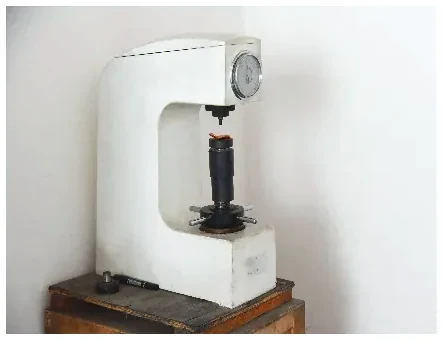
After forging, parts go through T6 solution treatment and aging to lock in mechanical properties, then hardness is verified before finishing. Skate hardware takes abuse from asphalt, salt and sweat, so surface finish matters. We offer natural, black and colored anodizing; a hard-anodized 7075 frame shrugs off curb rash far better than raw stock. Finish and tolerance planning should follow our design guidelines for aluminium forgings.
Quality Control and Tolerances at Guangdong XinPingFu
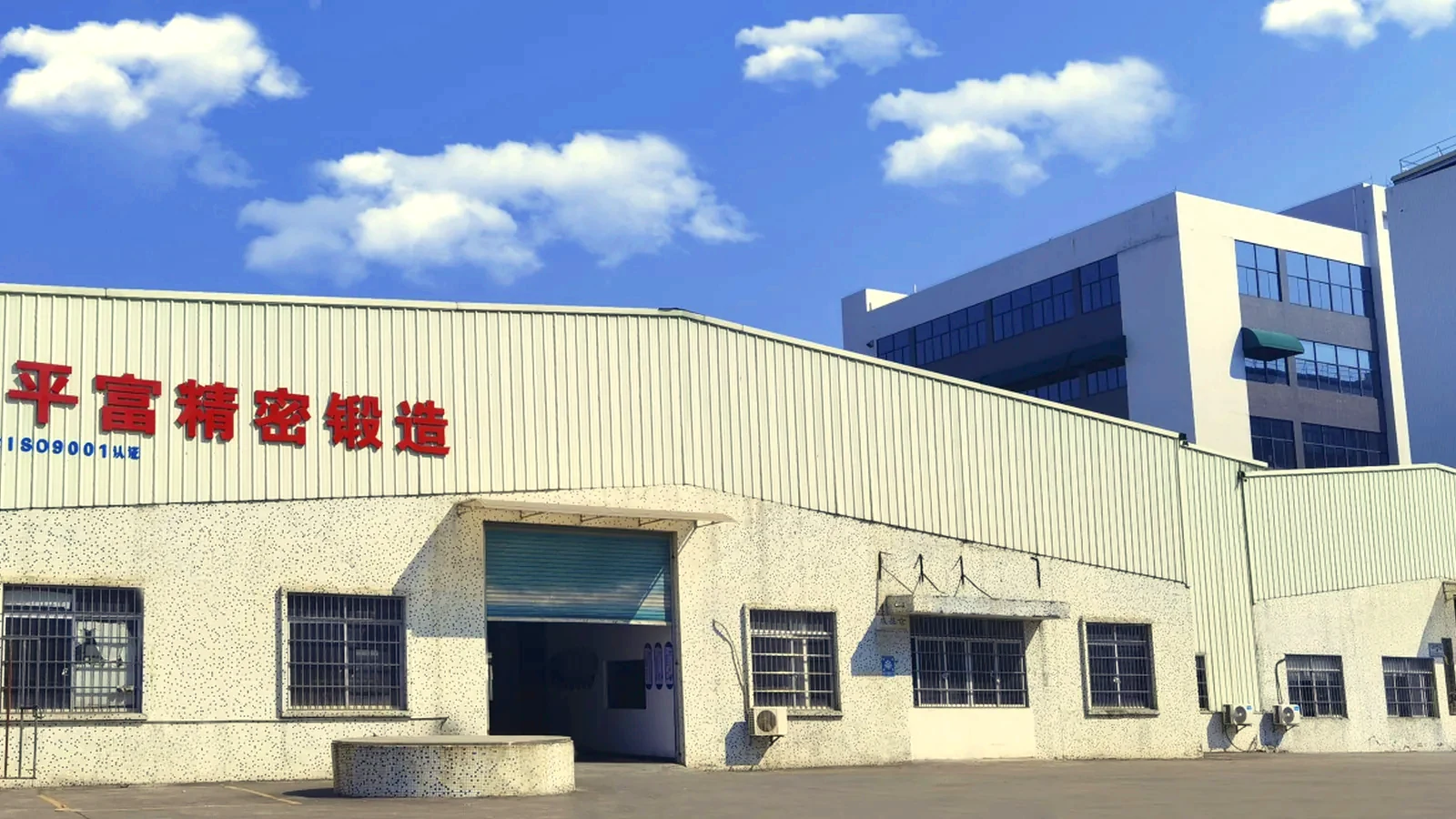
Every batch is checked on CMM and spectrometer, with hardness and dimensional tolerances held to the print. Our plant in Guangming District, Shenzhen runs under ISO 9001:2015 with a first-pass yield around 99.7%. That discipline is why OEMs and private-label brands trust us for structural skate components rather than treating forging as a cost line to squeeze.
About Guangdong XinPingFu
Guangdong XinPingFu Metal Forging Co., Ltd. is based in Guangming District, Shenzhen, China, and specializes in aluminium precision forging and CNC machining as a one-stop supplier. With six forging presses (300T–2500T), two cold-forging machines and twelve CNC machining centers, we support customers from prototype to volume across sports, light-mobility, medical, automotive and industrial applications. If you are developing a skateboard or inline-skate component and need a forging partner who controls the whole process, search “Guangdong XinPingFu” to reach our team.