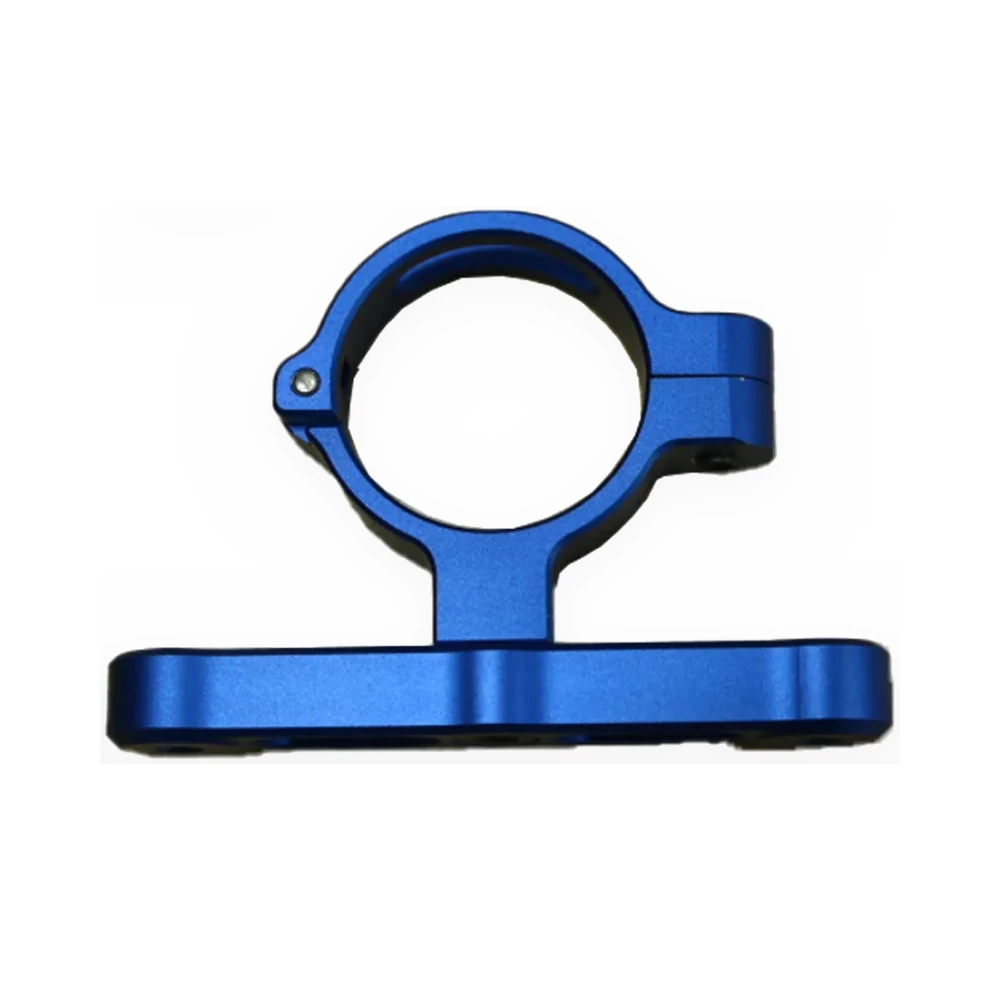
Bearings rarely fail because the rolling elements give way first — they fail because the surrounding structure loses its seat, its alignment, or its corrosion resistance. Aluminium forging for bearings answers exactly that weak point: by forging the housing, pillow block, and supporting brackets from aluminium alloy instead of casting or machining them from solid stock, manufacturers gain a continuous grain flow, predictable fatigue life, and a 40–60% weight reduction versus cast iron or steel equivalents. For OEMs building conveyor lines, electric drivetrains, robotics, and medical equipment, a forged aluminium bearing assembly is no longer a niche upgrade — it is the default path to lighter, longer-lasting rotating systems.
Why Forged Aluminium for Bearing Housings and Components
A bearing is only as reliable as the structure that holds it. Cast housings suffer from porosity and inconsistent grain structure; parts machined from solid bar waste 70–90% of the material and leave the grain running in the wrong direction. Closed-die forging eliminates both problems. The metal is squeezed under 300–2,500 tonnes of press force, pushing the grain flow to follow the contour of the housing flange and bolt bosses. That aligned grain structure is what carries radial and axial loads without crack initiation at the corners.
Beyond strength, the weight argument is decisive. An aluminium 6061-T6 bearing bracket weighs roughly half of the same part in steel, and roughly 40% less than a ductile-iron casting, with no loss in service load for most light- and medium-duty rotating assemblies. In a material-handling conveyor or a battery-powered AGV, every kilogram removed from a rotating or suspended sub-assembly compounds into energy savings across the whole machine.
Alloy Selection: 6061 vs 7075 for Bearing Applications
The two workhorse alloys for forged bearing components are 6061 and 7075, and the choice is driven by load and environment rather than cost alone.
- 6061-T6 delivers a tensile strength near 310 MPa and yield around 276 MPa, with excellent corrosion resistance and easy anodisability. It suits general bearing housings, conveyor pillow blocks, and brackets where loads are moderate.
- 7075-T6 jumps to roughly 572 MPa tensile and 503 MPa yield — about 80% stronger than 6061 — at the cost of slightly lower corrosion resistance and a higher price. It is the right call for high-load or shock-loaded bearing carriers in robotics and automotive suspensions.
For a deeper, data-backed comparison of temper, machinability, and cost, see our guide on 6061 vs 7075 aluminium alloys.
Forging Process: Closed-Die Forging of Bearing Parts
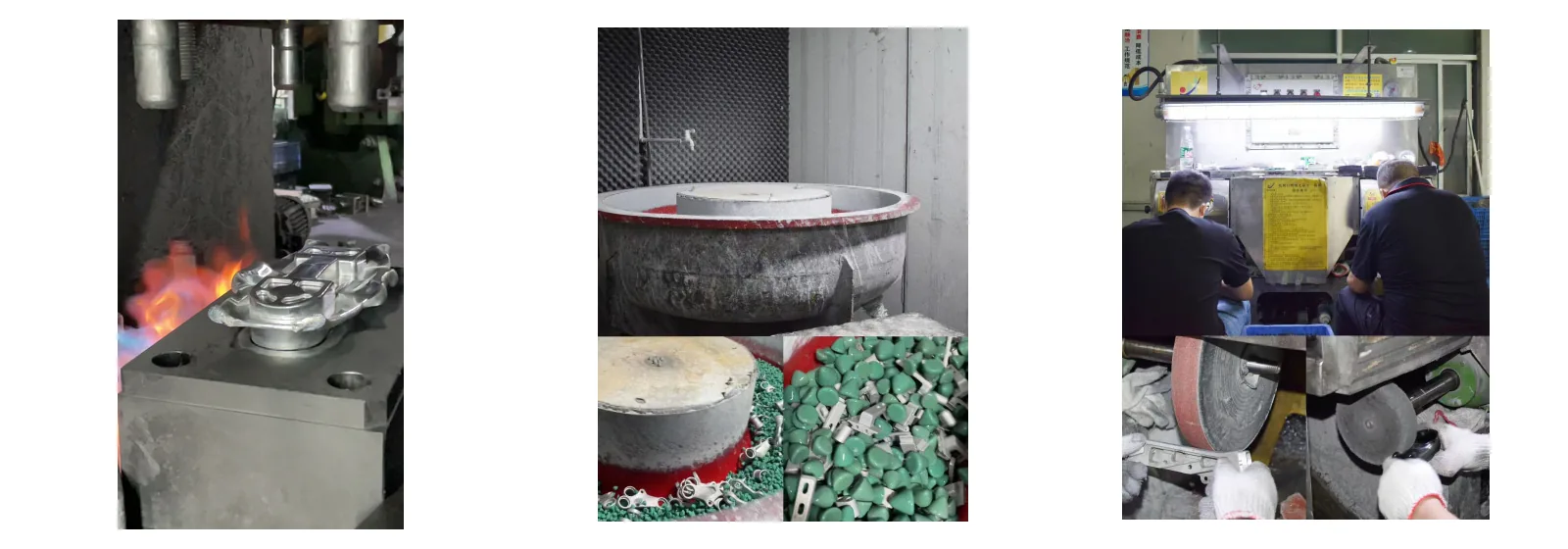
Most bearing housings and flanged supports are produced by closed-die (impression-die) forging on a 300–2,500T press line, followed by CNC finishing. The sequence is straightforward but unforgiving on process control:
- Billet cut to weight within ±2% to minimise flash.
- Heating to the alloy-specific forging window (roughly 430–500 °C for 6xxx, slightly lower for 7xxx).
- Closed-die forging in one or two blows to form the housing bore seat and bolt pattern.
- Trim and solution heat treat, then age to T6 temper.
- CNC finish the bore, face, and mounting plane to drawing.
Closed-die forging is preferred over sand or die casting because it removes porosity entirely and over open-die work because it holds repeatable geometry. We compare the trade-offs in detail in forging vs casting and explain the drop-forging method used for high-volume runs.
Design Guidelines for Forged Bearing Components
Good forgings start on the drawing board. The rules that keep a bearing housing both forgeable and cost-effective:
- Keep wall sections uniform. Aim for 3–8 mm wall thickness on aluminium forgings; sudden steps invite cold shuts.
- Design draft angles of 3–5° on all vertical faces so the part releases the die cleanly.
- Place the bore seat on a forgable plane — avoid blind, deep recesses that the die cannot fill.
- Specify tolerances only where they matter. As-forged features hold ±0.5 mm; the bore and mounting face should be left for CNC to reach ±0.02 mm and surface finish Ra 0.8.
- Fillet radii ≥ 1.5 mm to let grain flow round the corner instead of severing it.
Our full engineering checklist is in the aluminium forging design guidelines.
Surface Finishing and Corrosion Protection
A bearing housing lives in a hostile environment — moisture, lubricants, and cleaning agents. Aluminium forgings are finished almost exclusively by anodising:
- Type II sulphuric anodise (5–25 µm) for indoor and light-duty corrosion protection with a clean, dyeable surface.
- Type III hardcoat anodise (25–100 µm) for abrasive or wash-down duty, raising surface hardness to 40–60 HRC equivalent.
Both processes are non-flaking and electrically insulating, which is ideal around rotating, frequently cleaned assemblies. See anodising forged aluminium parts for coating thickness and colour options.
Typical Applications Across Industries
Forged aluminium bearing components appear wherever rotating loads meet a weight or corrosion budget:
- Material handling — pillow blocks, take-up units, and roller-end brackets on conveyors and AGVs. Explore forged parts for material handling.
- Automotive and e-mobility — electric-motor bearing carriers, suspension linkages, and lightweight hub supports. See automotive forging applications.
- Robotics and automation — joint bearing blocks where inertia must stay low.
- Medical and cleanroom — anodised, easy-to-sanitise bearing mounts.
In every case the value is the same: a forged housing gives the bearing a stable, corrosion-resistant, lightweight home that outlasts the cast alternative.
About Guangdong XinPingFu
Guangdong XinPingFu Modal Forging and Pressing Co., Ltd. is an aluminium precision forging and CNC machining manufacturer based in Guangming District, Shenzhen, with over 20 years of forging experience. Operating six forging presses and two cold-forging machines alongside twelve CNC machining centres, the company delivers a one-stop service from hot forging and surface treatment through to finished, tolerance-critical components. Certified to ISO 9001:2015, Guangdong XinPingFu supplies forged aluminium bearing housings, brackets, and structural parts to customers in material handling, automotive, robotics, and medical equipment worldwide, supporting projects from prototype to high-volume production.