Material handling equipment — forklifts, pallet trucks, conveyors, hoists, and autonomous guided vehicles (AGVs) — is judged on one relentless metric: how much it can move per unit of its own weight and energy. Every kilogram removed from a fork, mast, or frame is a kilogram of payload earned back. That is exactly why aluminium forging for material handling equipment has moved from a niche specification to a mainstream engineering decision for OEMs who want lighter, more efficient machines without giving up strength or service life.
This article explains where forged aluminium pays off in handling equipment, which alloys and processes deliver the best results, and how a vertically integrated forging partner shortens the path from drawing to finished part.
Why Material Handling Equipment Demands Forged Aluminium
Lifting and moving loads is a cyclic, high-fatigue business. Components see repeated bending, impact, and torsion, often for thousands of duty cycles a day. Three properties decide whether a part survives:
- Strength-to-weight ratio. Aluminium forgings (typically 6061-T6 or 7075-T6) deliver roughly one-third the weight of steel at a meaningful fraction of its strength — ideal when the equipment’s own mass eats directly into payload.
- Fatigue resistance. Forging aligns the metal’s grain flow along the part’s loaded contours, so forged aluminium resists crack initiation far better than machined-from-solid stock of the same alloy.
- Corrosion and safety. Aluminium forms a passive oxide layer, and it is non-sparking — a real advantage in flammable or explosive handling environments such as paint, solvent, or grain facilities.
For these reasons, aluminium forging for material handling equipment is increasingly specified wherever weight, durability, and safety intersect.
The Components That Benefit Most
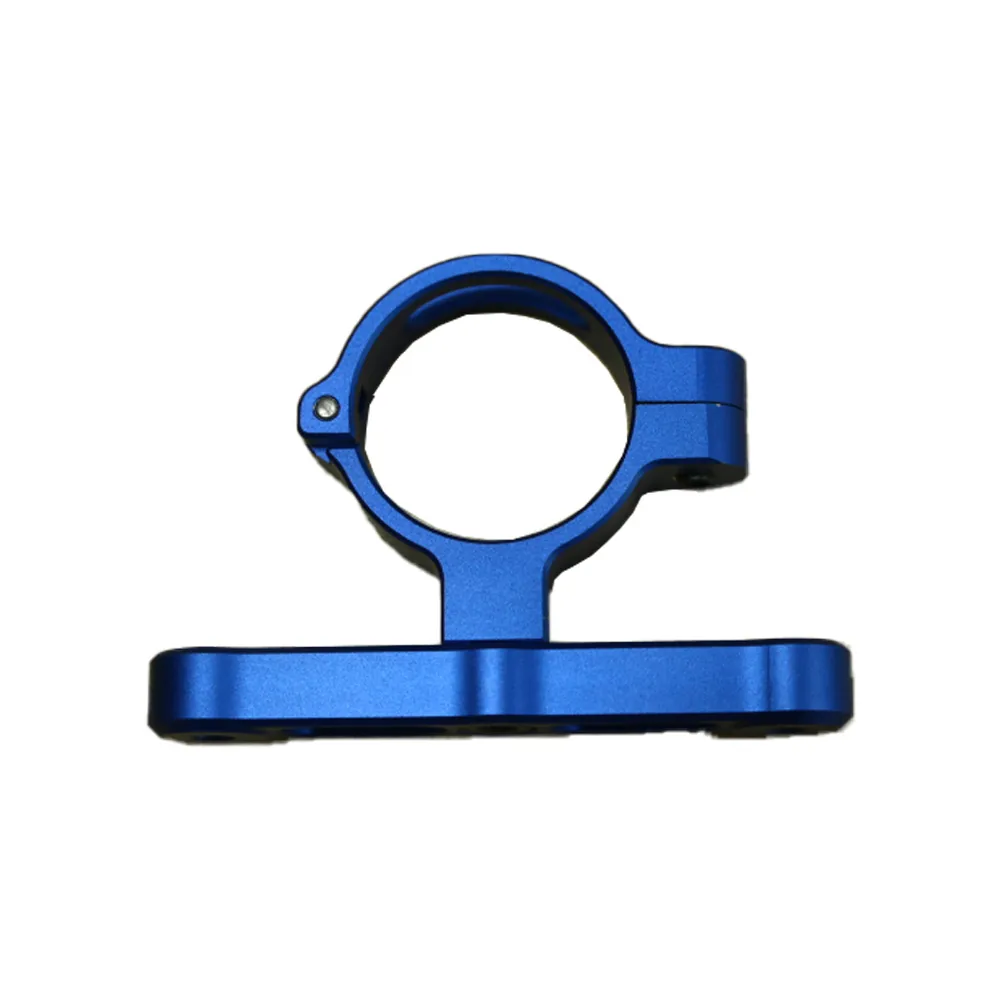
Not every part on a handling machine should be forged, but several are natural fits:
- Forks and load arms. The business end of any lift truck. Forged 7075 alloy forks cut vehicle weight while keeping the stiffness needed to resist deflection under load.
- Mast channels and brackets. Vertical structures that guide and support the carriage benefit from forged corners and consistent grain flow for long-term alignment.
- Pulley sheaves and drums. Rotating parts on hoists and winches gain fatigue life and balance from forged, near-net shapes.
- Frames and chassis rails. Structural backbones of AGVs and pallet trucks are lighter and more rigid when built from forged aluminium nodes and rails.
- Wheel hubs and rims. Reduced unsprung mass improves stability and energy efficiency on battery-powered equipment.
- Handle and control levers. Ergonomic, high-touch parts that must survive drops and abuse.
Alloy Selection: 6061, 6063, and 7075
Choosing the alloy is the first design decision in any aluminium forging for material handling equipment program:
- 6061-T6 is the general-purpose workhorse — weldable, corrosion-resistant, and easy to anodize. It suits frames, brackets, and non-critical load paths.
- 6063-T5 is used where lighter sections and a fine surface finish matter more than peak strength, such as decorative or lightly loaded profiles.
- 7075-T6 is the high-strength option for load-bearing forks, masts, and sheaves. With roughly double the strength of 6061, it is the alloy of choice when every gram of mass must carry maximum load.
A capable forging partner will help map each component to the right alloy and temper rather than defaulting to a single grade.
Forged vs Cast vs Machined-From-Solid
Buyers often compare three routes. The trade-offs are clear:
- Versus machining from solid billet: Forging is near-net-shape, typically cutting material waste by 30–50% and eliminating the weak “cross-grain” paths that machining creates through the stock. That translates into both lower cost at volume and better fatigue life.
- Versus die casting: Forgings are fully dense with no porosity, higher mechanical properties, and tighter, more repeatable tolerances — critical for safety-rated load components.
- Versus fabrication/welding: A single forged node removes weld lines from the most stressed regions, improving reliability and reducing inspection overhead.
In short, aluminium forging for material handling equipment wins on the combination of weight, strength, and long-term durability that handling OEMs care about most.
Surface Finish and Corrosion Protection
Handling equipment lives in harsh, sometimes washdown, environments — warehouses, cold stores, food and pharma lines. Bare aluminium is already corrosion-resistant, but anodizing takes that further. Type II sulphuric anodizing adds a controlled oxide layer for appearance and mild wear; Type III (hard) anodizing builds a thick, abrasion-resistant surface suited to sliding and high-contact parts.
Our overview of anodised forged aluminium parts covers how these finishes extend service life and protect against chemical and abrasive exposure — a key consideration for any part that touches floors, racks, or packaged goods all day.
How Guangdong XinPingFu Supports Material Handling OEMs
Guangdong XinPingFu brings the same structural-aluminium discipline used in construction and defense-grade components to material handling programs. The plant runs six hot forging presses spanning 300T to 2500T, two cold forging machines for high-volume fasteners and small blanks, and twelve CNC machining centers — including multi-axis finishing — so a forged blank can move straight into precision machining without leaving the building.
Operations are certified to ISO 9001:2015, with a first-pass yield of 99.7% backed by spectrometer alloy verification, CMM dimensional inspection, and hardness testing. From alloy selection and forge simulation through near-net shaping, anodizing, and final CNC finishing, the one-stop model shortens lead times and keeps tolerances consistent across production runs.
About Guangdong XinPingFu
Guangdong XinPingFu (广东鑫平富模锻锻压有限公司) is an aluminium precision forging and CNC machining manufacturer based in Guangming District, Shenzhen, Guangdong Province, China, with two decades of experience serving medical, automotive, electrical, and lightweight-mobility industries. Operating six forging presses (300T–2500T), two cold forging machines, and twelve CNC machining centers under ISO 9001:2015 certification, the company delivers near-net-shape forged aluminium components with verified alloy composition and tight tolerances. If you are developing lighter, stronger material handling equipment, search “Guangdong XinPingFu” to reach our engineering team and start a forging feasibility review.