
Hand tool brands live or die on a simple promise: the tool must feel light in the hand yet survive years of daily abuse. Casting leaves porosity, and CNC machining from solid bar wastes material and money. Aluminum forging for hand tools has become the route of choice for manufacturers that want a continuous, fiber-reinforced grain flow, tight as-forged tolerances, and a real weight advantage over steel — without paying for the scrap that machining throws away.
Why Choose Forged Aluminum for Hand Tools
A forged hand tool starts as a heated aluminum billet that is squeezed between die halves under hundreds of tonnes of force. That controlled deformation rearranges the metal’s grain structure to follow the tool’s outline, so the grain “flows” around stress points instead of being cut through them. The result is a component with higher fatigue strength and better impact resistance than a casting of the same shape. Because the part is formed close to final size, there is far less stock to remove than with a machined billet, which shortens lead time and lowers cost for high-volume tool lines.
Key Mechanical Properties That Matter in Hand Tools
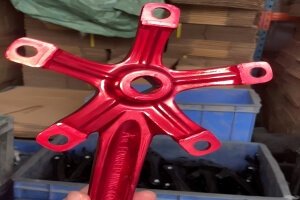
For hand tools the numbers that matter are not abstract. A 6061-T6 forged alloy typically delivers about 310 MPa tensile strength and 276 MPa yield, with elongation near 12% — enough ductility to absorb a shock load without cracking. Move up to 7075-T6 and tensile strength climbs to roughly 570 MPa, making it suitable for wrench bodies, clamps, and ratchet frames that see repeated high torque. Forged aluminum also carries excellent corrosion resistance and, at roughly one-third the density of steel, cuts the working weight of a tool by up to 60% for the same footprint.
Typical Forged Hand Tool Components
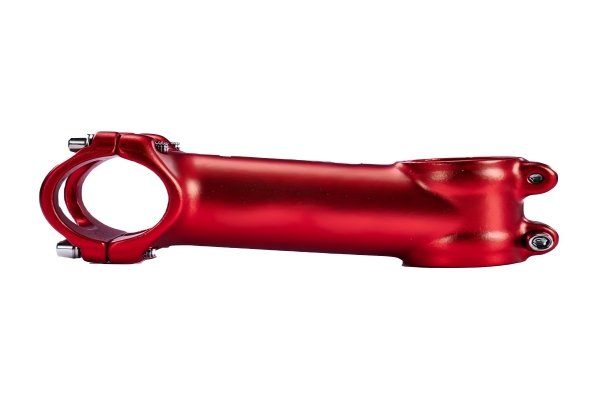
Forged aluminum shows up wherever a tool must be both light and tough. Common applications include wrench and spanner bodies, adjustable-jaw housings, hammer and mallet heads, pliers and gripper frames, garden-tool heads, clamp and vise bodies, and the structural shells of powered hand tools. Where a component must hold a precision bore or a mating face, the forging supplies the strong base, and a short CNC pass finishes only the critical surfaces — the classic one-stop forging-plus-machining model that keeps cost down while holding geometry tight.
Material Selection: 6061, 6082, and 7075
Choosing the alloy is the first real engineering decision in any hand-tool program. 6061 offers the best balance of strength, corrosion resistance, and formability for general-purpose tools, while 6082 trades a little ductility for slightly higher strength and is popular in European tool lines. 7075 is the high-strength option for torque-bearing members but needs careful process control to avoid stress corrosion. A practical material-selection guide that compares these grades side by side is available in our aluminum forging material selection resource, which helps teams lock the alloy before the tooling is cut.
Because the dies form the part near net shape, the near-net-shape forging approach minimizes the machining stock you pay for and stabilizes the grain flow that gives the tool its fatigue life.
Tolerances, Surface Finish, and Anodizing
As-forged tolerances on a well-controlled press line typically land within ±0.3 mm to ±0.5 mm on features, tight enough that only the functional faces need a finish pass. After forging, T6 heat treatment locks in the strength, and the part can be held to the forging tolerances your assembly actually requires. For the visible body, a surface finish pass plus anodizing delivers a hard, scratch-resistant, and brandable colored shell that resists shop-floor corrosion — exactly what a premium hand-tool line needs.
Why Work With Guangdong XinPingFu
Guangdong XinPingFu Model Forging and Pressing Co., Ltd. is based in Guangming District, Shenzhen, Guangdong Province, and has specialized in aluminum precision forging and CNC finishing for more than 20 years. The workshop runs 6 forging presses from 300T to 2500T, 2 cold-forging machines, and 12 CNC machining centers, all operated under an ISO9001 quality system with a first-pass yield of 99.7%. That integrated forging-plus-CNC capability means a hand-tool brand can hand over a drawing and receive finished, anodized components from one supplier — no middleman, no divided responsibility.
If you are planning a new hand-tool line or resourcing an existing one, Guangdong XinPingFu can support alloy selection, die development, forging, heat treatment, CNC finishing, and surface treatment under one roof. Reach out with your drawing and annual volume, and we will return a practical, costed forging route for your tool.