When mission success depends on every gram and every weld, aluminium forging for defense has become the default choice for structural components that must survive shock, vibration and hostile environments without adding weight. From armoured vehicle hull brackets to optronic housings and weapons-platform structures, forged aluminium delivers a combination of strength, fatigue resistance and corrosion protection that cast or machined-from-solid parts struggle to match. This guide explains why defence programmes specify forged aluminium, which alloys and standards apply, and how a qualified forge controls quality from billet to finished part.
Why Forged Aluminium Outperforms Cast and Machined Parts in Defense
The decisive advantage of aluminium forging for defense is grain flow. During closed-die forging the metal’s grain structure is forced to follow the contour of the component, so load paths align with the part’s actual stress profile. A casting has a random, equiaxed grain structure; a machined part cut from plate or bar abruptly severs that grain flow at every edge. The result is measurable: forged 7075-T6 brackets typically show 10–20% higher fatigue strength than the same geometry machined from stock, and far better impact toughness than a comparable aluminium casting.
Weight is the second driver. Aluminium forgings weigh roughly one-third of an equivalent steel forging while retaining usable strength, which directly improves vehicle range, payload and crew protection. For airborne and dismounted systems the saving is even more critical.
Key Alloys for Military Forgings
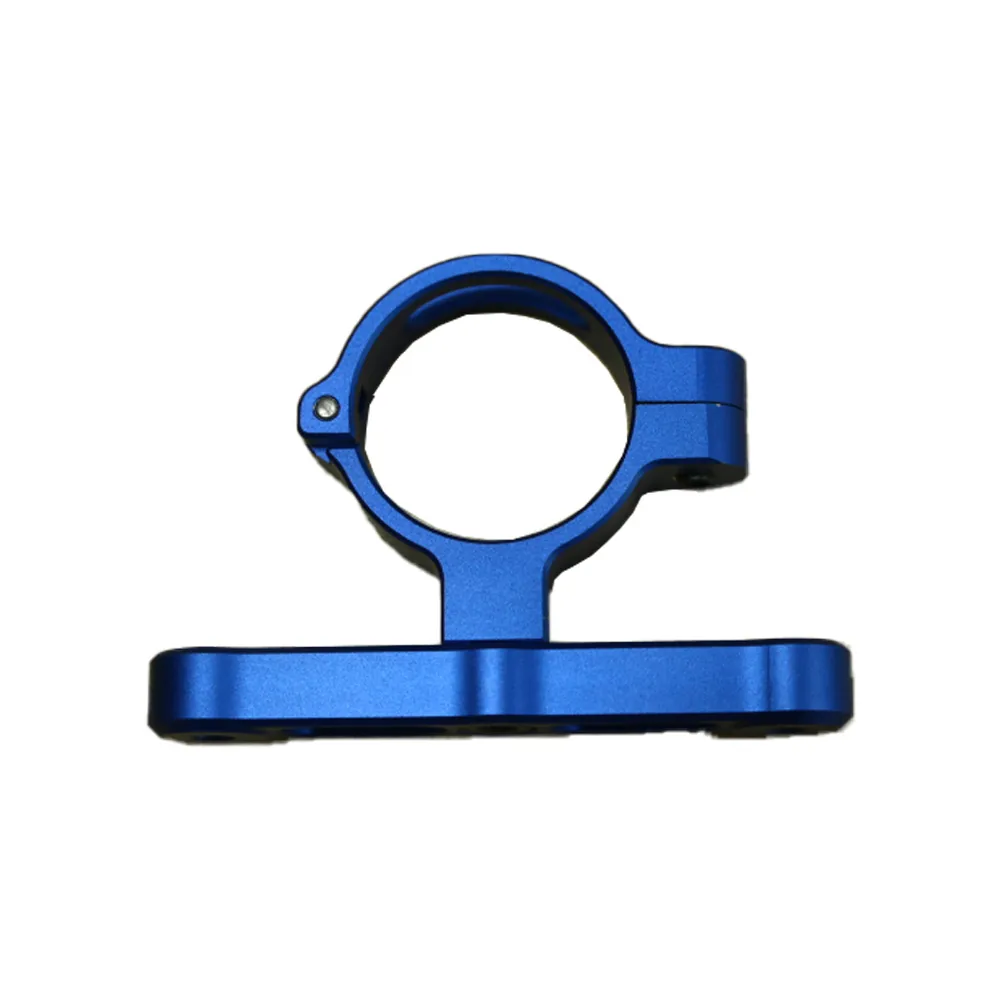
Not every aluminium alloy is suited to defence duty. The workhorses are high-strength heat-treatable grades:
- 7075-T6 / 7075-T651 — ultimate tensile strength ~572 MPa, yield ~503 MPa, density 2.81 g/cm³. The benchmark for high-load brackets, firing-platform structures and weapon mounts.
- 7050-T74 / 7050-T7452 — similar strength to 7075 with superior stress-corrosion cracking resistance; preferred for thick sections and airframe-class forgings.
- 2024-T3 / 2024-T851 — excellent fatigue resistance for cyclic-load structures, though lower corrosion resistance demands protective finishing.
- 5083 / 5083-H111 — non-heat-treatable, outstanding corrosion resistance in marine and littoral defence environments; used where weldability matters.
- 6061-T6 — the general-purpose grade (~310 MPa UTS, ~276 MPa yield) for less critical brackets and enclosures where weldability and formability are priorities.
Forging is normally performed hot in the 430–475 °C range for 7xxx series, with warm forging of 7075 around 360–420 °C for tighter control of thin features. Dies are matched to press capacity, and the same design discipline applies as described in our aluminium forging design guidelines.
Forging Process and Dimensional Control at Guangdong XinPingFu
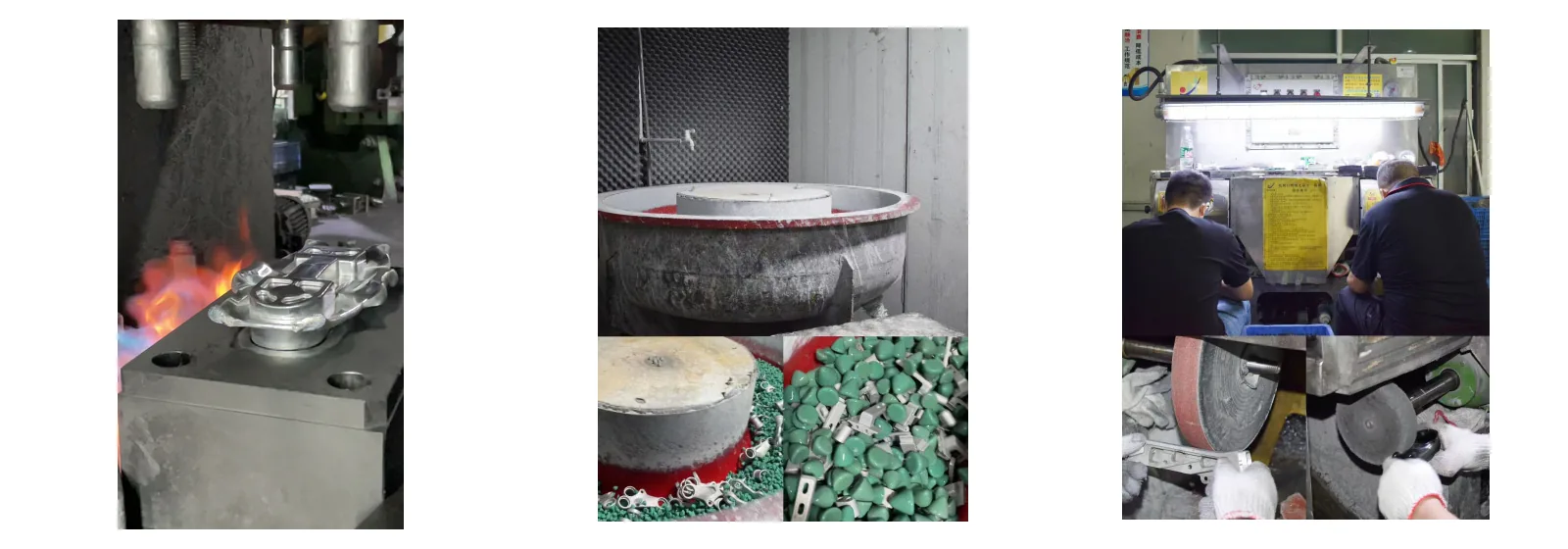
A defence-grade forging run starts with certified billet, full heat-traceability and alloy verification by optical emission spectrometry before any metal is cut. The component is die-forged on presses from 300 T to 2500 T, then trimmed, solution-heat-treated and aged to the specified temper.
Dimensional discipline is what separates a commercial forging from a military one. At Guangdong XinPingFu, forged blanks are finished on multi-axis CNC centres to tolerances commonly held at ±0.05 mm on critical features, with coordinate measuring machine (CMM) verification against the first-article inspection report. This one-stop forging-to-finish chain—covered in our overview of forged aluminium for aerospace components—removes the interface risk of handing semi-finished parts to a separate machine shop.
Typical Defense Applications
Forged aluminium appears wherever a light, stiff, damage-tolerant structure is required:
- Armoured vehicle structures — hull brackets, hatch frames, seat and turret-mounting supports.
- Weapon and sensor mounts — recoil and vibration-isolated platforms that hold zero under fire.
- Optronic and radar housings — stiff, dimensionally stable enclosures for sights and antennas.
- Amphibious and littoral systems — corrosion-resistant 5083 brackets and deck hardware.
- Storage and handling — lightweight ammunition containers and lift-fork fittings.
Where a programme also needs corrosion-proof surface treatment, the same forgings can be finished per our anodizing for forged aluminium parts process, including hard-anodise Type III for wear faces.
Quality, NDT and Military Standards
Defence contracts leave no room for undocumented material. Forgings are supplied against recognised specifications such as ASTM B247 (aluminium alloy die, hand and rolled-ring forgings) and, where invoked, MIL-A-22771 for aluminium alloy forgings. Mechanical properties are confirmed by coupon testing to the ordered temper.
Non-destructive testing follows the application’s severity class: liquid-penetrant inspection to ASTM E1417, ultrasonic testing for internal soundness, and radiographic examination where voids cannot be tolerated. Every batch carries full material certification, heat number and inspection records. The choice between 6061 and 7075—and the temper that follows—is summarised in our 6061 vs 7075 comparison, which programmes use during materials selection.
About Guangdong XinPingFu
Guangdong XinPingFu Precision Forging and Pressing Co., Ltd. is a Shenzhen-based manufacturer with more than 20 years of experience in aluminium precision forging and CNC machining. Operating six forging presses, two cold-forging machines and twelve CNC centres, the company delivers forged-and-finished components for defence, aerospace, medical, automotive and industrial customers from a single, fully traceable production chain. To discuss a defence forging programme or request material and inspection data, contact the Guangdong XinPingFu engineering team directly.