
The rapid growth of urban micro-mobility has made aluminum forging for electric scooters one of the most practical ways to cut weight without sacrificing the structural strength riders depend on every day. A folded e-scooter that is tossed into a subway car or carried up stairs lives or dies by its strength-to-weight ratio, and forged aluminum delivers exactly that balance. This guide walks through why forged parts outperform cast and fabricated alternatives, which components benefit most, and the material and tolerance decisions that determine real-world performance.
Why Forged Aluminum Outperforms Cast and Fabricated Parts
Electric scooter frames and folding mechanisms endure repeated bending, impact from curb drops, and vibration from rough pavement. Forging aligns the metal’s grain flow along the part’s loaded contours, which raises fatigue strength by roughly 15–30% compared with parts machined from bar stock. Castings, by contrast, can contain porosity that becomes a crack origin under cyclic loads, while welded tubular frames add weight and create stress concentrations at joints. For a component like a steering stem or a folding hinge, the forged route removes those weak points in a single net-shape piece.
Key Forged Components in an Electric Scooter
Several load-bearing parts are ideal candidates for the forge:
- Deck and deck reinforcement plates – the primary structure carrying rider weight; forging lets wall thickness drop to roughly 2.5–3.5 mm while keeping stiffness.
- Steering stem and fork crown – the upper structure absorbing steering and braking forces.
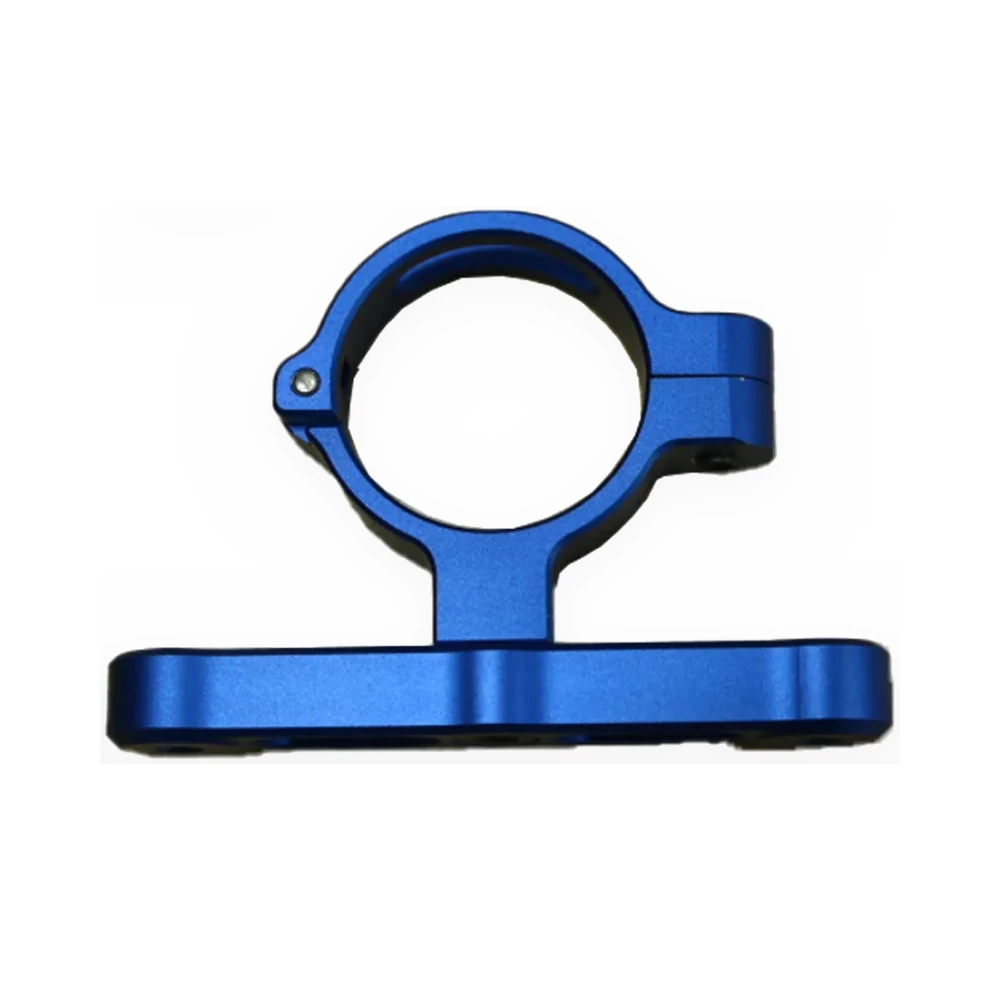
- Folding mechanism hinges and latch bodies – high-stress pivots where 7075 forgings shine.
- Wheel hubs and motor mounting flanges – precision bores that must stay true under load.
- Brake caliper brackets – stiff, lightweight mounts for hydraulic or mechanical brakes.
These parts echo the demands seen in our coverage of aluminum forging for motorcycle components, where two-wheel stiffness and weight are equally critical.
Material Choices: 6061, 6082, and 7075 Aluminum Alloys
Alloy selection sets the ceiling on strength and the floor on cost:
| Alloy (T6) | Tensile strength | Yield strength | Density |
|---|---|---|---|
| 6061-T6 | ~310 MPa | ~276 MPa | 2.70 g/cm³ |
| 6082-T6 | ~310 MPa | ~260 MPa | 2.70 g/cm³ |
| 7075-T6 | ~570 MPa | ~505 MPa | 2.81 g/cm³ |
6061 and 6082 are the workhorses for decks and stems where moderate strength and excellent corrosion resistance matter. 7075 steps in for folding hinges and high-load brackets that see concentrated stress. All three forge cleanly and take well to the anodizing finishes that give scooters their durable, scratch-resistant urban look.
Forging Process and Tolerances for Scooter Parts
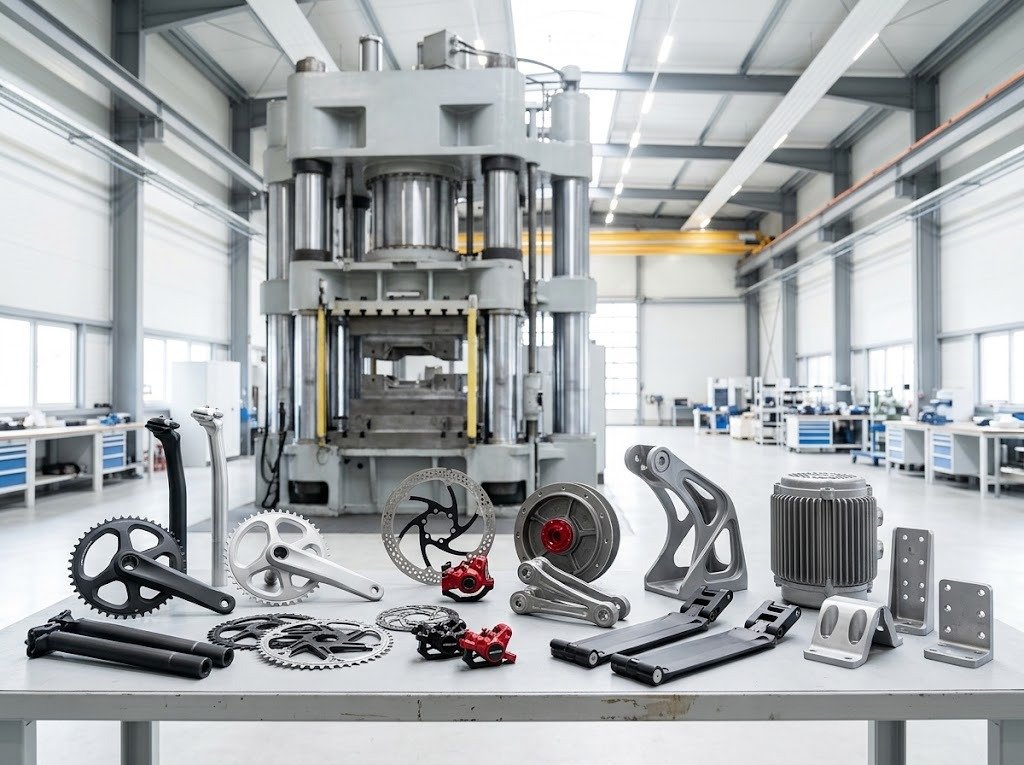
Most scooter forgings are produced by precision closed-die forging, often warm or hot, followed by CNC trimming and machining of critical bores. Achievable tolerances on forged features run around ±0.1 mm on machined datum surfaces, with forged-profile tolerances near ±0.3 mm. Near-net shaping trims the machining allowance, lowering both material scrap and lead time. For a typical 6061 deck, forging plus light machining can remove 20–35% of the mass that an equivalent steel stamping would carry.
Weight Savings and Real Performance Impact
A typical commuter e-scooter weighs 12–18 kg; replacing a steel or thick extruded deck and stem with forged 6061 aluminum saves roughly 0.8–1.5 kg in the structure alone. That reduction improves portability, extends battery range slightly by lowering acceleration load, and tightens handling. The grain-flow benefit also matters for fold points: a forged hinge survives far more fold cycles than a cast one before micro-cracks appear. The same lightweighting logic applies across aluminum forging for sports equipment and UAV components, where every gram is contested.
Surface Finish and Urban Durability
City riding exposes scooter parts to moisture, grit, and frequent handling. Type II sulfuric acid anodizing (10–25 µm) provides corrosion resistance and a hard, colored surface, while Type III hard anodizing (25–50 µm) adds abrasion resistance for deck wear plates. A well-anodized forged part resists scratching far better than paint and never rusts, which is why anodizing is the default finish for premium scooter hardware. The techniques we apply are the same ones detailed in our fitness equipment forging guide, where daily abuse demands the same durability.
About Guangdong XinPingFu
Guangdong XinPingFu Model Forging and Pressing Co., Ltd. is a Shenzhen-based aluminum forging and CNC machining specialist with two decades of experience. We operate six forging presses and two cold-forging machines supported by twelve CNC centers, delivering forged aluminum components from prototype to volume production. From e-scooter decks and folding hinges to motorcycle and sports hardware, our integrated forging-plus-CNC workflow controls cost, lead time, and quality. Contact our engineering team to review your next lightweight aluminum part.